
From Palestinian tatreez and keffiyeh textiles to Pharaonic-inspired embellishments, celebrities are using fashion to communicate cultural identity, preserve memory, and make statements that travel beyond the red carpet.
A red-carpet look can do more than attract attention. Through its embroidery, silhouette, color, and decorative details, a garment can communicate where someone comes from and what they want the world to remember.
This is where fashion meets semiotics: the study of how signs create meaning. In couture, these signs can take the form of traditional patterns, historical references, symbolic colors, or familiar garment shapes. When celebrities wear them on international stages, clothing becomes a way to make cultural identity visible within a global conversation.
Recent appearances by Arab celebrities and international figures demonstrate how these visual references can take different forms. Some garments revisit traditional craftsmanship, others reinterpret historical imagery, while certain looks invite audiences to read political meaning into their design.
Yousra: Bringing Ancient Egypt to the Oscars

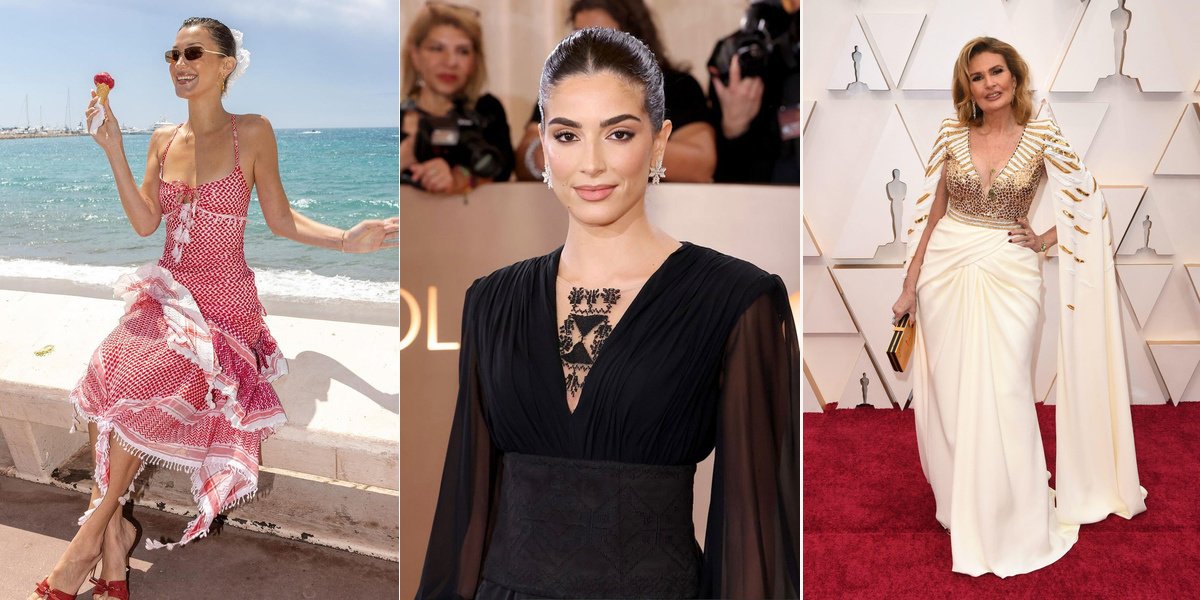
At the 2020 Academy Awards, Egyptian actress Yousra arrived in an ivory and gold creation by Lebanese designer Zuhair Murad. The custom gown came from his Spring 2020 Couture collection, inspired by the queens of Ancient Egypt.
Its shimmering gold bodice, flowing ivory skirt, and embroidered cape sleeves translated Pharaonic references into contemporary eveningwear. Egyptian stylist Mai Galal completed the look with jewelry from Nara Fine and a clutch by Lebanese label La Rose De Sim.
The appearance connected Egyptian cultural heritage with Lebanese couture craftsmanship on one of cinema’s most visible international stages. Rather than reproducing historical dress, the design translated its visual vocabulary into modern formalwear.
Saja Kilani: Tatreez as a Language of Identity
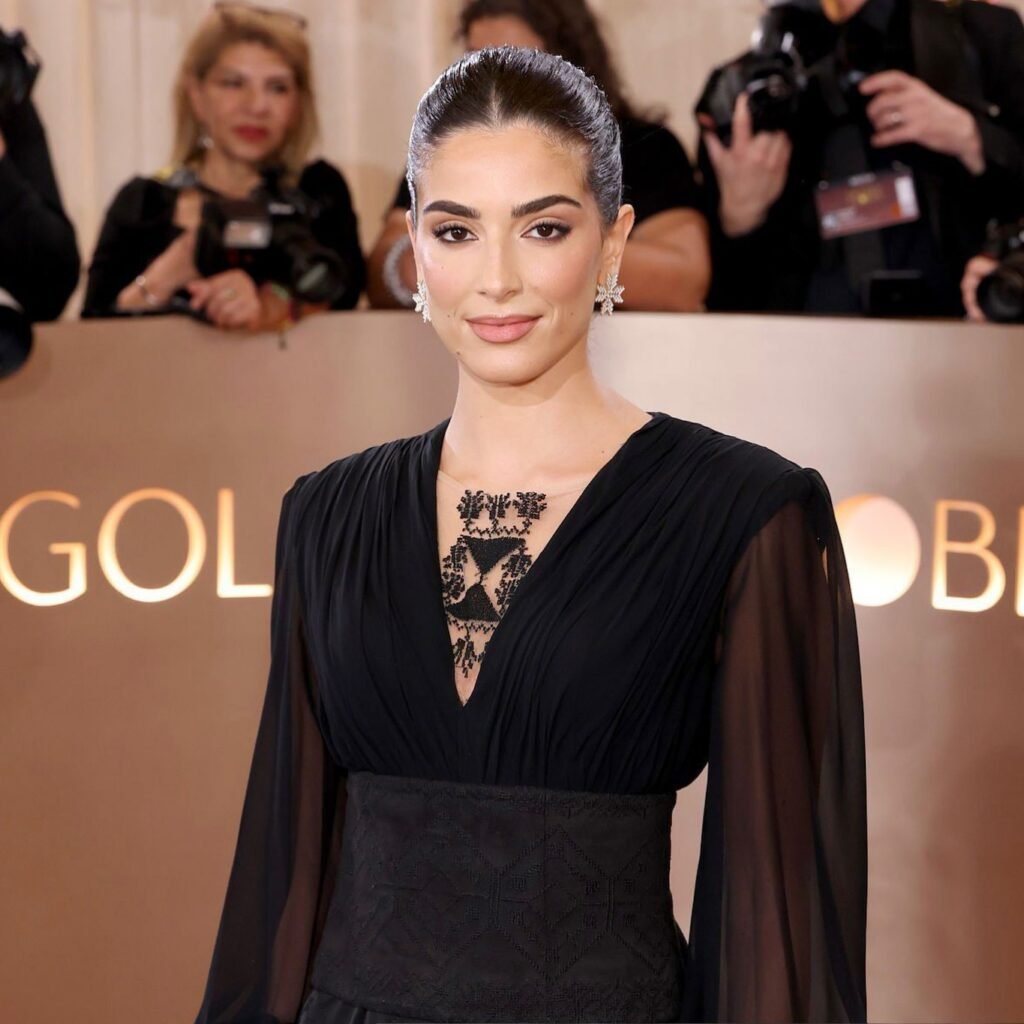
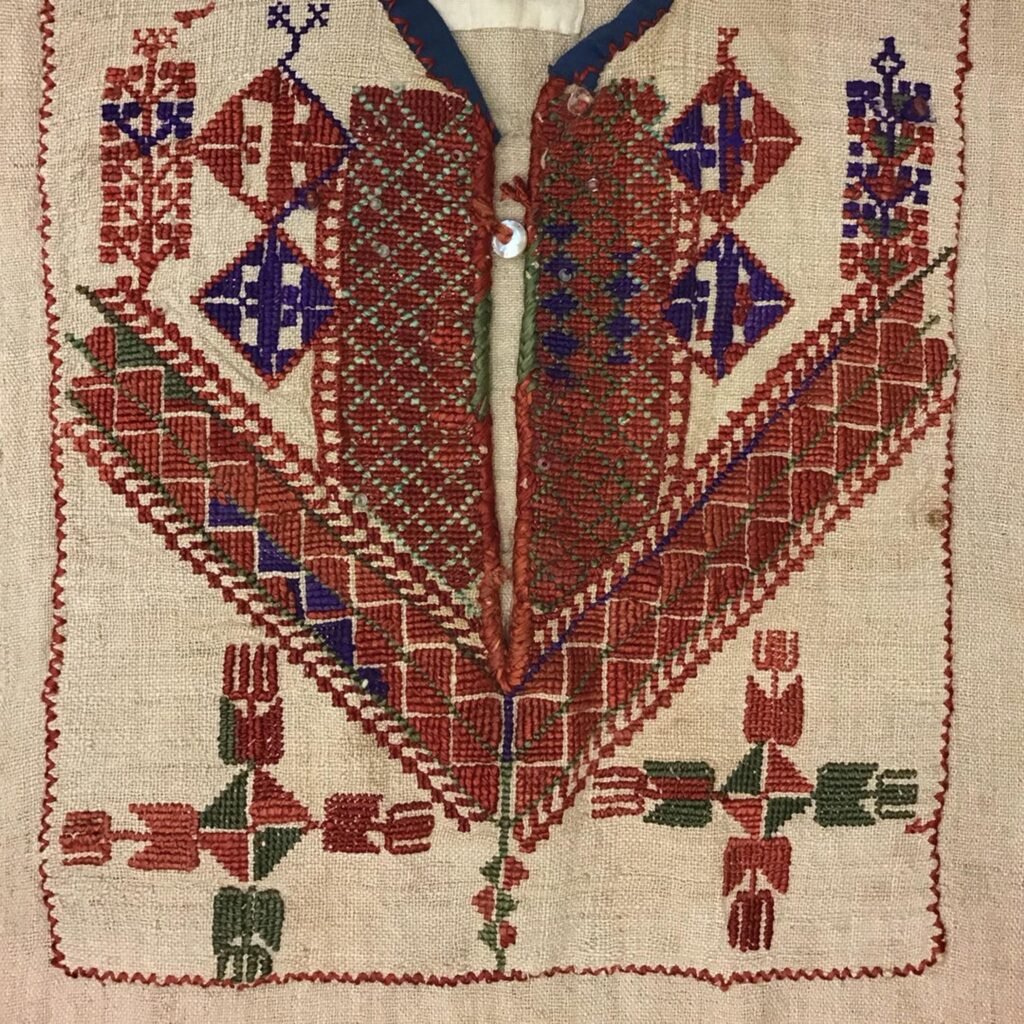
At the 2026 Golden Globes, Palestinian-Jordanian-Canadian actress Saja Kilani chose a custom black gown by Jordanian designer Reema Dahbour, inspired by the traditional Palestinian thobe.
The neckline incorporated tatreez, the centuries-old Palestinian embroidery practice, while her earrings carried related references. Kilani explained that the embroidered detail echoed protective motifs traditionally stitched by women.
The silhouette added another layer. Its structured shoulders represented strength, while the black color expressed both mourning and resilience, according to the actress.
For Kilani, the garment connected contemporary couture with a tradition through which Palestinian women have preserved identity, family history, and regional memory across generations.
Bella Hadid: The Keffiyeh Reimagined as Couture
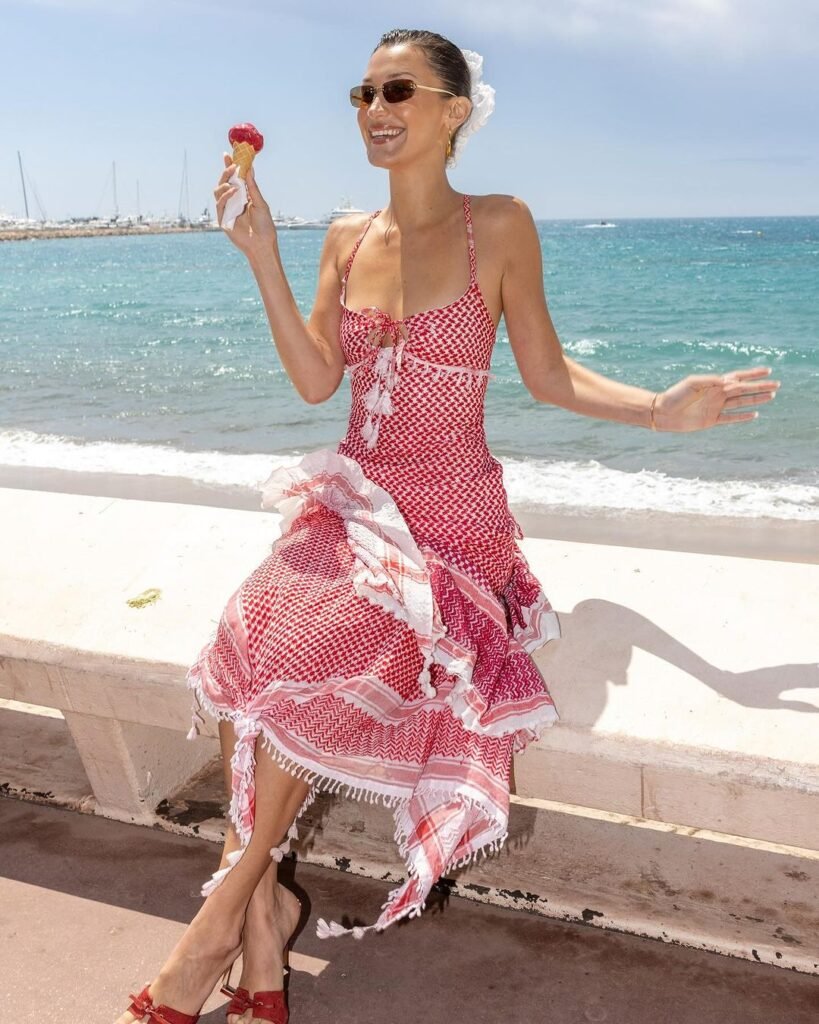
At the 2024 Cannes Film Festival, Bella Hadid brought another Palestinian textile into international fashion coverage. She wore a vintage red-and-white dress made from keffiyeh fabric by American-Iranian design duo Michael and Hushi.
Originally created in 2001, the cotton dress featured a fitted silhouette and an asymmetrical, ruffled skirt. Hadid’s appearance in the piece connected its contemporary fashion language with the cultural significance of the Palestinian keffiyeh.
The garment has since gained another dimension. In November 2026, the Victoria and Albert Museum in London presented the dress in a dedicated display titled The Keffiyeh and the Fabric of Resistance. It appears alongside a separate keffiyeh made by Hirbawi in Hebron.
The museum’s presentation places the garment within a wider discussion of clothing, identity, and resistance. Its journey from an independent design in 2001 to an internationally recognized fashion moment in Cannes, and now a museum display, demonstrates how a textile can carry meaning across different generations and contexts.
Waad al-Kateab: When Words Become Part of the Dress
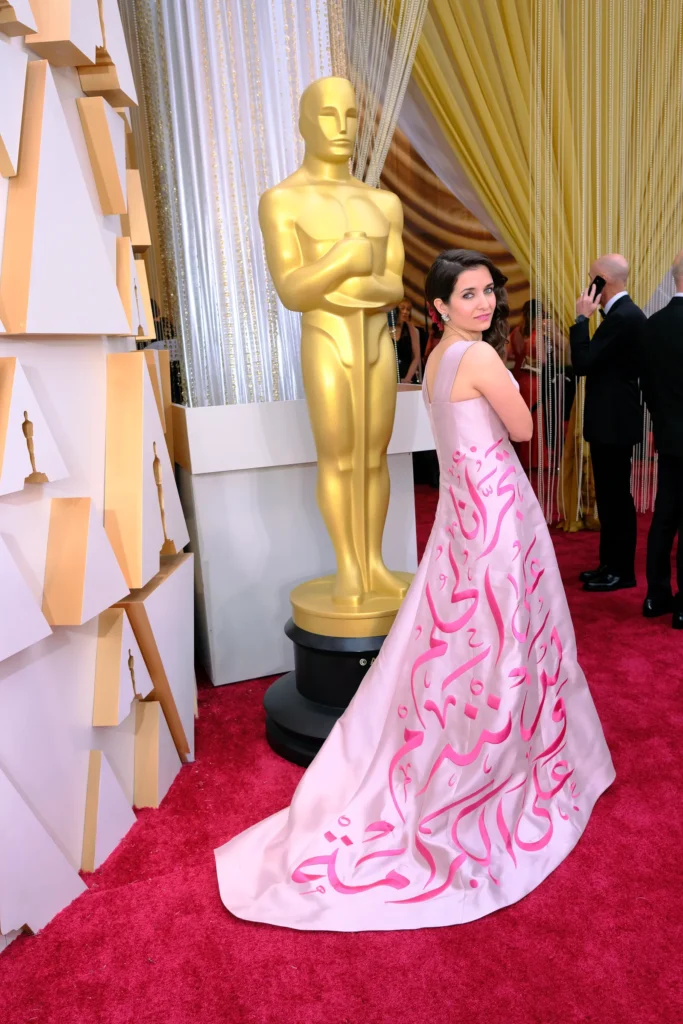
At the 2020 Oscars, Syrian filmmaker Waad al-Kateab offered another interpretation of fashion as cultural expression on the red carpet.
Her gown, designed by Syrian designer Reem Masri, featured Arabic calligraphy along its train. The inscription translated to: “We dared to dream, and we will not regret dignity.”
The words transformed the garment into a visible message. Rather than using embroidery as decoration alone, the design placed language and cultural identity directly within its construction.
For a filmmaker whose documentary For Sama explored life during the war in Aleppo, the inscription connected her personal story with a wider message about dignity, resilience, and the right to dream.
Cate Blanchett: The Power of an Unconfirmed Symbol
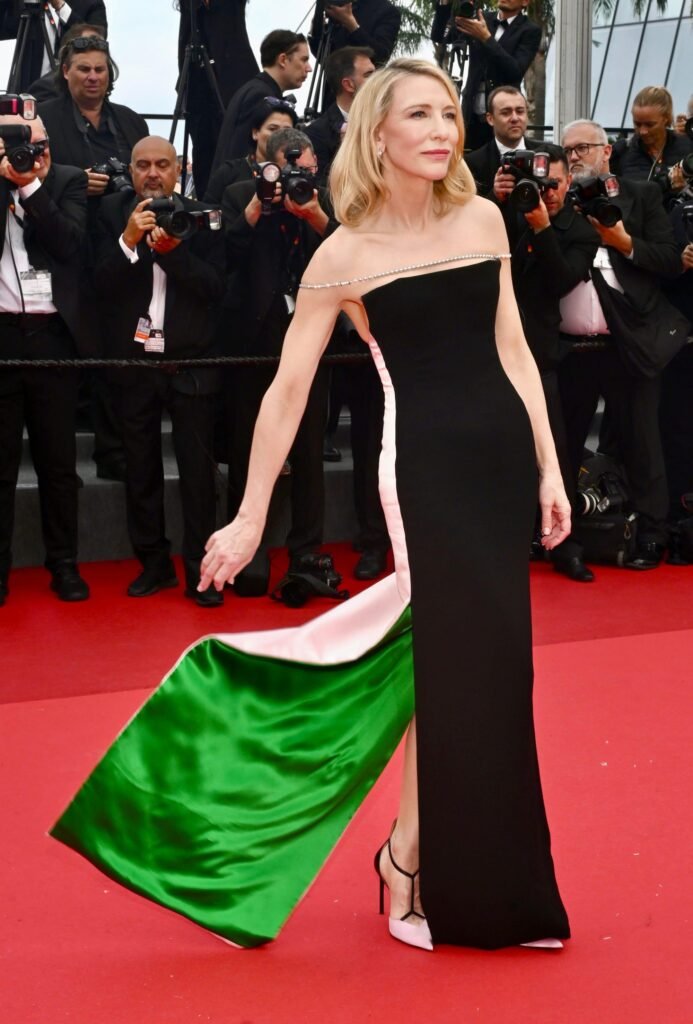
At the 2024 Cannes premiere of The Apprentice, Cate Blanchett appeared in a Jean Paul Gaultier couture gown designed by Haider Ackermann.
The dress featured a black front, a pale pink back, and green inner lining. When Blanchett lifted its train, the green lining appeared against the red carpet, creating a combination that many viewers interpreted as resembling the Palestinian flag.
The association also recalled the watermelon, a widely recognized Palestinian solidarity symbol. Its red flesh, green and white rind, and black seeds mirror the colors of the Palestinian flag.
However, neither Blanchett nor her stylist or designer confirmed that the gown intended to communicate this message. The look therefore remains an example of how audiences interpret fashion through cultural and political references, rather than a confirmed statement by the wearer.
Beyond the Garment: Representing Regional Designers
Cultural representation can also begin with the origin of a design. Saudi presenter Ajwa Aljoudi has spoken about deliberately choosing Saudi-designed and Saudi-made clothing for international appearances.
Her intention is to introduce regional creative talent to audiences who might otherwise overlook it. In this case, the designer’s identity and production origin become part of the message, even without an explicit historical motif.
When Fashion Carries a Story
These appearances demonstrate that fashion can communicate identity in different ways. A traditional embroidery technique can preserve inherited memory. A historical silhouette can reinterpret an ancient civilization. A textile can represent a cultural struggle, while a simple design choice can introduce regional designers to an international audience.
The strongest statements are not necessarily the most elaborate. They are the ones that carry context, intention, and a clear connection to the person wearing them.
On the global stage, couture can become more than an image. It can become a way of carrying history into the room.