
The multidisciplinary production brings Arabic and Spanish poetry, flamenco, symphonic music, and contemporary dance together for its Arab world premiere at Abu Dhabi Festival.
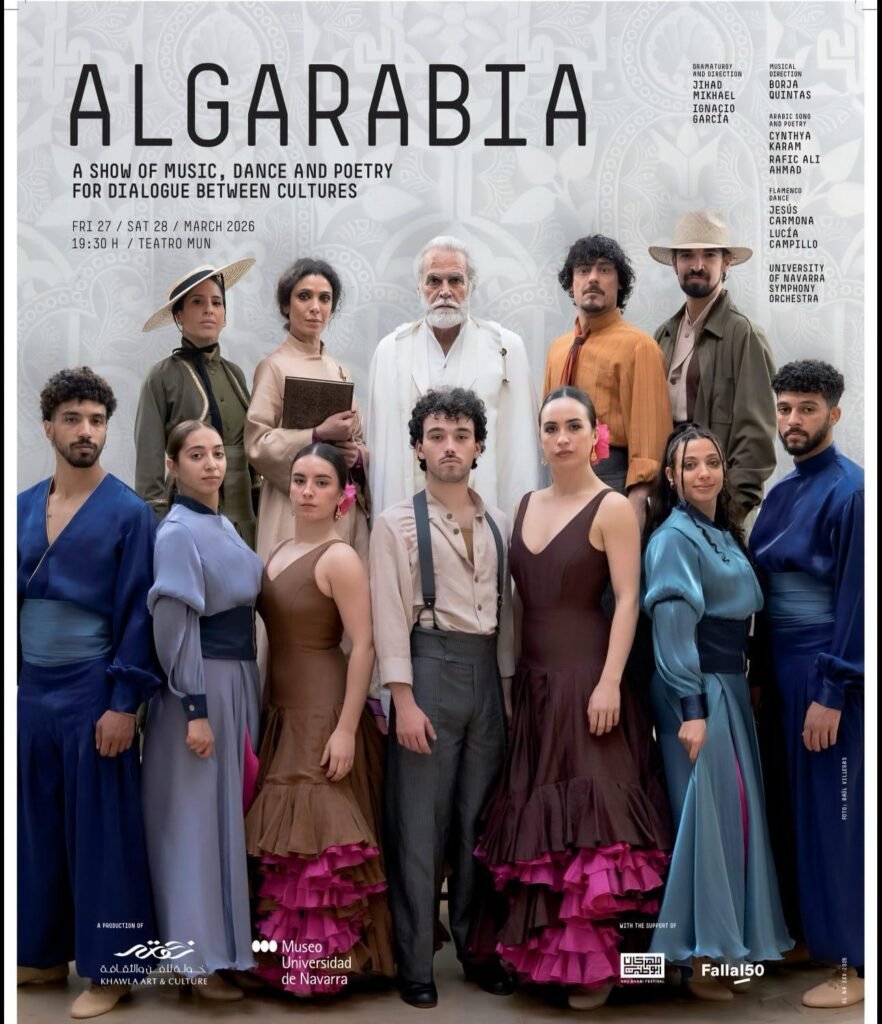
Flamenco and Arab poetry meet on stage in Algarabía, a new production exploring the artistic connections between two cultural traditions. Arriving in Abu Dhabi on November 26, the performance brings together musicians, dancers, actors, and a symphony orchestra for an evening shaped by shared histories and contemporary reinterpretation.
Co-produced by Abu Dhabi Music & Arts Foundation (ADMAF), Museo Universidad de Navarra, and Khawla Art & Culture, the production follows two sold-out performances in Pamplona, Spain, in March 2026. Its Abu Dhabi presentation marks its Arab world premiere and forms part of the Abu Dhabi Festival headline program.
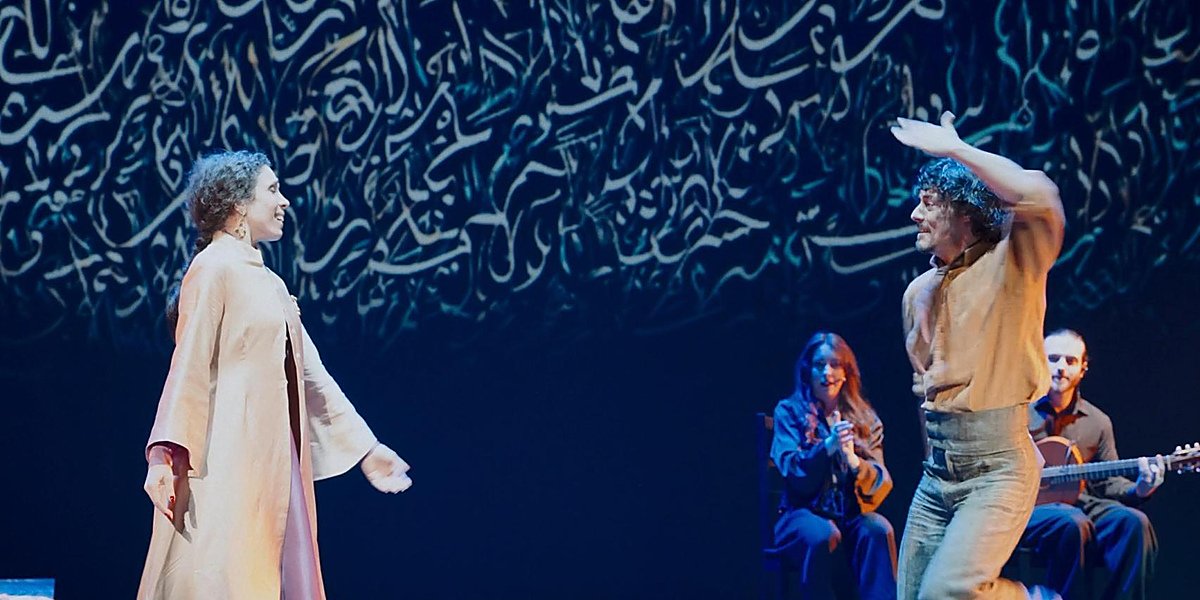
Rather than treating flamenco and Arab art as separate influences, Algarabía builds a dialogue between their musical, poetic, and movement traditions. Its stage narrative unfolds in an Andalusian garden, where an Arab girl encounters a Spanish florist. Their contrasting approaches to flowers, knowledge, and preservation gradually reveal deeper cultural connections.
A Conversation Through Poetry and Music
Poetry provides one of the production’s central links between cultures. The program includes texts by Syrian poet Nizar Qabbani and medieval Andalusian poet Ibn Zamrak. Their work appears alongside Spanish writers Miguel Hernández and Saint John of the Cross, as well as the traditional lyrics of Lamma Bada Yatathanna.
The musical arrangement follows a similarly layered approach. Composer Manuel de Falla provides several symphonic foundations, including selections from La vida breve, Noches en los jardines de España, El amor brujo, and El sombrero de tres picos.
These compositions meet new work by Emirati composer Ihab Darwish and arrangements by Josema García Hormigo. The result brings orchestral music into conversation with flamenco percussion, guitar, singing, and the Arabic oud.
Movement Between Two Traditions
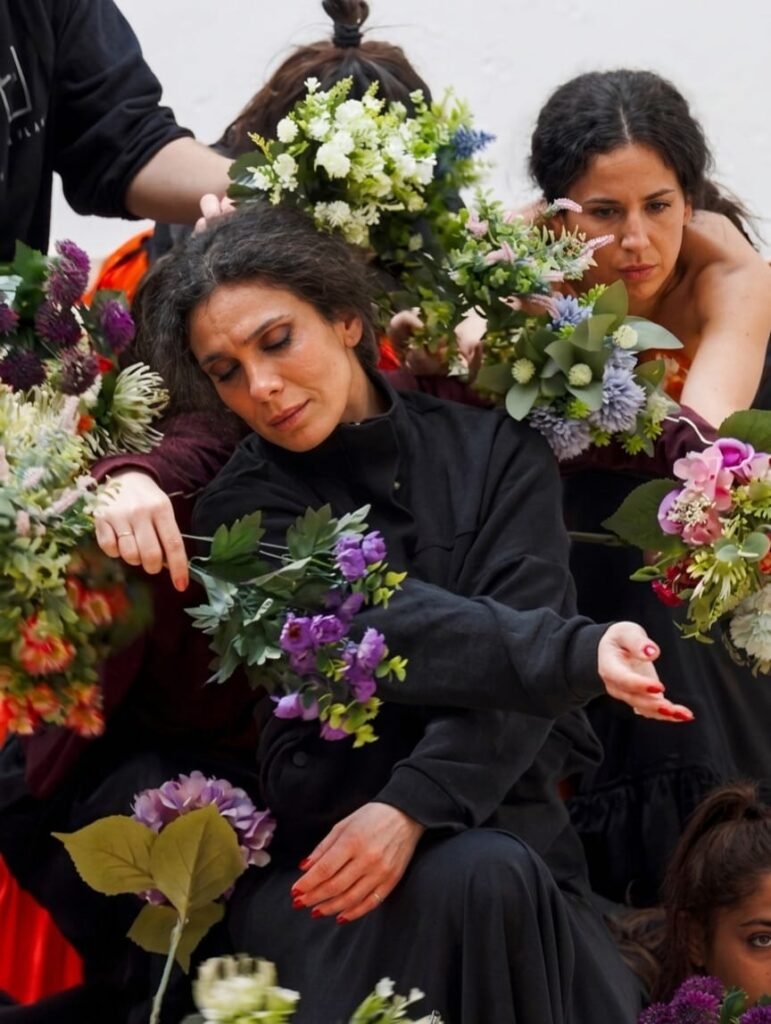
Flamenco dancer and choreographer Jesús Carmona leads the movement direction. A former principal dancer with Ballet Nacional de España, Carmona has built an acclaimed international career. His choreography explores how traditional flamenco movement can meet contemporary and Arab dance languages.
The Abu Dhabi cast includes Carmona as Florencio, Lebanese actress and singer Cynthya Karam as Farah, and Lebanese actor Rafic Ali Ahmad as the Spirit of the Garden. Spanish dancer Lucía Campillo appears as Candela.
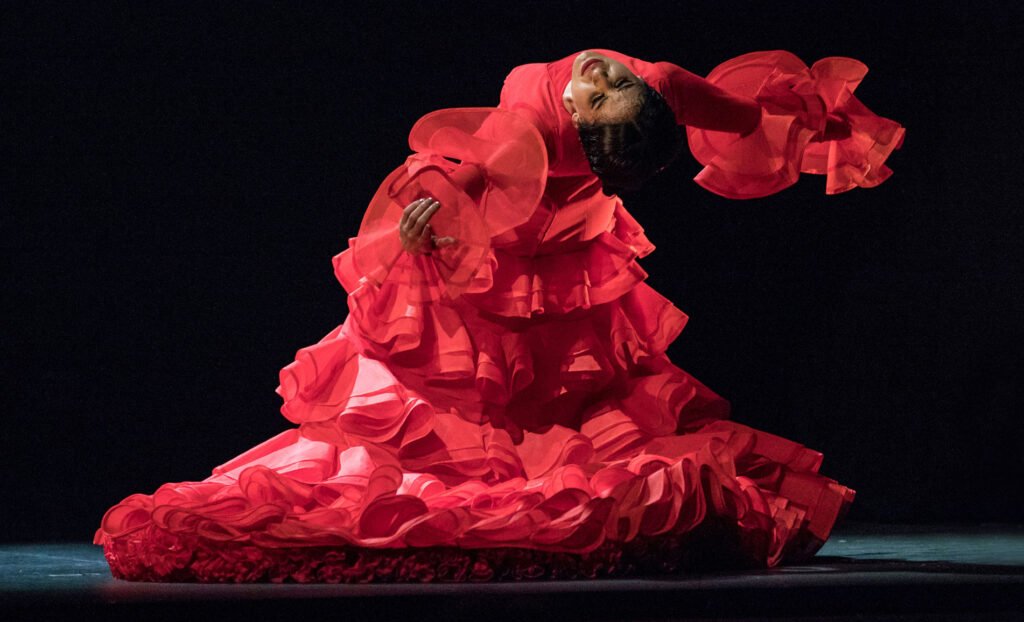
The musical ensemble includes the University of Navarra Symphony Orchestra and Choir. Flamenco musicians Manuel Masaedo, Antonio González Reyes, and Belén Vega join Iraqi oud master Naseer Shamma. Dancers from Sharjah Performing Arts Academy also take part, adding regional performers to the international collaboration.
From Encounter to Reconciliation
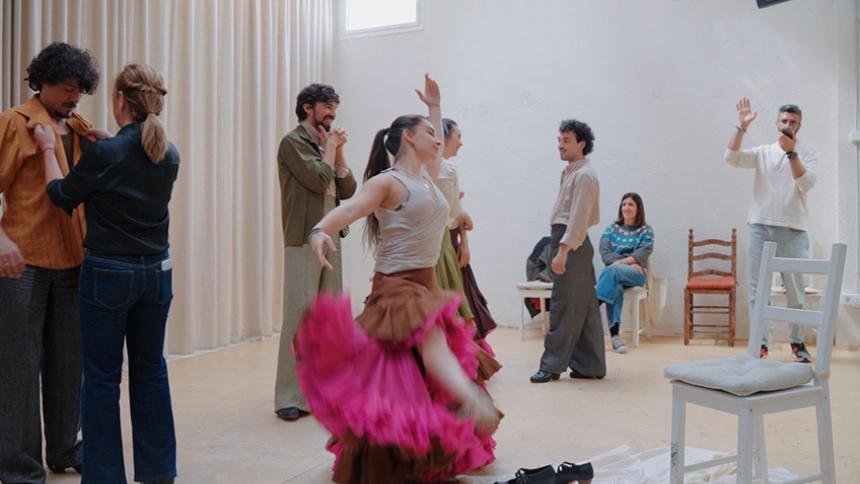
The program follows a sequence of musical and dramatic movements. It moves through Prelude, Encounter, Conversation, Dispute and Struggle, Reflection, and Reconciliation before its final dance.
This progression gives the production a wider emotional arc. Its central idea does not depend on presenting cultural traditions as identical. Instead, it explores how distinct artistic languages can communicate, challenge one another, and find common ground.
Presented at Emirates Palace Mandarin Oriental, Algarabía runs from 8 to 9:30 p.m. on November 26. Its Arab world premiere offers Abu Dhabi audiences an opportunity to experience a collaboration connecting Arab poetry, Spanish dance, and contemporary performance.
Through music, movement, and verse, the production approaches cultural heritage as something that continues to evolve. Its dialogue looks backward to shared histories while creating a new stage language for the present.