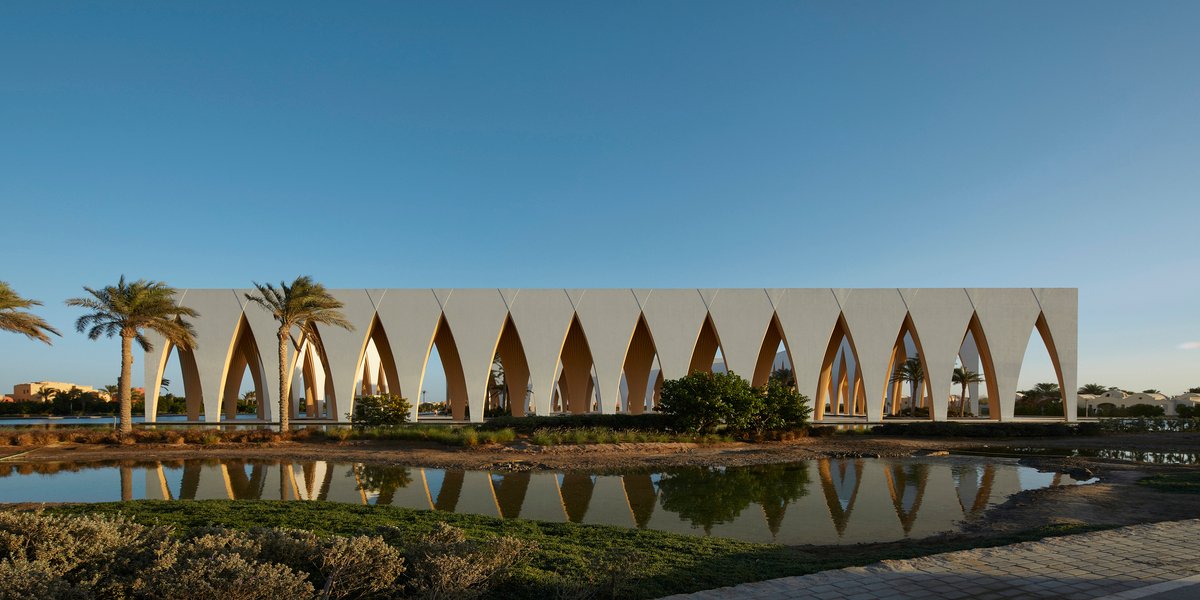

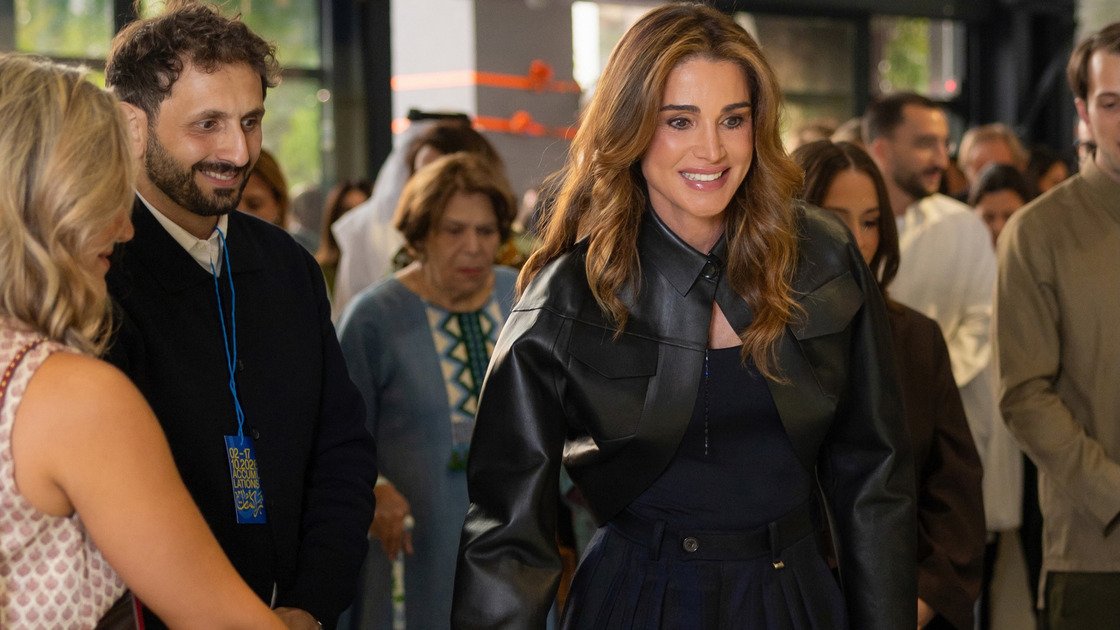
Jordan’s capital is becoming a design city for the first half of October. On Tuesday, September 29, Her Majesty Queen Rania Al Abdullah launched the fourth edition of Amman Design Week (ADW) at the Ras El Ain Hangar, ahead of its public opening on Friday, October 2. Notably, the Queen founded the festival in 2016. This edition will be running until October 17 under the theme Accumulations. It is the first one since 2019, with exhibitions, installations, workshops, talks and public projects across five districts. Including, for the first time, the coastal city of Aqaba.
The Queen Opens the Hangar
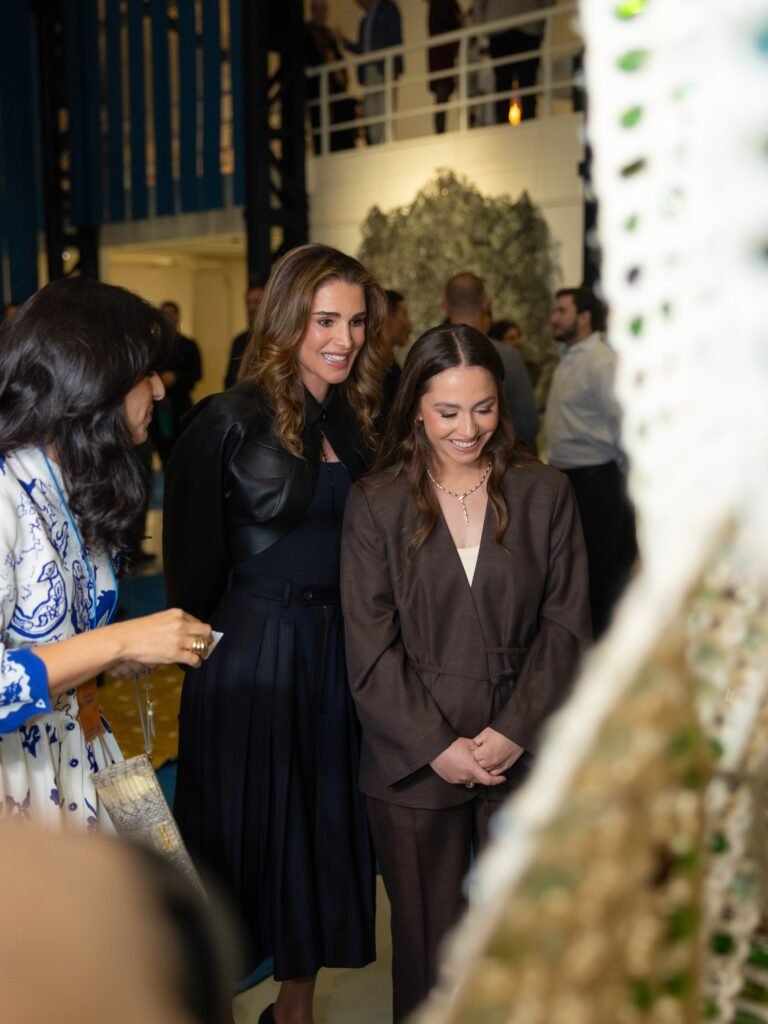
Her Majesty Queen Rania, accompanied by Her Royal Highness Princess Iman bint Abdullah II and other members of the Royal Family, toured the Hangar Exhibition with ADW co-directors Sarah Hejazin and Bisher Tabbaa. According to the official announcement, this year’s edition brings together 220 participants from all around the world. Presenting their work across 59 participating spaces and 204 events. The installations include designers and artists from Jordan, Palestine, Syria, Lebanon, Iraq, Saudi Arabia, Kuwait, Bahrain, Qatar, Egypt, India and Armenia. All exhibitions and programmes are free and open to the public.
Seven Years of Work, Now in the Spotlight
In addition, Tabbaa explained that the theme reflects the work designers kept doing during the gap: research and making that continued behind the scenes, now brought into view. Exhibition curator Faysal Tabbarah and programme curator Khaled Al-Bashir lead the theme. Tabbarah describes it as a compilation of how daily practices, environments and cultural memory pile up and shape what designers create today. Not only do some works read almost like material inventories, but also others stretch, reshape, or recombine materials in new ways.
The Hangar at the Centre
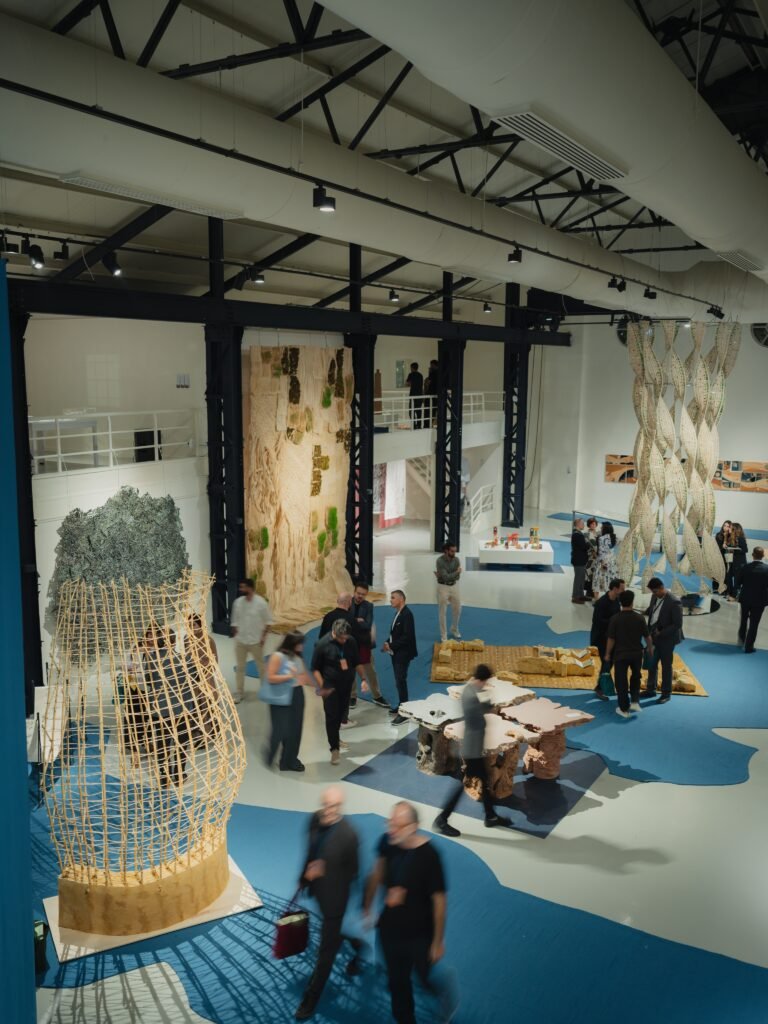
A 1930s electricity-generating plant turned public cultural and exhibition space, The Hangar is ADW’s headquarters and the base of most of the main works. They span product design, material experimentation, and research-driven projects about cultural practices and historic narratives.
Argubaly, one of the most talked-about pieces, is Troubled Waters by Palestinian architect and historian Nadi Abusaada. A nine-year project in the making. A white plaster octagonal fountain stands in the space like a ghostly echo of the courtyard fountains of a vanished era. Its only splash of color is a single blue-and-red floral tile. The sole surviving fragment of a fountain by Armenian ceramist David Ohanessian. It once stood in Jerusalem’s now-demolished 1920s Palace Hotel. Abusaada’s installation speculates on what the whole fountain looked like.
Design in the Park
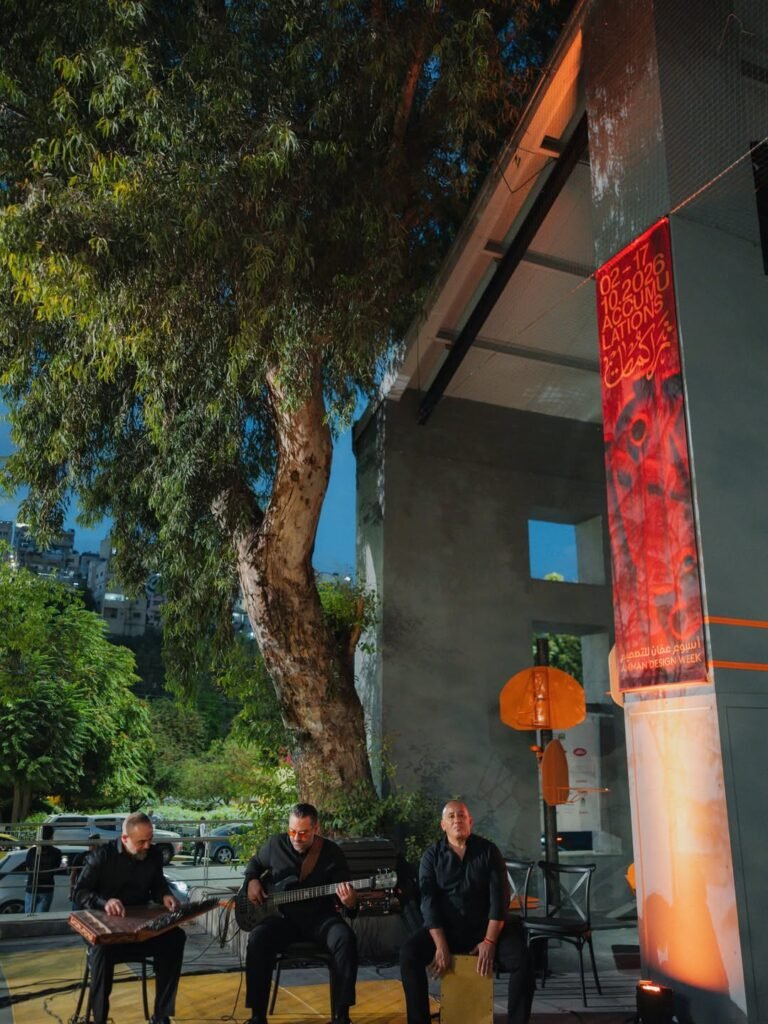
Moreover, design also steps outdoors. In Ras El Ain Park, Folly by Civil Architecture, co-founded by Bahraini architect Ali Ismail Karimi and Kuwaiti architect Hamed Bukhamseen. Lies a ceramic-tiled canopy between the existing trees. It is built from discarded eucalyptus wood, in collaboration with Haswa Ceramics by Jordanian ceramicist Sama El Saket. Small figures on the roof, which the architects call caryatids, are intentionally left without a fixed meaning. Which gives the freedom for open interpretations by the visitors.
Close by, Abeer Anabtawi’s Nawwarat Amman turns a basketball court into a canvas of plants, sayings and symbols drawn from the city. Additionally, four works created for this edition will remain in Amman after the festival ends, so the week leaves lasting traces in public space.
Heritage Houses and Domestic Life
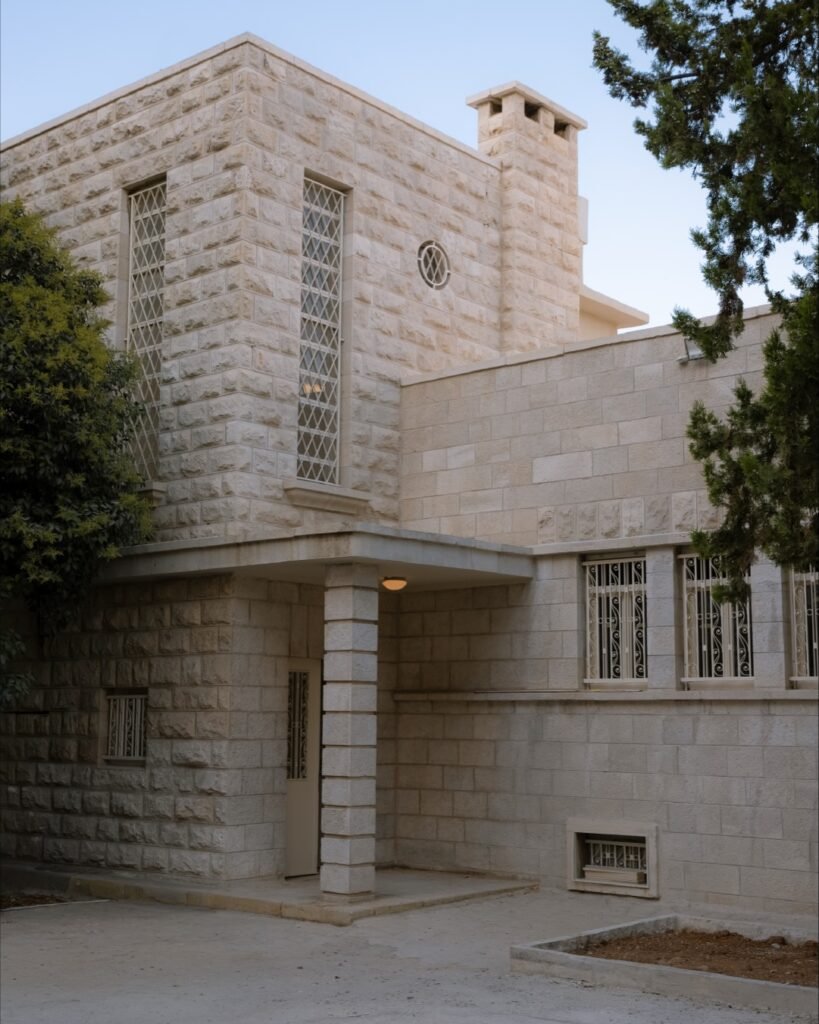
In Jabal Al Lweibdeh, Darat Abu Adnan, a restored 1950s house. It hosts projects on domestic life, coexistence with nature, and heritage craft. In The Return, Jordanian designer Farah Tajeddin sets a dessert table like no other. Candleholders, cups, and cutlery made from Dead Sea salt, layered with a plant-based binder made of synthetic adhesives. Her work links the salty landscape of her childhood to the idea that life is a journey and death is a return.
A Festival for Everyone
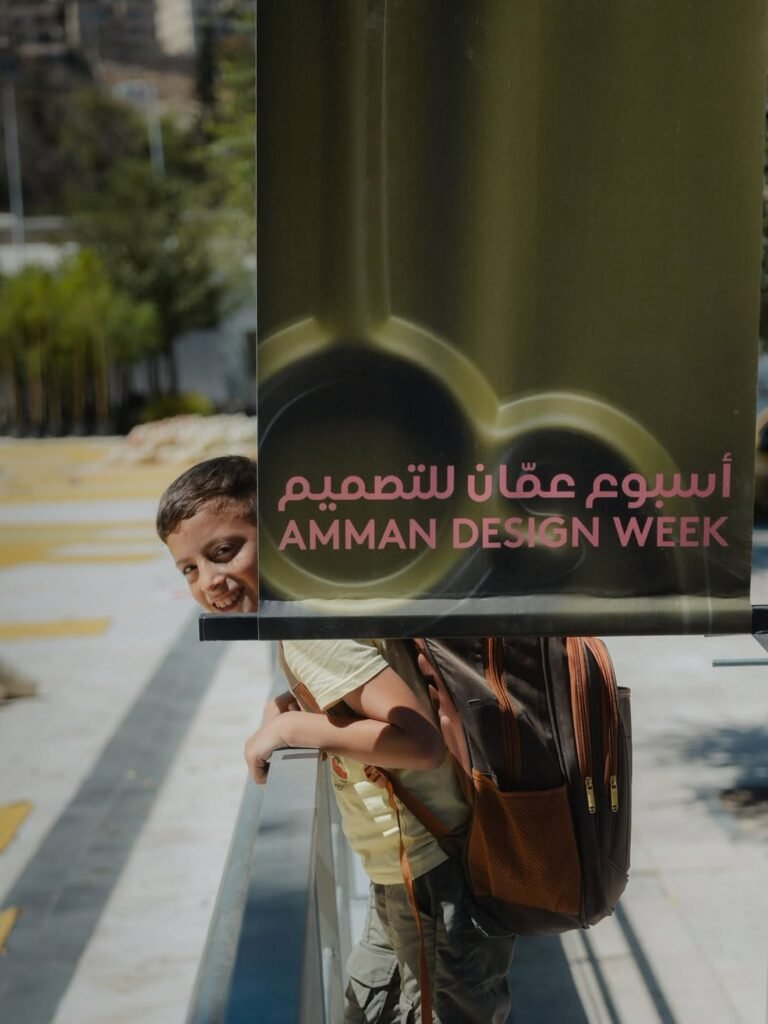
ADW presents itself as an immersive experience in local and regional design and culture. Aiming to establish Amman as a regional hub for innovation and expression. Beyond its two-week event, it runs year-round learning programmes for current and aspiring designers and craftspeople. Furthermore, rather than focusing on selling products, it is a platform for experimentation. Tabbaa says it is planned for people who don’t see themselves as “design people,”. Family workshops, guided tours for first-time gallery visitors, and installations in parks and plazas that need no ticket.
Planning a Visit
To conclude, ADW runs until October 17 across Ras El Ain, Jabal Al Lweibdeh, Jabal Amman, Iraq Al Amir, and Aqaba. Entry is free, and the full programme and registration details are on ammandesignweek.com.