
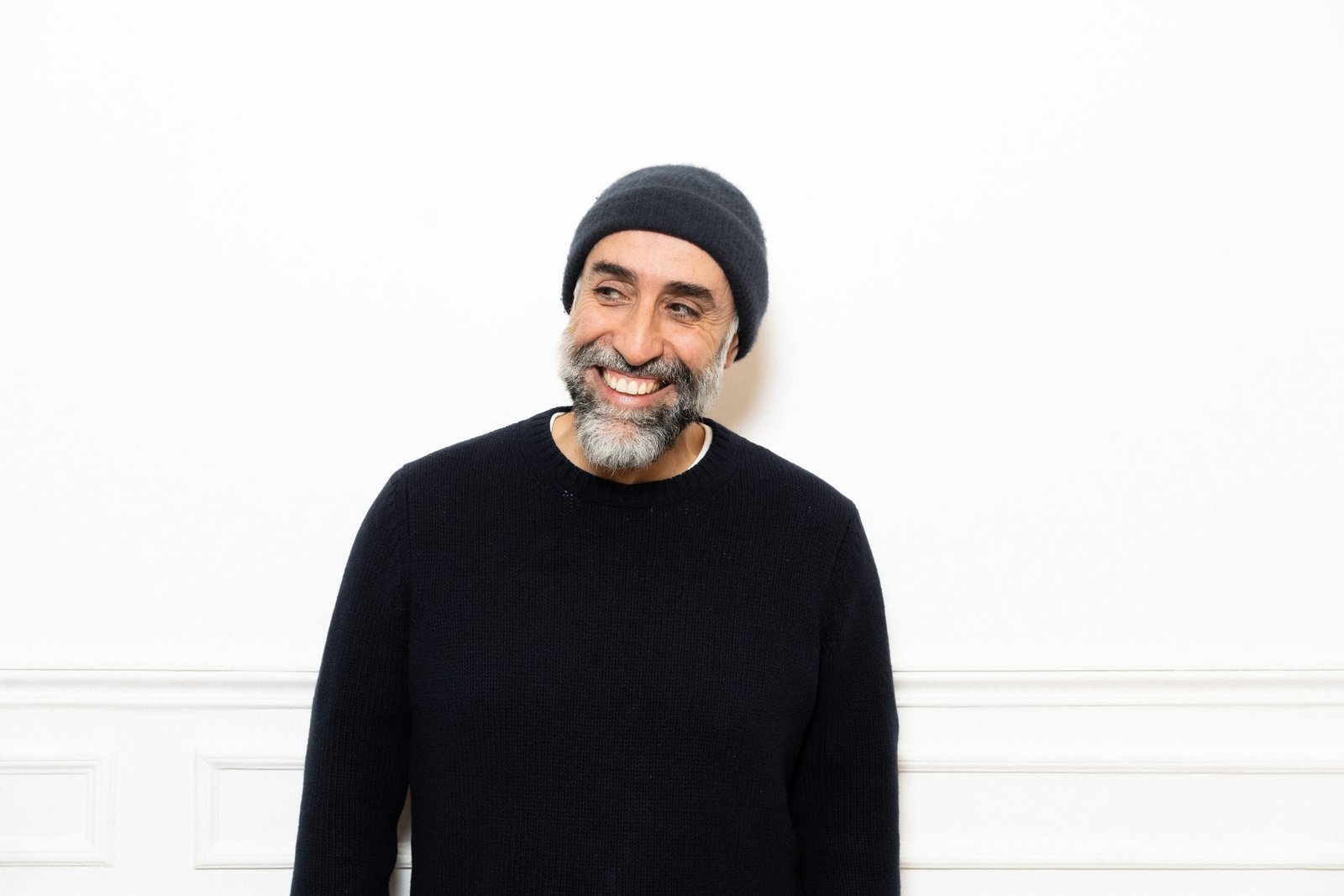
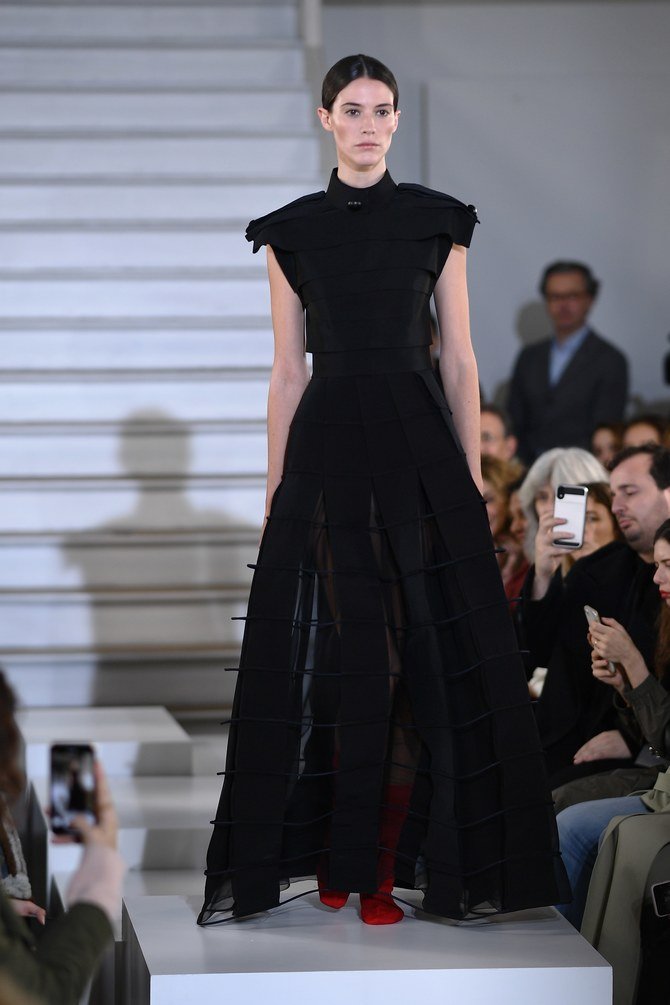
Suzy Menkes, writing in the International Herald Tribune, once described Rabih Kayrouz as “an architect in a world of decorators,” a line that has followed him for years because it captures something specific and true about where he sits within Lebanese fashion. The country’s most internationally visible designers built their reputations on embellishment, on the red carpet gown, on maximalism executed at the highest technical level. Kayrouz built his on the opposite instinct. His clothes are defined by clear lines, immaculate tailoring, and a blend of elegance with ease, and they have carved out a distinctive position within both haute couture and ready-to-wear precisely because they refuse to compete on the terms everyone else accepted. That refusal has cost him some of the mainstream recognition his contemporaries enjoy. It has also made him one of the most respected Lebanese designers working today, and the only one whose work is regularly discussed in the same conversation as the Parisian minimalists rather than as a regional export.
Leaving at Sixteen
Kayrouz was born in Jounieh, Lebanon, in 1973, into a country that would spend most of his childhood at war. He left for Paris at the age of sixteen, both to escape the civil war and to pursue his passion for fashion design, which he had held since the age of twelve. He has been consistently direct about the fact that there is no romantic origin story behind it: “I don’t have a specific story. Neither my grandmother nor my mother introduced me to clothes design. I’ve just always loved clothes, the fabrics, and folding fabrics.”
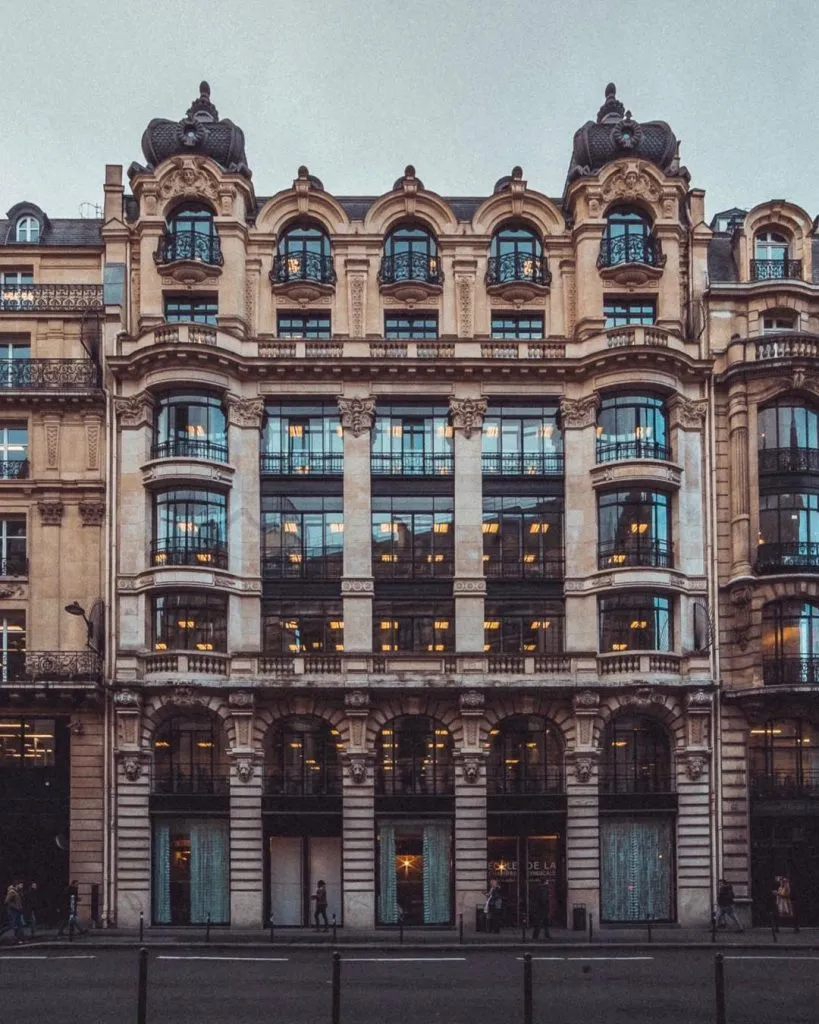
He studied at L’École de la Chambre Syndicale de la Couture Parisienne, the institution that has trained a significant proportion of the couture industry’s technical talent for a century, and after graduating, completed stints at both Chanel and Christian Dior Couture. Those two houses gave him a foundation in construction that is visible in everything he has produced since, and they also gave him a clear sense of what he did not want to make. A holiday visit to Lebanon in 1995, with the country finally at peace, persuaded him to return home. “I think this was the moment to come back to Beirut,” he said later.
Beirut, Then Paris
He opened his first fashion house in the heart of Beirut in 1998, and spent the following decade designing for private clients in a market that was rebuilding itself alongside the city around it. What he learned during those years shaped both his design language and his understanding of the industry’s structural gaps. In 2008, he opened his design studio in Paris, establishing Maison Rabih Kayrouz as a house operating from both cities simultaneously, and by 2009 he had been invited by the Chambre Syndicale de la Couture Parisienne to become a correspondent member, joining the official couture calendar.
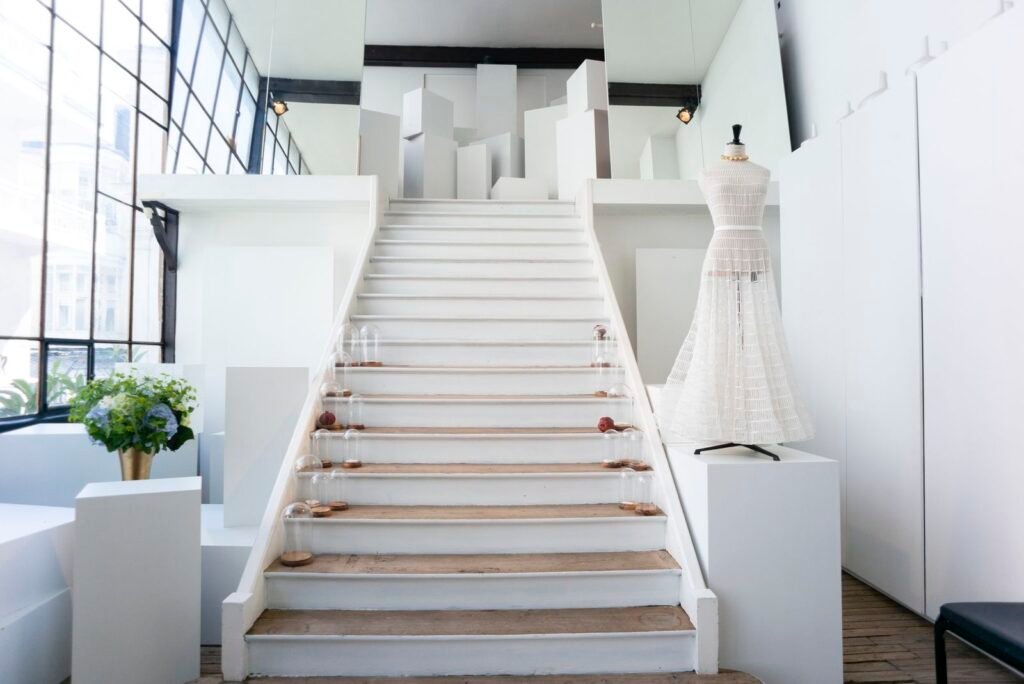
The recognition accelerated from there. In 2012 he stepped outside his established territory and debuted a ready-to-wear line in Paris, capturing attention with its minimalist aesthetic and architectural precision. He was named a finalist for the ANDAM prize in 2013, was made Chevalier des Arts et des Lettres by the French government that same year, and has since been awarded France’s Chevalier de la Légion d’Honneur. In July 2019, the house celebrated its twentieth anniversary with a show at Paris Couture Week. The trajectory from a sixteen-year-old refugee studying pattern cutting to a designer decorated by the French state is not a common one, and Kayrouz has remained notably unsentimental about it: “I’m just happy to be part of the story, but it’s not my story, it’s the story of Maison Rabih Kayrouz, and I’m part of it. In a way I’m a servant to this.”
August 4, 2020
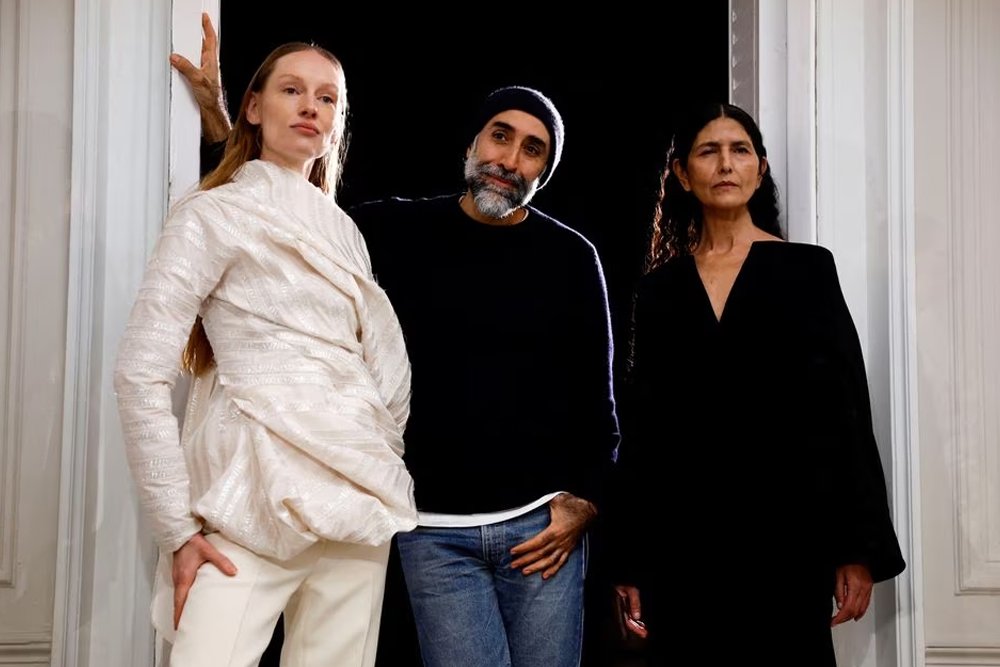
On the day of the Beirut port explosion, Kayrouz was in the city. He suffered a brain haemorrhage, two clots, and twenty-two stitches. In the months that followed, there was a limited ready-to-wear collection and no haute couture collection in January, as he took a step back to physically and emotionally heal and to refocus his brand. He gave very few interviews during that period, and when he did speak, he was clear about what the experience had taken from him and what it had not: “Physically I’m quite good, but I’m still moved by everything. I woke up with all the destruction around me. I’m the generation that built up that part of Beirut, and we were there in 1995, and were able to witness all the construction, and it was moving to see the destruction.”
The house now describes the explosion as the third of three births in Kayrouz’s life, the first in 1973 in Lebanon, the second in 1998 when he opened the Beirut house, and the third in 2020, when serious injury paradoxically bestowed upon him the gift of rebirth. The collections that followed turned inward. The Fall/Winter 2024-2025 collection, marking twenty-five years of the house, was framed explicitly as a homecoming, an intimate dialogue with memory, built around pieces including a tilted split jacket and a protective Cocoon coat that read as garments designed for shelter as much as for appearance.
The Starch Foundation
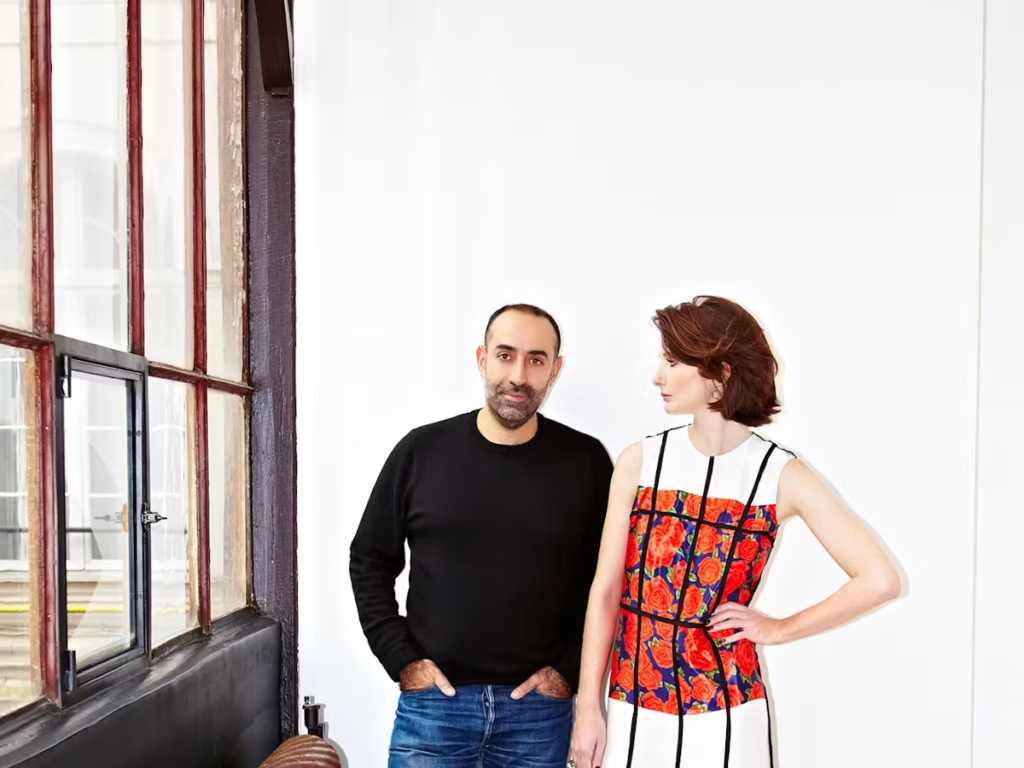
The part of Kayrouz’s work that receives the least coverage may be the most consequential. In 2008, together with Tala Hajjar, he founded the Starch Foundation in Beirut, a non-profit that helps young Lebanese designers launch and promote their debut collections. His reasoning was practical rather than philanthropic: after several years working in Lebanon, he had noticed that there were many talented couturiers but very few opportunities for contemporary designers with an adventurous spirit. “Instead of questioning why, we thought, let’s try to create a support system and off we went.”
The foundation accepts proposals from anyone working in fashion, design, architecture or any creative field, selects a cohort, and supports them for a year, providing a free platform to build a name and expand their practice. Nearly two decades on, Starch has become the most significant incubator for emerging Lebanese design talent in the country, and the clearest evidence that Kayrouz understood something about the industry’s structural problems that most successful designers never bother to address.
What the House Represents
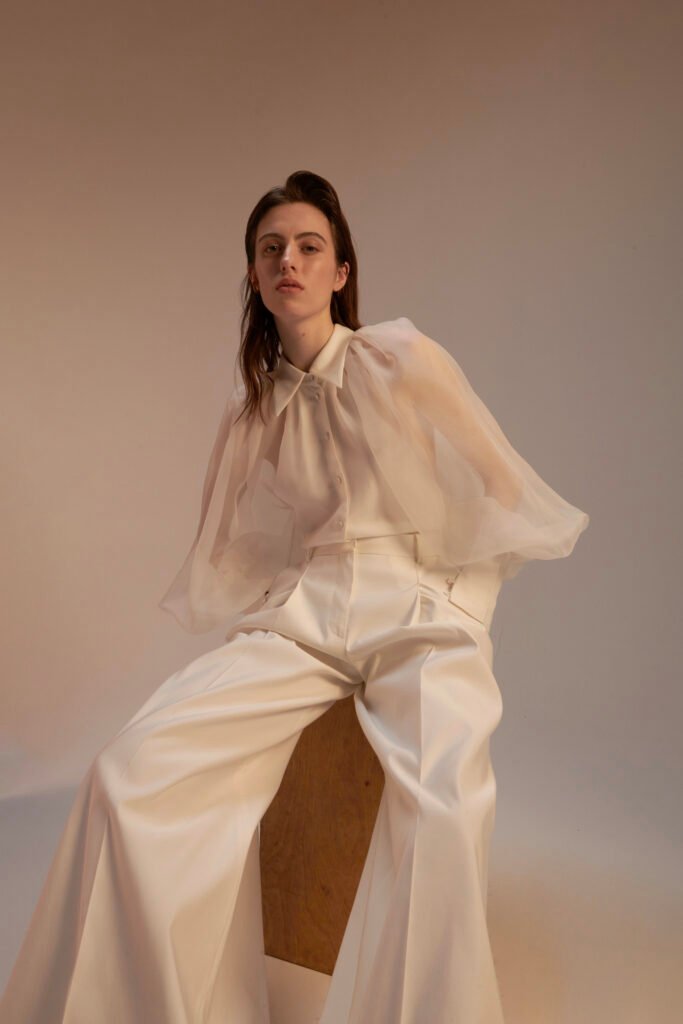
Maison Rabih Kayrouz now operates boutiques in Lebanon, Paris and London, produces four collections a year, and sits on the official Paris couture calendar alongside houses with considerably greater commercial scale. The design philosophy has never wavered: the East and the West intertwined, the oriental complexity of his upbringing meeting a personal preference for geometry, simplicity and minimalism, a dialogue between Beirut and Paris that runs through every collection the house has produced.
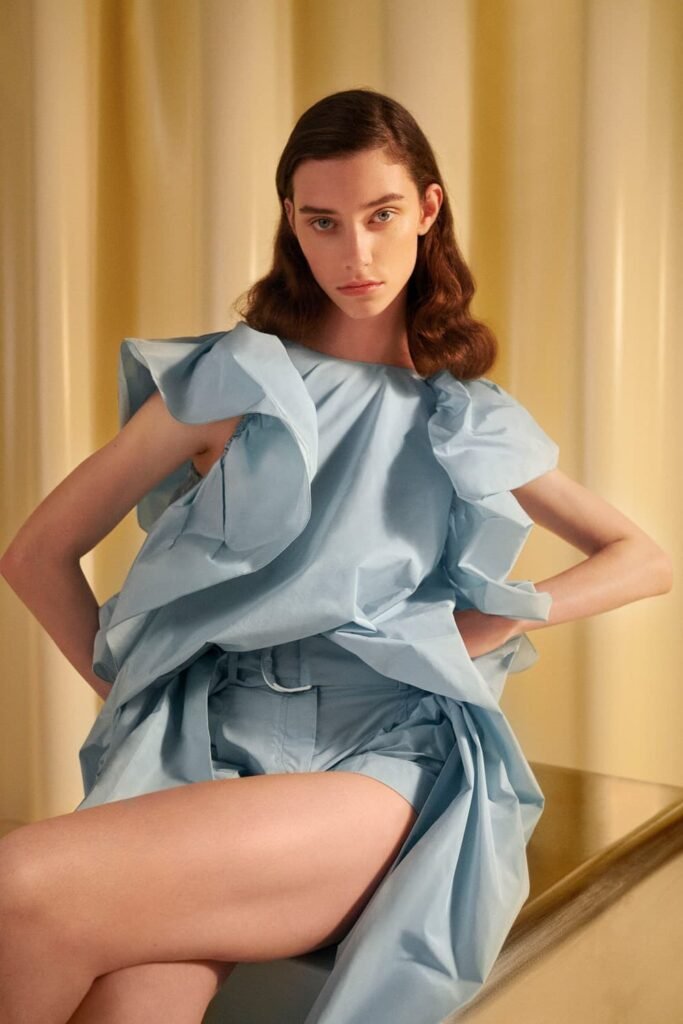
Kayrouz argued for wearable couture years before the industry moved in that direction, and the growth of demi-couture across the past decade has proven him right. He has been building the same thing since 1998, from a city that keeps forcing him to start again, and the work has held its shape through all of it.