
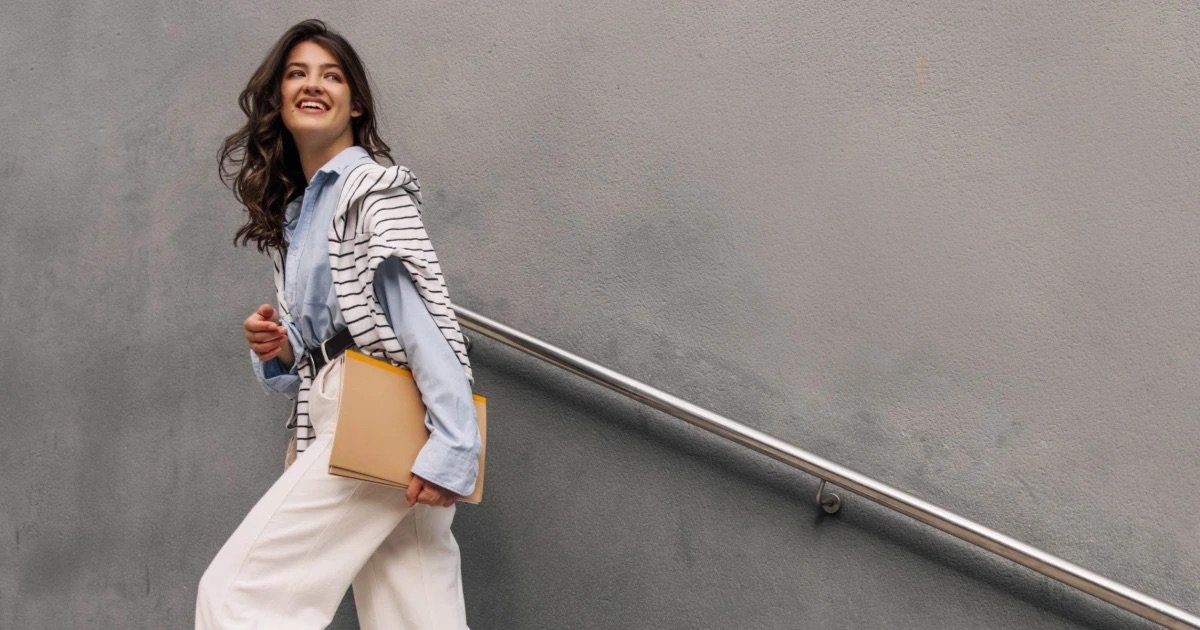
The Parisian woman has been the subject of so many magazine features, style guides, and aspirational mood boards that she has almost become a cliché, a fantasy figure invented by the fashion industry to sell trench coats and red lipstick. The reality is more interesting and more instructive than the fantasy. What Parisian style actually describes is a philosophy of dressing that prioritises quality over volume, coherence over trend-chasing, and personal confidence over external validation. The reason it has endured as a reference point for decades is not that French women possess some genetic advantage in matters of taste, but because they have developed a consistent relationship with their wardrobes that most of the world’s fashion culture actively works against.
Understanding how to achieve that relationship is more useful than any list of essential pieces, though the pieces matter too. The goal is to dress in a way that looks considered without looking laboured, that communicates personality without requiring explanation, and that holds up across seasons and occasions without needing constant replacement. That is a discipline, and like any discipline, it can be learned.
Build a Wardrobe That Coordinates

The foundational principle of Parisian dressing is coherence. French women prioritise quality and versatility in their wardrobes, selecting pieces that withstand the test of time, effortlessly blend with most things in a wardrobe, and boast quality craftsmanship, not because they are minimalists by nature, but because a wardrobe built around complementary pieces allows for effortless combinations on any given morning. Every piece should be able to work with at least three others already in the wardrobe. If it cannot, it has no business being there.
The most powerful wardrobes in 2026 are not the biggest ones; they are the most cohesive and versatile. A capsule of well-chosen pieces in a considered palette black, navy, camel, ivory, with deliberate punctuations of a single stronger colour, will produce more outfit combinations and more visual consistency than a wardrobe twice its size built around trend purchases. The French approach to colour is not about restriction; it is about intention. Wearing cherry red or emerald green works precisely because the rest of the wardrobe is disciplined enough to let it land.
Invest in Fabric Before You Invest in Silhouette

The quality of the fabric is what separates a good outfit from a great one, and it is the element that most people underestimate when attempting this aesthetic. Parisian chic favours quality materials, cashmere, silk, leather, and precision cuts over quantity, and the reason is practical as much as aesthetic: good fabric moves differently on the body, holds its shape across a long day, and photographs with a richness that fast-fashion alternatives cannot replicate. A well-cut silk blouse worn with straight-leg denim and loafers will always read more elegant than a trend-forward outfit constructed from inferior materials, regardless of how sophisticated the silhouette looks on the rack.
Natural fabrics, organic cotton and linen, are favoured over synthetic alternatives not because of a philosophical commitment to sustainability, but because they feel better, drape better, and age better. Clothes that develop character over time are more Parisian in spirit than clothes that look best the day they are purchased.
Master the Proportion Game

One of the most consistently observed principles of French dressing is the balancing of proportions across a look, and it is the one that most directly determines whether an outfit reads as effortless or simply assembled. The genius lies in the proportions: fitted on top, flowing on the bottom, or structured on the outside and relaxed underneath, always with an awareness of how the overall silhouette reads from a distance. Oversized blazers work because they are worn over something fitted. Wide-leg trousers work because they are paired with a tucked-in shirt or a close-fitting knit. The rule is not rigid, but the underlying logic is consistent: one part of the outfit should anchor the other.
In 2026, the most interesting French dressing pairs perfectly cut raw denim with a masculine jacket to create a controlled silhouette, a combination that works because each element is doing its job. The jeans provide the clean, straight line; the jacket provides the structure. Neither piece is trying to be the statement. Together they create one.
Understand the Role of the Signature Piece

Every Parisian wardrobe has its signatures, the pieces that appear across multiple outfits and function as a through-line for the wearer’s personal style. A quintessential red lip, a silk neck scarf, a passed-down jewellery piece, these are the personal touches that make a look feel individual rather than overly styled. The signature is not a uniform; it is a consistent element that tells you something specific about the person wearing it, and that communicates more about personal style than any single statement piece could.
For some women it is a particular silhouette, always a straight trouser, always a tucked shirt. For others it is a material, always leather, always linen. For others still it is a recurring colour note or a specific type of accessory. The key is that the signature is genuine rather than adopted. Wearing a red lip because Parisian women wear red lips is not a signature. Wearing it because you have worn it since you were twenty and it is simply part of how you present yourself, that is.
Do Not Dress for the Occasion. Dress for Yourself.
The most difficult aspect of Parisian style to acquire is not the trench coat or the silk blouse, both of those can be purchased. What is genuinely difficult to acquire is the confidence that makes clothes look worn-in rather than worn-for-effect. The attitude that combines unwavering confidence and authenticity is what allows Parisian women to move through the decades with constant modernity, not the specific garments, but the relationship the wearer has with them.
This means wearing a blazer to a casual dinner because you like how you look in a blazer, not because the occasion demands it. Wearing ballet flats to a meeting because they are what you reach for without thinking. Choosing the outfit that reflects how you actually want to look rather than how you think you are expected to appear. Spotting a Parisian woman in heels is a rarity; comfort always comes first, not because heels are wrong but because the choice is always made on personal grounds rather than external pressure.
The effortlessness that defines this aesthetic is not achieved by caring less. It is achieved by caring differently, about quality rather than novelty, about coherence rather than variety, about developing a genuine point of view rather than assembling one from trend reports. The wardrobe that results from those priorities tends to look, to the outside world, like it required no effort at all. That impression is the product of considerable thought, exercised consistently over time.