


Founded by sisters Fatma and Shaimaa El Alawy, the Egyptian label combines digital design, 3D printing, architectural inspiration, and playful experimentation to create sculptural accessories that challenge traditional ideas of the handbag.
A handbag is usually designed around a familiar silhouette. Mesh–Mesh prefers to question what that silhouette can become.
Founded in Cairo in 2024 by Egyptian sisters Fatma and Shaimaa El Alawy, the accessories label uses 3D printing to transform architectural references and abstract ideas into sculptural handbags. Its designs play with transparency, unusual proportions, and geometric structures, often resembling small objects of contemporary art.
The sisters bring different disciplines to the project. Shaimaa is an architect whose approach to design draws on spatial experiences and physical forms. Fatma contributes a background in marketing and a passion for fashion storytelling. Their different perspectives helped shape a brand that treats the handbag as an opportunity for experimentation rather than simply a functional accessory.

Their work has also started reaching international audiences. Mesh–Mesh designs appeared on red carpets at the El Gouna Film Festival and in the wardrobe of Lily Collins‘ character in Emily in Paris. The brand received the Cairo Design Awards’ 2025 Emerging Accessory Brand recognition and has since been named a Fashion Trust Arabia 2026 Fashion Tech finalist.
Where Architecture Meets Digital Design
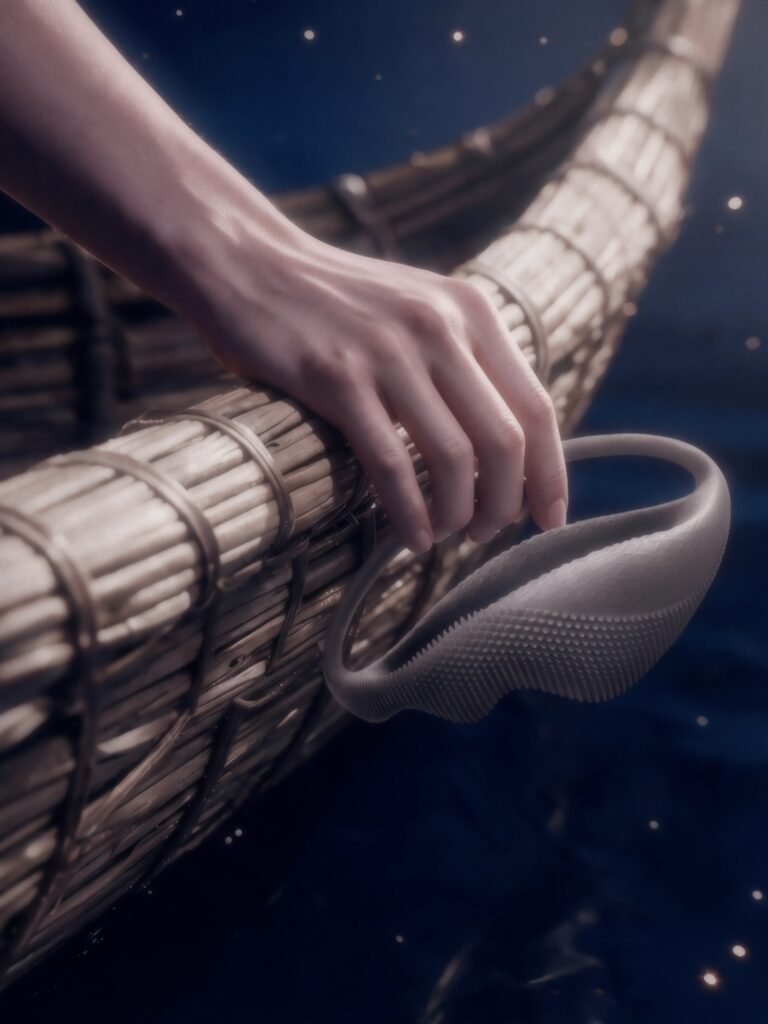
Mesh–Mesh’s debut collection, Alhambra, began with a visit to Spain’s Alhambra Palace in Granada. The sisters were drawn to its intricate architectural details, particularly the muqarnas: elaborate geometric forms that create layered, honeycomb-like patterns across ceilings and vaulted spaces.
Rather than reproducing these details as surface decoration, they translated their geometry into the structure of the bags themselves. The result turns architectural patterns into sculptural accessories that play with light, shadow, and transparency.
Their later Sarāb collection takes inspiration from a different landscape. Meaning “mirage” in Arabic, Sarāb explores the fluid curves of desert dunes and the visual illusion of an object suspended within another.
The designs contrast a more familiar inner handbag structure with an unconventional outer form. This relationship between interior and exterior creates a sense of movement, making the bags appear almost weightless.
The references are recognizable without becoming literal. Architecture and landscape provide starting points, but the sisters reinterpret them through their own visual language.
How a Mesh Becomes a Handbag

The process begins on a computer. Using computer-aided design software, the sisters develop digital forms, experiment with geometry, and refine the structures before production.
The designs then take shape through resin-based 3D printing. Light cures the material layer by layer, gradually building each object with precision. According to the brand, the process works in increments of approximately one-tenth of a millimeter.
The technology allows the founders to create intricate structures that conventional manufacturing methods would struggle to reproduce. Some designs can also emerge as a continuous printed piece rather than requiring the assembly of separate panels.
However, the process does not end when the printer finishes. Each bag receives hand-polishing, coloring, and detailed inspection. Digital production and manual finishing therefore work together, giving the pieces both technical precision and a considered final surface.
This approach also gives the brand flexibility to produce smaller quantities and experiment with new forms without committing to traditional large-scale manufacturing
Beyond the Traditional Handbag
Mesh–Mesh’s ambitions extend beyond its current collections. The sisters have discussed experimenting with flexible materials, more complex structures, and new product categories, including footwear, eyewear, jewelry, and homeware.
Their selection as Fashion Trust Arabia 2026 Fashion Tech finalists offers another platform for developing that direction. The recognition places their work within a wider regional conversation about how technology can reshape fashion design and production.
For now, the handbag remains their main canvas. Through 3D printing, the El Alawy sisters are exploring what happens when architecture becomes an accessory and digital experimentation becomes a form of self-expression.
Their work suggests that the future of fashion does not have to abandon cultural memory. Sometimes, it simply needs a different way to give it shape.