
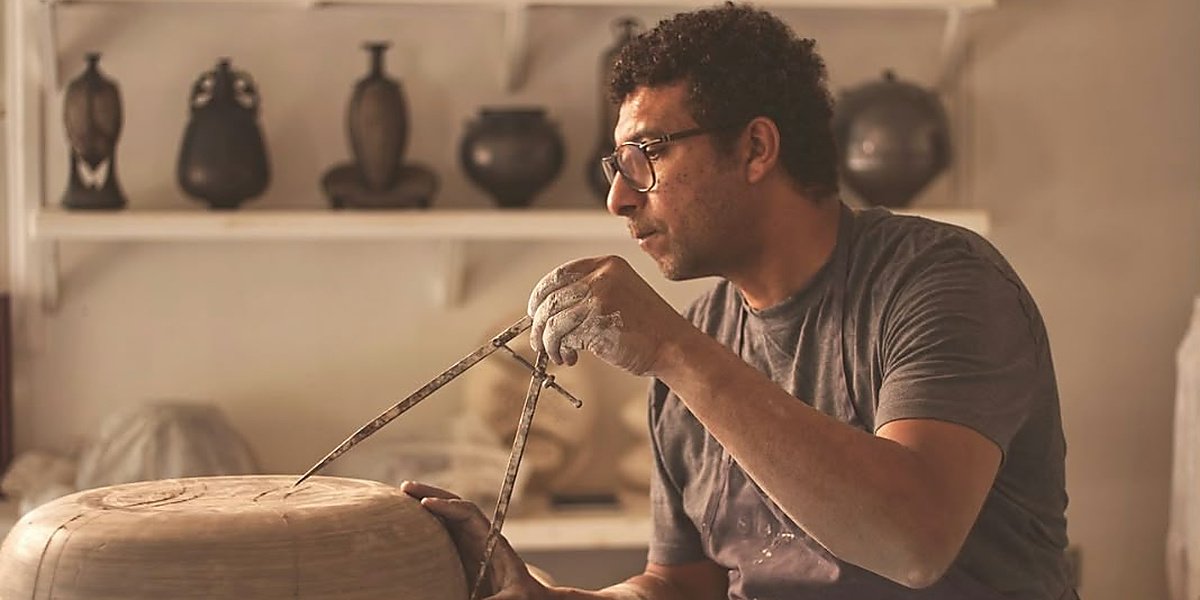
Egyptian-American ceramicist Ibrahim Said completed the inaugural Artisan Residency at The Metropolitan Museum of Art. The museum ran this initiative with Swiss watchmaker Vacheron Constantin. The Met revealed his new sculpture, Shaping Time, on October 8. Two weeks later, a solo exhibition opened at Yossi Milo Gallery in New York. The work links ancient Egyptian and Islamic design with modern craftsmanship.
As part of the program, the residents also traveled to Geneva, Switzerland. There, they immersed themselves in the ateliers of Vacheron Constantin, learning from the luxury brand’s master watchmakers and engravers. This cross-disciplinary exchange allowed Said to study how precision engineering and the manipulation of time could be translated into the medium of clay. The Met and Vacheron Constantin originally launched their cultural partnership in 2023, and this newly wrapped artisan residency stands as one of the collaboration’s flagship educational projects
An 18-Month Residency
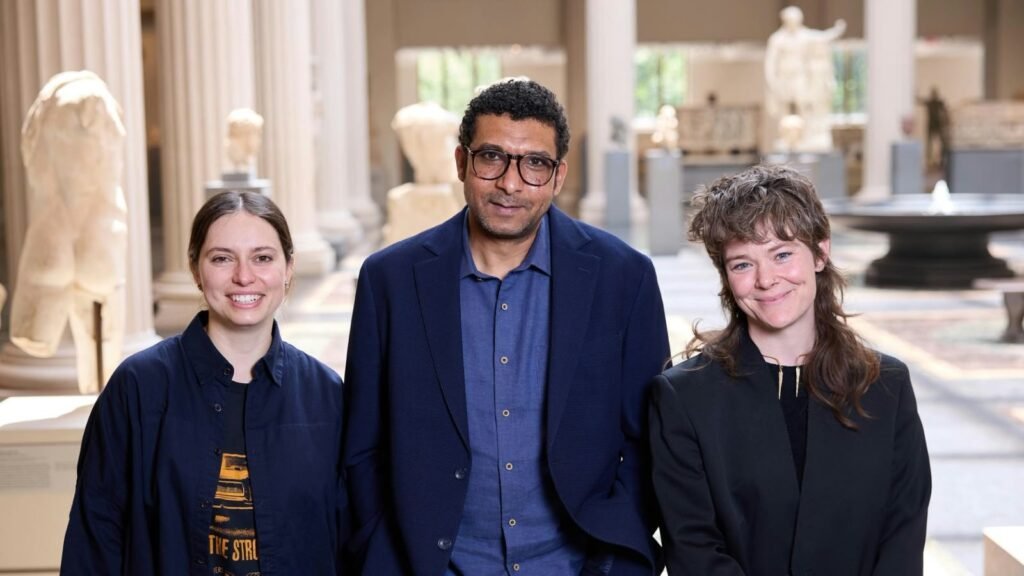
The residency ran from May 2025 to October 2026. It had three phases: research, creation, and public engagement. Said worked alongside two other artisans, woodworker Aspen Golann and goldsmith Joy Harvey. They collaborated directly with The Met’s curators and conservators. The group also traveled to Geneva to learn from Vacheron Constantin’s craftspeople. The Met and Vacheron Constantin launched their partnership in 2023. This intensive residency stands as its flagship project.
The Work: Shaping Time
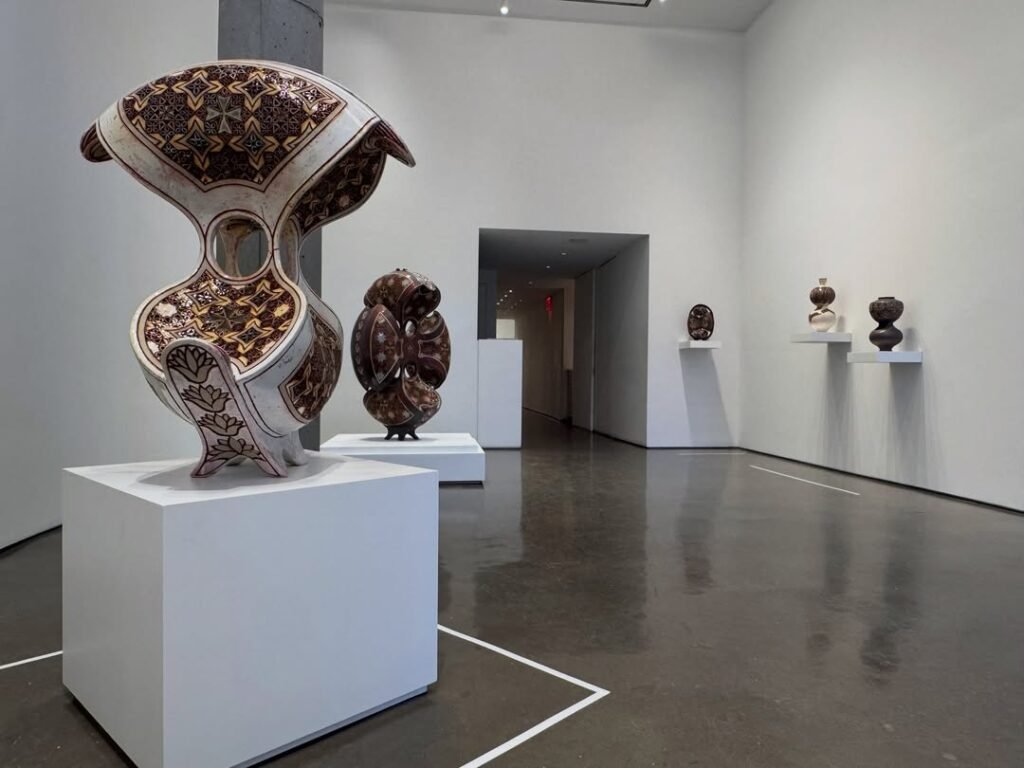
The centerpiece of this residency is Shaping Time, which is a monumental, three-tiered ceramic structure. Said modeled and engraved it using lacquered ceramic. He drew inspiration from an ancient Egyptian New Year’s flask in The Met’s collection. The sculpture combines curved forms, intricate carvings, and open patterns. These distinctive elements come from ancient Egyptian and Islamic art. As a result, the work reimagines the vessel as a layered object, not a simple container.
From Fustat to New York: A Journey Rooted in Clay
Said was born in 1976 in Old Cairo. He grew up in Fustat, a district famous for pottery for centuries. He belongs to a long family of potters. According to his gallery, his interest in clay began at age six. He started visiting his father’s workshop regularly back then.
Later, he taught himself by studying ancient pieces at the Egyptian Museum in Cairo. His work now belongs to major museum collections, including Bait al-Baranda Museum in Muscat, Oman. In 2024, he received the Maxwell/Hanrahan Award in Craft.
The New York Solo Exhibition
The solo show at Yossi Milo runs through January 9. The exhibition presents beautiful white earthenware vessels and carved plates. The gallery says Said treats time as a flexible condition. He rejects a fixed line stretching from past to future. Instead, he blends overlapping histories and imagined futures. Delta Vase (2025) shows this same creative approach.
Why Said’s Triumph Matters Globally
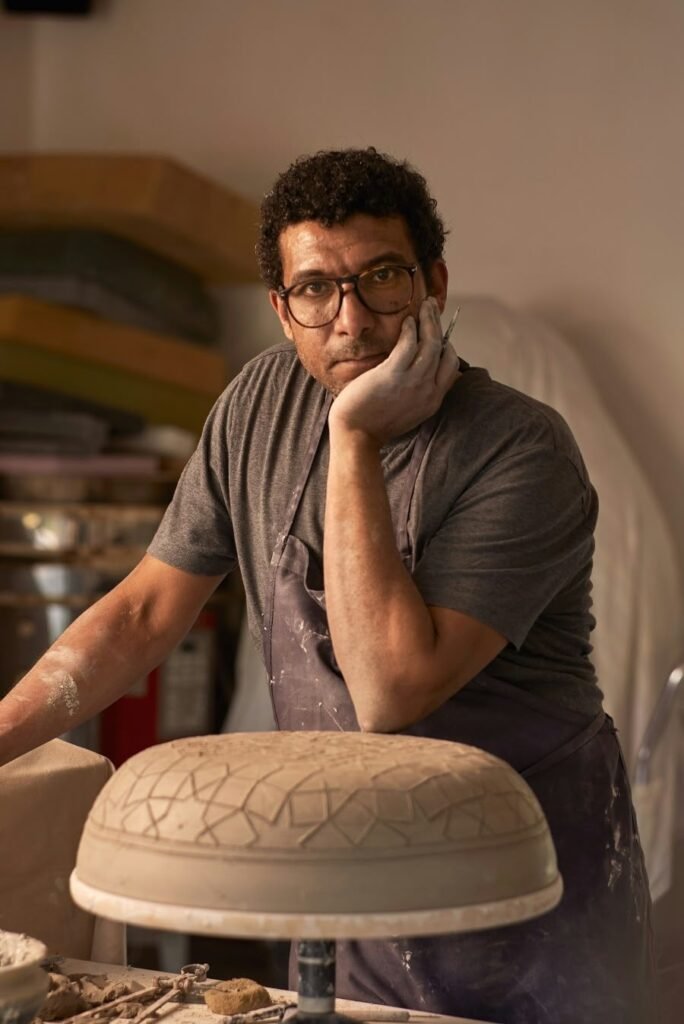
Luxury houses increasingly fund traditional craft. This project serves as a clear example. For Egyptian and Arab readers, Said’s success carries a deep meaning. It shows how local traditions can enter global museums on their own terms.
Moreover, the residency gave him total freedom to experiment, as he told GQ Middle East. His daily practice remains deeply rooted in Fustat’s vibrant pottery culture.