
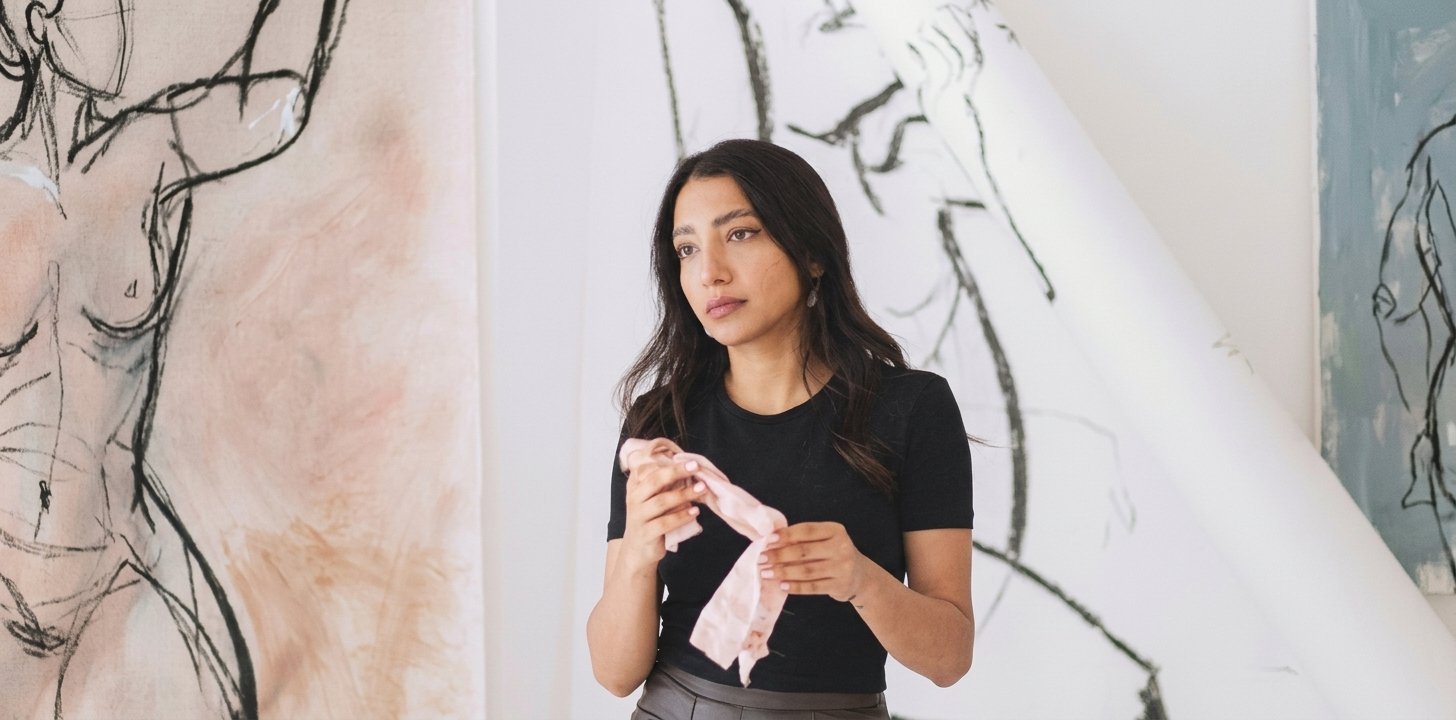
French jewelry house Boucheron has honored Emirati artist Maitha Abdalla at MENART Fair in Paris. She received the first Coup de Cœur Boucheron award for a bronze sculpture, Hug My Land. The recognition is more than a prize. It shows how historic jewelry houses are building lasting relationships with Gulf contemporary artists.
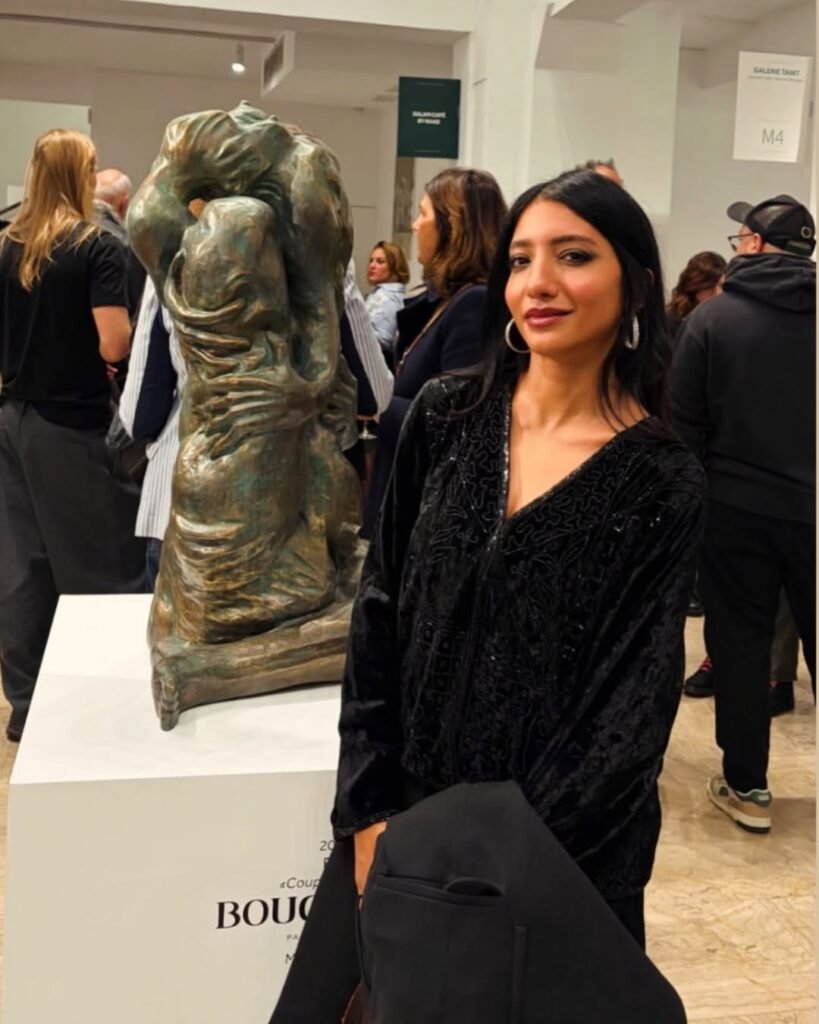
The Award and the Work
MENART Fair held its seventh edition in Paris from October 23 to 25 at Galerie Joseph, during Paris Art Week. Laure d’Hauteville founded the fair in 2021 to spotlight modern and contemporary art from the Middle East, North Africa, and their diasporas. This year’s theme was “Where Is Home?”
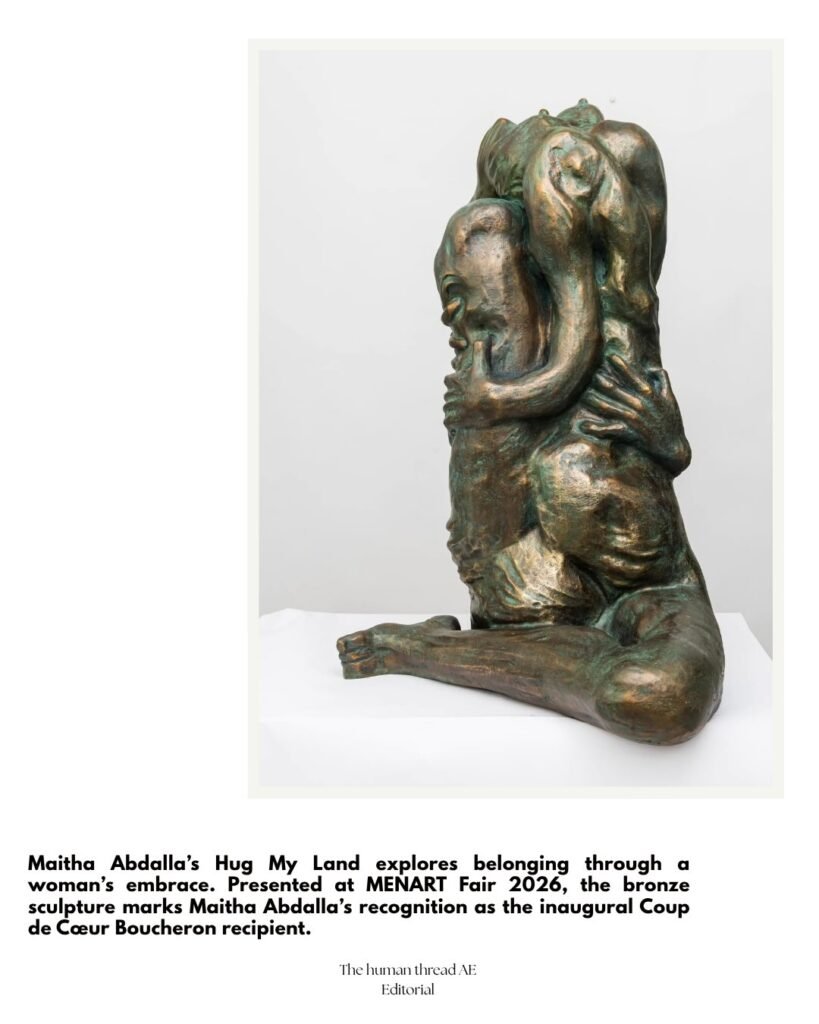
Abdalla answered that question with Hug My Land. A bronze figure folds in on itself, becoming both the person seeking refuge and the refuge itself. In other words, the sculpture treats home as something carried within the body. She is the first artist to receive the award.
Who Is Maitha Abdalla?
Abdalla was born in 1989 in Khor Fakkan and lives and works in Abu Dhabi. According to Artsy, she paints, sculpts and performs. Myths from the UAE and the region sit at the heart of her work, including stories her grandmother told her. Her distorted figures often blend human and animal features. Her work has appeared at venues including Palazzo Franchetti in Venice, the Fine Arts Society in Sharjah and the European Parliament in Brussels.
What the Prize Offers
Boucheron says the award comes with an endowment and a long-term relationship within its ecosystem. The house also presents it as part of Boucheron Curation, a new platform for artists across disciplines. According to Arabian Business, the platform offers financial endowments, residencies, production backing, and exposure in Boucheron’s boutiques and at 26 Place Vendôme. CEO Hélène Poulit-Duquesne says Boucheron gives artists total Carte Blanche. Boucheron has partnered with MENART since 2024.
Why Jewelry Houses Are Moving Into Art
The strategic shift of jewelry houses into the art world expands far beyond mere marketing. This transition is driven by three core pillars.
First, houses are transforming from traditional corporate sponsors into active creative partners. Therefore, they are moving away from simple logo placement at major art fairs. Instead, they build structured platforms that offer endowments, residencies, and direct production support.
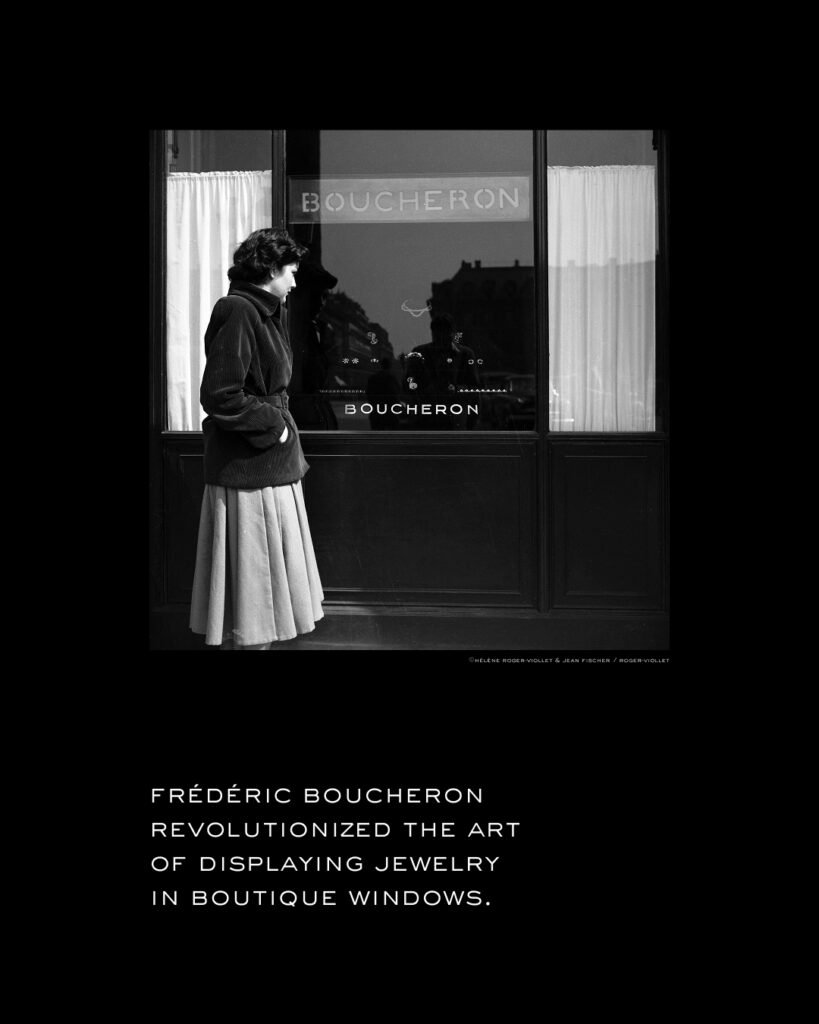
Second, this patronage is deeply intertwined with brand identity. At Boucheron, CEO Hélène Poulit-Duquesne traces this philosophy back to the house’s heritage. For instance, founder Frédéric Boucheron’s background in textiles instilled a lasting respect for artistic innovation. Consequently, supporting modern artists reads as authentic heritage rather than pure advertising.
Third, this approach directly mirrors the radical creative freedom found in workshops today. Through boundary-pushing initiatives like Boucheron’s Carte Blanche collections, designers possess total freedom. For example, they experiment with avant-garde materials ranging from NASA aerogel to unexpected industrial by-products. Ultimately, houses now extend that exact same “total carte blanche” to the contemporary artists they support.
A Wider Pattern in the Gulf
Boucheron is not alone in this field. L’ÉCOLE, School of Jewelry Arts, supported by Van Cleef & Arpels, shows research into lost goldsmithing techniques at Dubai Design Week from November 3 to 8. Richard Mille, the Swiss watchmaker, backs the Richard Mille Art Prize at Louvre Abu Dhabi. Meanwhile, Frieze Abu Dhabi opens its first edition on November 19, and the Guggenheim Abu Dhabi opens on December 11. Together, these events give luxury houses new platforms in the region.
What to Watch
The test will be continuity. A prize creates visibility, but long-term partnership builds careers. Boucheron has promised the second. If it delivers, Abdalla’s award may become a template for other houses.