

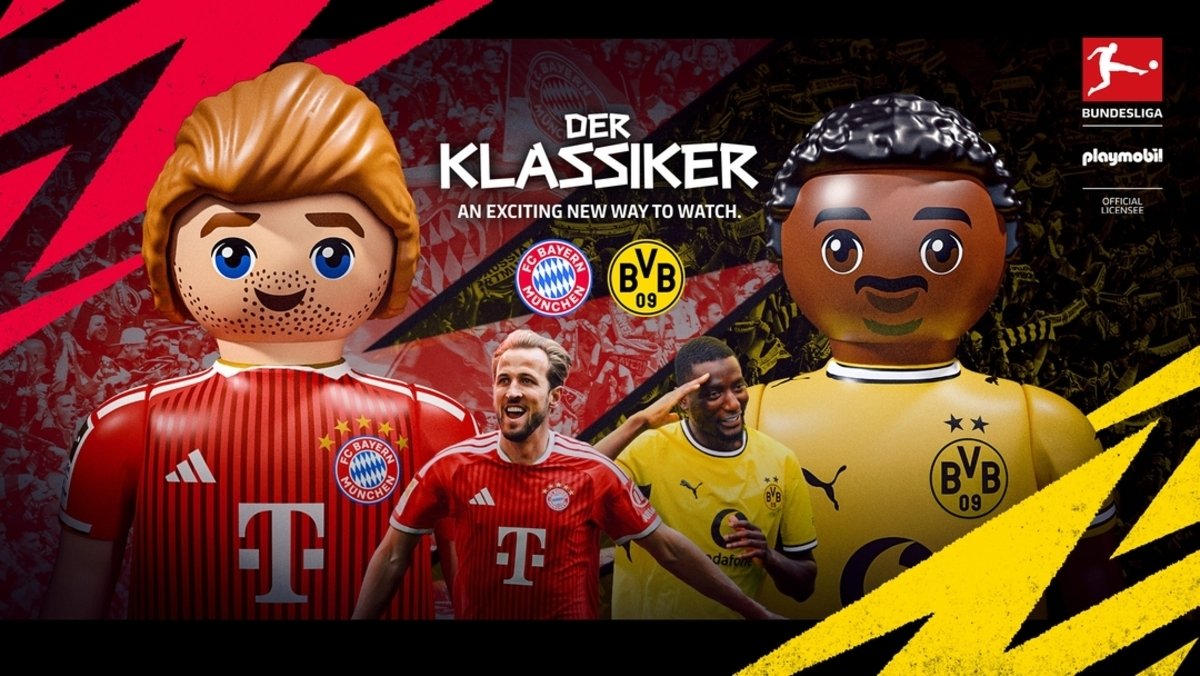
With MBC3 bringing a virtual football match to children across the region, are we making the beautiful game more accessible or turning it into another entertainment product?
Football has always brought generations together. However, introducing children to the sport sometimes requires a little creativity. This October, the Bundesliga tried something different with one of football’s biggest rivalries.
On October 31, Bayern Munich faced Borussia Dortmund in the famous Der Klassiker. Yet, viewers could follow the action through more than one screen experience. Alongside the traditional broadcast, a virtual version transformed the players into Playmobil-style characters.
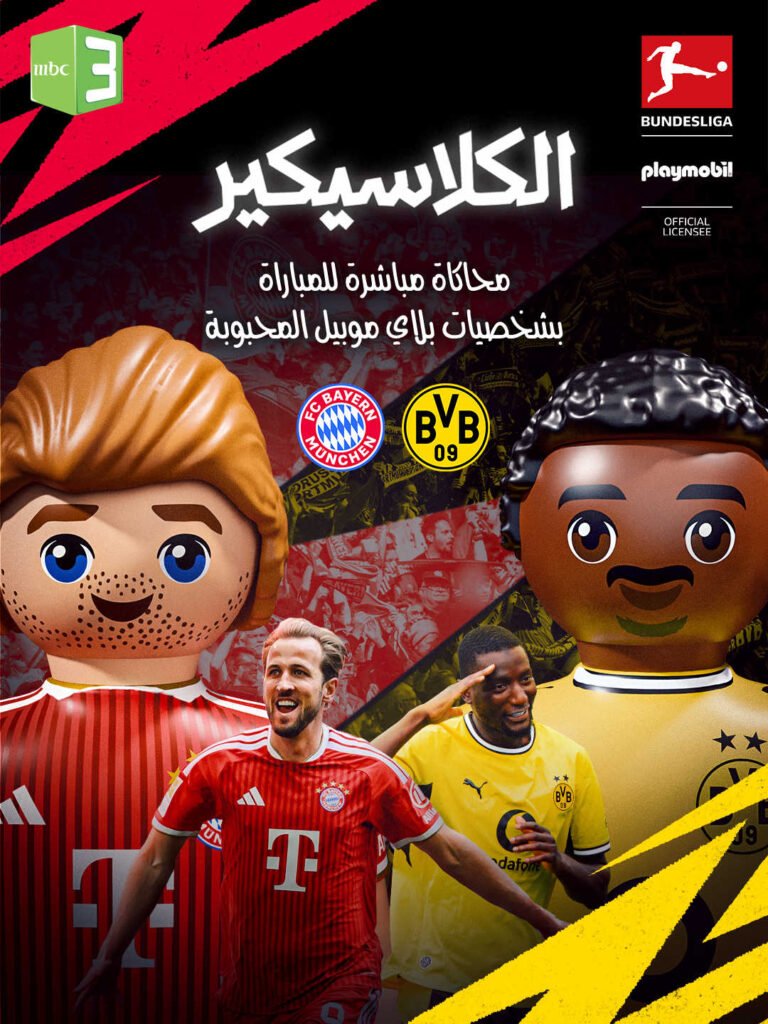
The experiment quickly found its way to the Middle East. MBC3 aired the alternative match coverage, while MBC Action carried the traditional broadcast. Children and families could also follow MBC3 through Shahid’s live channel. Egyptian commentator Essam Abdo guided younger audiences through the animated action.
But was this simply a clever broadcasting experiment, or does it signal something bigger?
Football Meets the World of Toys
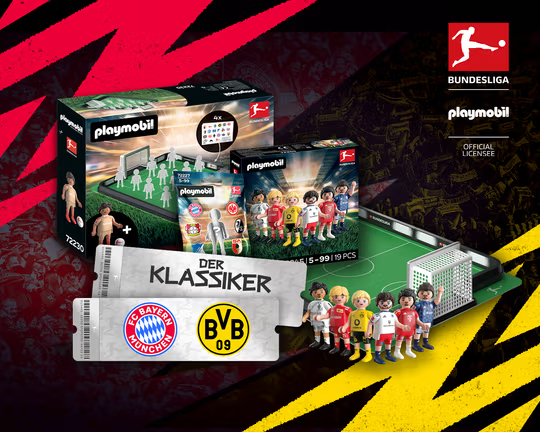
The virtual match was much more than a cartoon recreation. It used official player-tracking data to translate real movements into a digital Playmobil world.
The technology tracked 21 points across each player’s body. EA TRACAB handled the visual rendering, while AWS Cloud supported the virtual production. As a result, viewers could follow the actual match through animated characters.
The game itself ended 2–2. However, the experiment offered something beyond the final score. It presented professional football through a format that younger audiences might find more familiar.
The Case for Making Football Fun
There is an obvious appeal to this idea. Children already connect with animated characters, toys, and interactive digital worlds. Bringing those elements into football could make the sport feel less intimidating.
Moreover, the format creates an opportunity for parents to introduce football naturally. A child who initially watches for the Playmobil characters might eventually become curious about the actual players. They might start recognizing teams, understanding goals, and following rivalries.
That curiosity could become the beginning of a genuine sporting interest. After all, every football fan starts somewhere.
But Are We Turning Everything Into Entertainment?
Still, the experiment raises some interesting questions. Children already navigate a world filled with screens, games, characters, and branded experiences.
Does football really need another layer of entertainment to attract their attention? Or should we encourage children to appreciate the sport itself?
There is also the question of branding. Playmobil’s recognizable characters give the broadcast an immediate appeal. However, this raises a wider conversation about how commercial partnerships shape children’s entertainment.
When brands become part of the viewing experience, where do entertainment and marketing meet? And how much should that distinction matter when the audience includes children?
These questions deserve attention, especially as broadcasters explore new ways to reach younger generations.
So, Are You With It or Against It?

Personally, the idea has potential if it introduces children to something beyond the screen. The animated broadcast could become a gateway to watching real matches, learning the rules, and discovering different teams.
However, the real success should not depend on how entertaining the virtual world looks. It should depend on whether children become interested in football itself.
Perhaps the best approach isn’t choosing between Playmobil and traditional football. Instead, it means using one to introduce the other.
So, what do you think? Would you encourage your children to watch football through Playmobil characters, or would you rather introduce them to the real game?