
Most of the artists in this series are defined by absence, by what they left behind after death cut the work short. Dia Azzawi is different. He is 86 years old, he lives in London, and he is still working. He has been making art for over sixty years, through the fall of the Iraqi monarchy, the Ba’athist coups, the Iran-Iraq war, the Gulf War, the 2003 invasion, and everything that followed. He has watched Baghdad, the city that made him, be dismantled several times over. He painted through all of it, from exile, without stopping. He once described his own work as “part of the Renaissance of Arab Art, yet universal in its dimension and interlocked within contemporary history and culture.” That is not a boast. It is an accurate description of what the canvases actually contain.
Two Degrees and a Divided Life
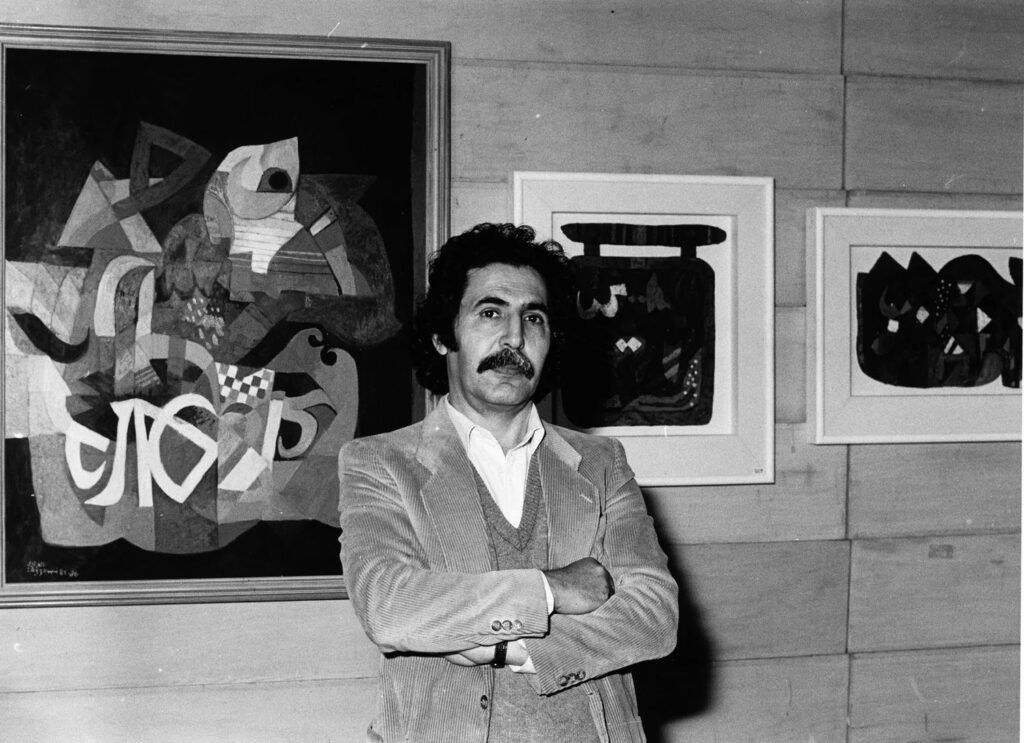
Born in Baghdad in 1939, Azzawi pursued an unusual double path from the beginning, studying archaeology at the University of Baghdad in the mornings and fine art at the Institute of Fine Arts in the afternoons, graduating from both in 1962 and 1964, respectively. Archaeology gave him a relationship with deep time, with civilisations that had already risen and fallen, with the physical residue of human history, that would shape everything he made as an artist. His work draws on ancient civilisations and Iraqi heritage, focusing on extinct languages, calligraphy, and Arab mythology, but always in dialogue with the present, never as a nostalgic retreat.
During his undergraduate years, he became involved with al-Marsam al-Hurr, The Free Atelier, a collective of Iraqi artists and creatives, and was also a member of the Baghdad Group for Modern Art, founded by Jewad Selim. He was learning from the generation that came before him while already forming the ideas that would make him distinct from it. From 1966 to 1973, Azzawi served as a reservist in the Iraqi military, where he witnessed atrocities that would fundamentally shape his artistic conscience. Through this experience, he learned that he needed to speak for those who had no voice. That commitment, to art as testimony, to painting as a moral act, became the spine of his practice.
The New Vision Manifesto
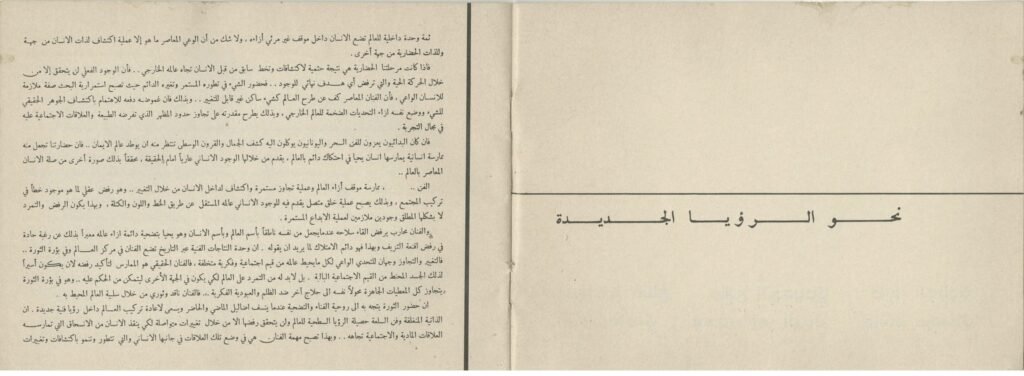
The aftermath of the crushing defeat of the 1967 Arab-Israeli War had a profound impact not only on the region but on Azzawi’s creative vision, eventually leading to his penning of the Towards the New Vision manifesto in 1969, advocating for Arab unity across cultural spheres under the belief that art held the power to transcend failed political efforts. He formed the art group New Vision with contemporaries Rafa Nasiri, Muhammad Muhyiddin, Ismail Fattah, Hashem al-Samarchi, and Saleh Al-Jumaie. The distinction the group drew was important: New Vision sought to unite artists around issues of ideology and culture rather than style and technique. It was a deliberate rejection of the idea that a movement needed a shared aesthetic; what mattered was a shared commitment to the Arab world’s political and cultural realities. Azzawi took up the Palestinian cause explicitly, using his platform to raise awareness about issues affecting the broader Arab community.
The Visual Language
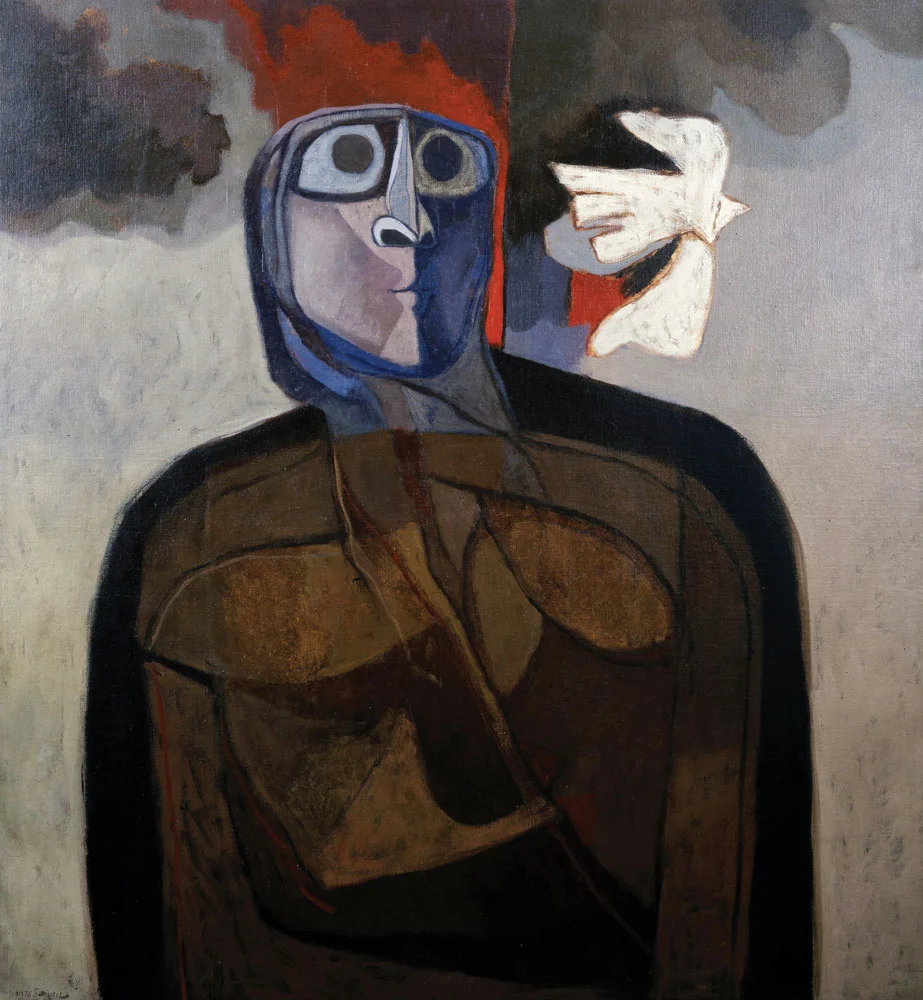
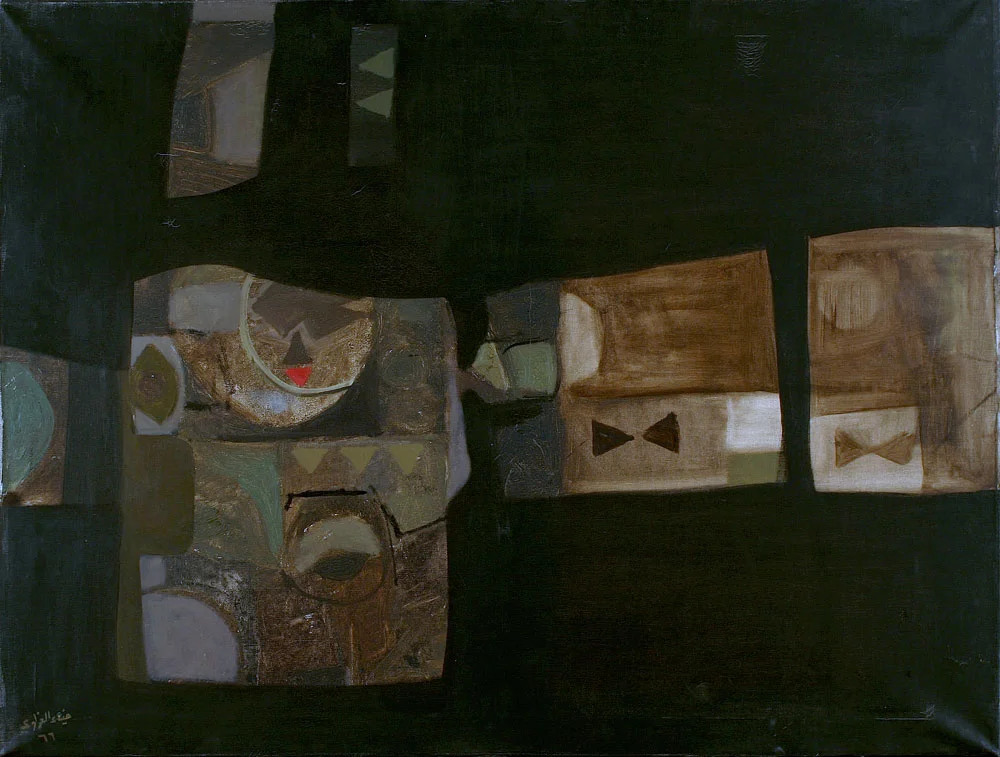
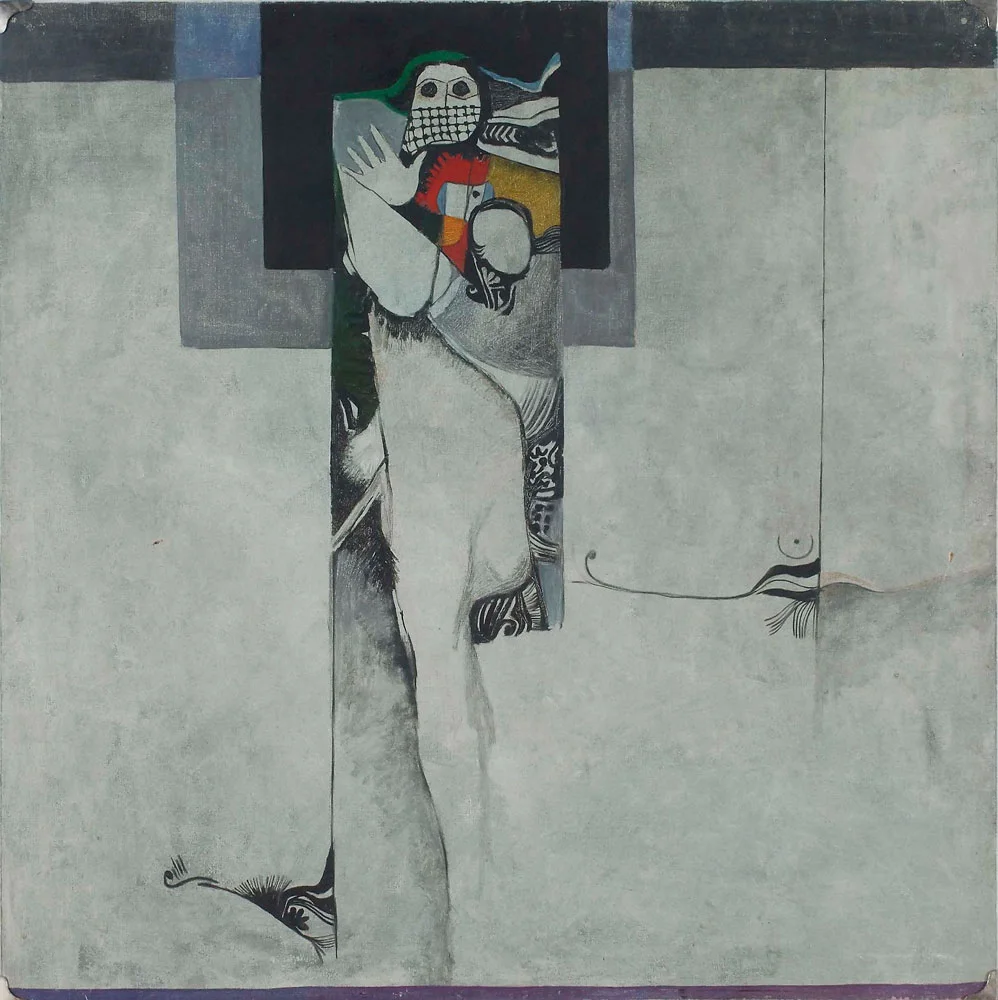
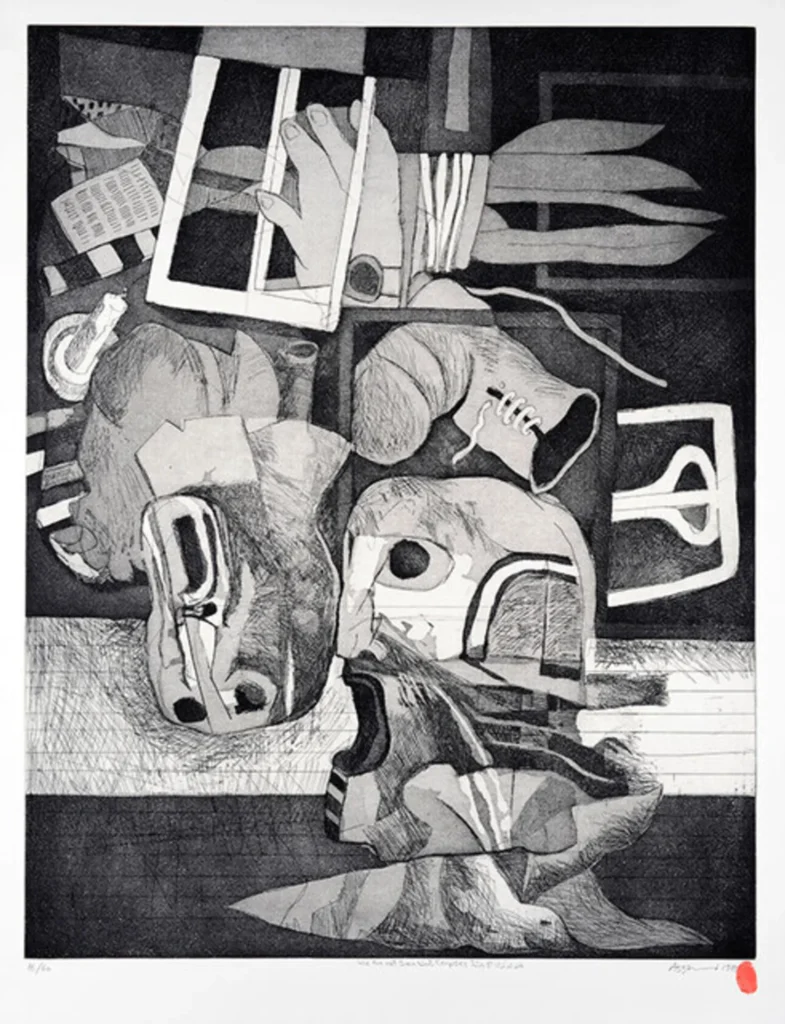
Azzawi’s paintings incorporate calligraphic script, muted and sandy colours, and elements inspired by Iraq’s folklore and history. His work is noted for its refusal to be reduced to a single cultural style; despite the Arabic and Western influences in his life, his art is non-reducible in this way. He works across painting, sculpture, prints, drawings, and book art, with an acute understanding of antiquity and cultural heritage evident in works that capture historical moments, often on a monumental scale, carrying through an awareness of human suffering and turmoil.
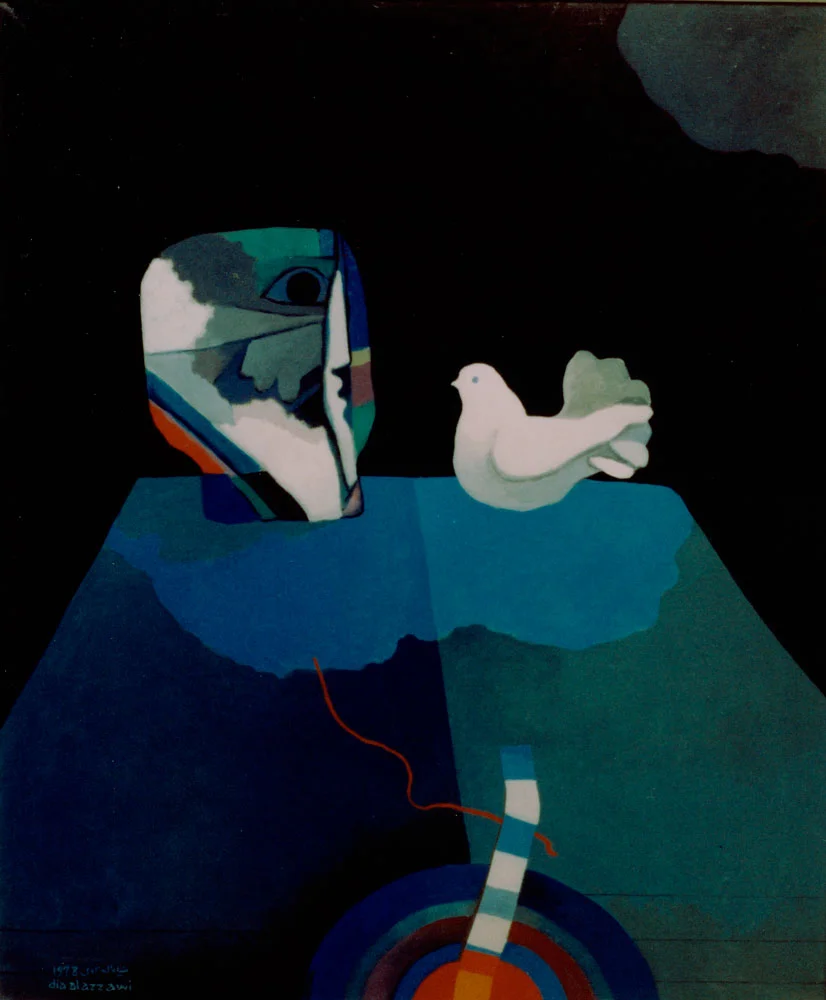
His early work drew directly from Sumerian and Babylonian visual culture, figures fragmented and reassembled, symbols of ancient Mesopotamia rendered in contemporary abstraction. As his career developed, the palette shifted, and the references widened, but the underlying argument remained consistent: that Iraqi and Arab visual heritage is not a historical artefact but a living resource, one that speaks directly to the present because the present has never fully escaped the weight of that past.
Sabra and Shatila: The Work That Defined a Generation
In September 1982, militias entered the Palestinian refugee camps of Sabra and Shatila in Beirut and murdered between two and three thousand civilians over three days. When news of the slaughter reached Azzawi in London, the Iraqi artist known for his interpretations of war felt compelled to speak on behalf of those who could no longer speak for themselves.
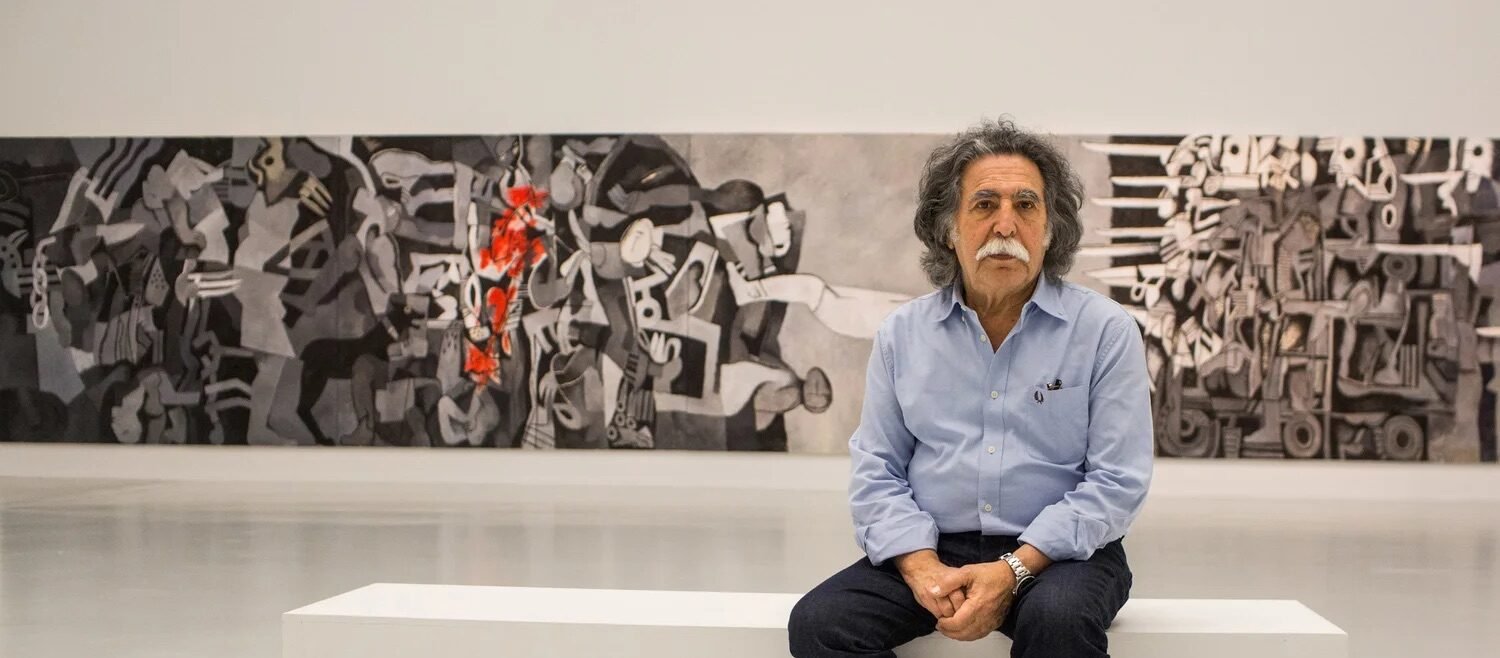
The original drawing on paper, executed with ballpoint pen, pencil, and wax crayon across four large panels, depicted densely packed figures of body parts, animal images, and domestic elements. Azzawi deployed a cubist approach: obliterated human figures broken into geometric fragments and depicted from multiple viewpoints simultaneously, creating a fractured appearance that emphasised the flatness of the picture and made the horror impossible to organise into a coherent narrative. The work was not illustrative. It was structural. Azzawi described it as “a manifesto of dismay and anger.” Areas of white, where the eye would normally rest in a monochromatic composition, become corpses. He was also moved by Jean Genet’s “Four Hours in Shatila,” a written dispatch from the site of the massacre, and the resulting work shares Genet’s refusal to allow the reader any escape from what is being shown.
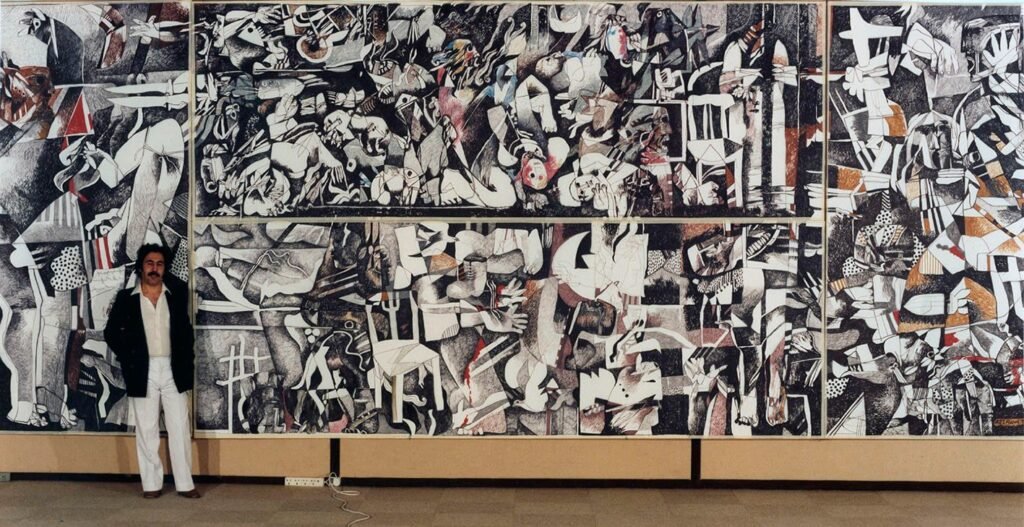
The original Sabra and Shatila Massacre was acquired by Tate Modern in 2012. By then, three decades after its execution, the paper had become fragile and light-sensitive, making it difficult for the museum to exhibit regularly. In 2014, with the artist’s approval, the late Dr. Ramzi Dalloul commissioned a tapestry version, entrusted to the historic Real Fábrica de Tapices in Madrid, completed between 2014 and 2018 as a means of preserving the work’s presence for future generations. The original is in Tate Modern. The tapestry travels. The work endures.
Exile and Continued Presence
Azzawi moved to London in 1976, where he worked as an art consultant at the Iraqi Cultural Centre between 1977 and 1980. He was the inaugural editor of the magazine Ur from 1978 to 1984, a provocative journal published by the Iraqi Cultural Centre in London. He has lived in exile for nearly fifty years, longer than most of the artists in this series were alive. That displacement is itself part of the work. The distance from Baghdad did not produce nostalgia in his canvases. It produced urgency.
He has exhibited extensively in the Middle East, North Africa, the United States, India, Brazil, and Europe, including a retrospective at the Institut du Monde Arabe in Paris in 2002. His work sits in the permanent collections of the Tate Modern, the British Museum, Mathaf in Doha, the Barjeel Art Foundation in Sharjah, and major institutions across the Arab world and Europe. He received first prize at the International Summer Academy in Salzburg in 1975, first prize at the First Arab Contemporary Art Exhibition in Tunis in 1981, and the Jury Prize at the International Cairo Biennial in 1992.
He is still in London. He is still working. The canvases are still carrying the weight of everything that happened, in Baghdad, in Beirut, across a region that has never stopped producing material for an artist who committed his life to bearing witness. That commitment has not wavered in six decades. It is unlikely to waver now.