
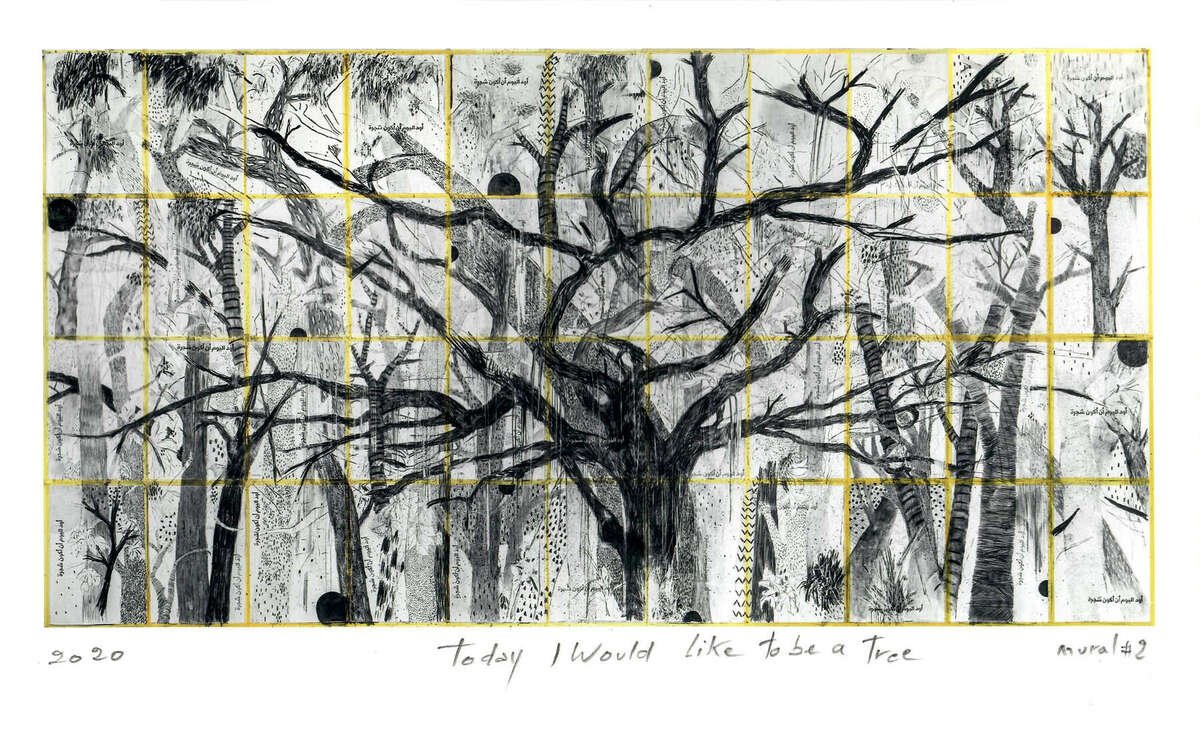
Through a collective art project led by Lebanese artist Abed Al Kadiri, more than 1,000 displaced children are transforming their drawings into an artistic archive of memory, imagination, and belonging.
A long sheet of white paper can hold an entire world. In Lebanon, artist Abed Al Kadiri has invited displaced children to draw the things they remember, miss, and imagine. Their drawings now form the fourth edition of Today I Would Like to Be a Tree, titled 1,000 Houses of Paper.
The mobile program began in March 2026. It reached children in public schools, collective shelters, and community spaces across Lebanon. More than 1,000 displaced children have participated, creating around 180 meters of drawings. The work now appears in concertina-style artist’s books, known as leporellos, at Beirut’s Nuhad Es-Said Pavilion for Culture.
A Space to Draw, Not a Lesson in What to Feel
Each workshop begins with conversation and storytelling. Children then gather around a continuous roll of paper and draw together. The sessions do not ask them to produce a correct picture or follow a fixed theme. Instead, they offer room for expression within a shared activity.
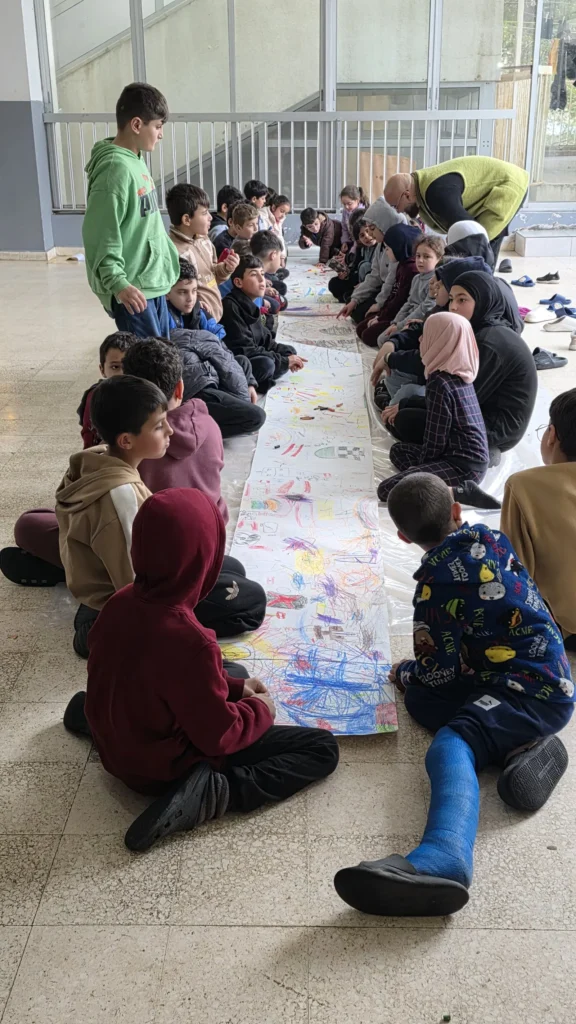
The drawings often feature homes, trees, landscapes, flowers, birds, and Lebanese flags. These subjects do not erase displacement. Rather, they show what children choose to bring into their pictures: memories, places, and possibilities.
Al Kadiri calls this approach a “safe white space.” In an interview with Vogue Arabia, he described it as a space for children to express sadness, pain, joy, and dreams. Each participant also receives drawing materials, a sketchbook, and colors to continue creating after the session.
From Collective Drawings to Artists’ Books
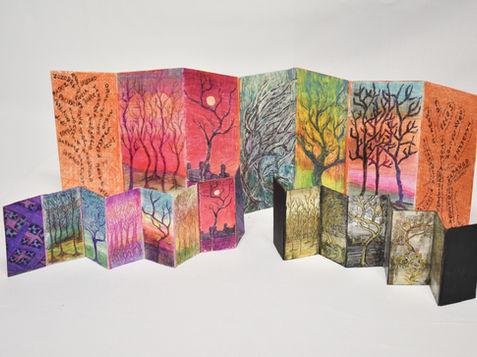
The latest phase turns the children’s drawings into leporello books. Each book preserves the original sequence of marks on one side. Invited artists respond on the reverse, creating a dialogue without covering the children’s work.
The exhibition features 22 artists, including Nabil Nahas, Dia al-Azzawi, Fatima El Hajj, Marwan Rechmaoui, Lamia Joreige, and Akram Zaatari. The format connects the children’s drawings with established contemporary practices while keeping their contributions intact.
For Al Kadiri, the project builds on a longer relationship between art, memory, and repair. The first edition emerged after the Beirut port explosion on August 4, 2020. His exhibition at Galerie Tanit had been buried beneath the gallery’s rubble. In response, he created two murals from 80 cardboard drawings, honoring architect Jean-Marc Bonfils, who died in the blast. Proceeds helped repair around 50 nearby homes through the Lebanese NGO Bassma.
Later editions continued that conversation. In 2023, The Red Olive Tree appeared in Paris. In 2024, Lebanon Valley brought drawings of villages in southern Lebanon and the Beqaa to Doha.
An Exhibition With a Wider Purpose
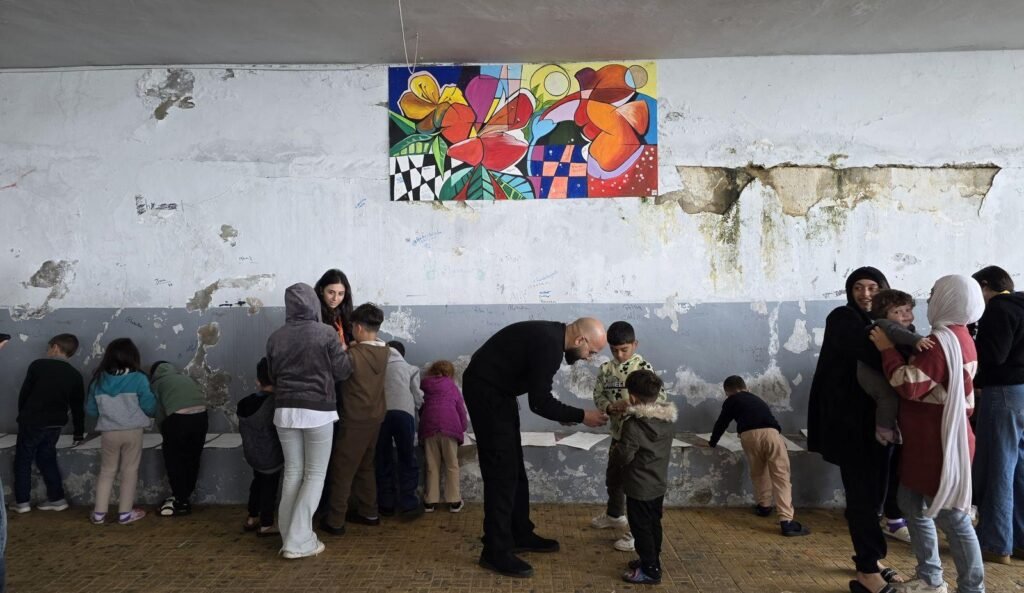
The current exhibition runs at Beirut’s Nuhad Es-Said Pavilion until December 1, 2026. It opened on November 11 at the National Museum of Beirut. An online auction will also offer the artists’ books.
Proceeds will support the Lebanese organizations Azahir and Bassma. Both organizations work to provide education and psychosocial support for children affected by war. The European Union and Lebanon’s Ministry of Culture also co-fund part of the project through the Culture for All program.
The title 1,000 Houses of Paper does not describe a literal count of houses. Instead, it points to the scale of participation and the recurring image of home within the drawings.
Across 180 meters of paper, the children have created a record of what they choose to remember, share, and imagine. Paper cannot replace what displacement takes away. However, it can hold space for their voices and carry them beyond the places where they first gathered to draw.