
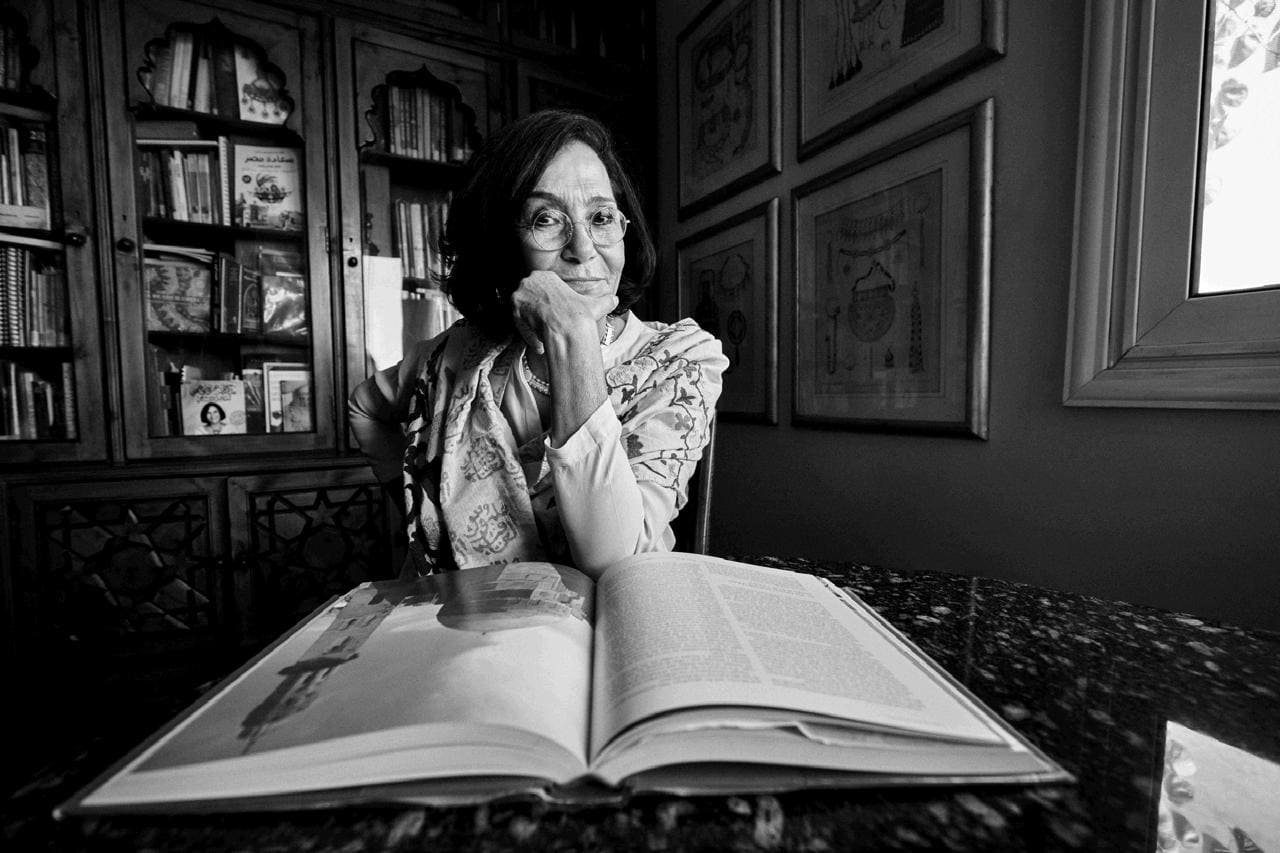
In 1969, a young Egyptian woman named Azza Fahmy came across a book on medieval European jewellery. It was written in German, which she did not read, and it was expensive, more than she could easily justify spending. She bought it anyway, describing the moment later as “like the light at the end of the tunnel.” She had just completed a degree in interior design at Helwan University and was preparing for a second degree in applied arts. The book changed the trajectory of everything. She took it to Khan El-Khalili, Cairo’s ancient jewellery quarter, found the best goldsmith in the bazaar, a master craftsman named Hajj Sayyed, and asked him to teach her. He agreed. She was the first woman ever to apprentice in that district. She wore $20 overalls from Sears Roebuck to protect herself from acid burns, tied her hair back, and learned her trade from the ground up. The manual labour eventually obliterated her fingerprints. The work was worth it.
That apprenticeship in Khan El-Khalili is not a founding mythology constructed after the fact; it is the literal origin of everything Azza Fahmy Jewellery has become across more than five decades of continuous operation. The house draws its design language from over 7,000 years of history, with each piece handcrafted in gold and silver and detailed with intricate calligraphy, symbolic motifs, and semi-precious gemstones. The connection between the craftsman’s bench and the finished piece has never been severed, and it remains the clearest distinction between Azza Fahmy and every imitation of what she built.
Building the House
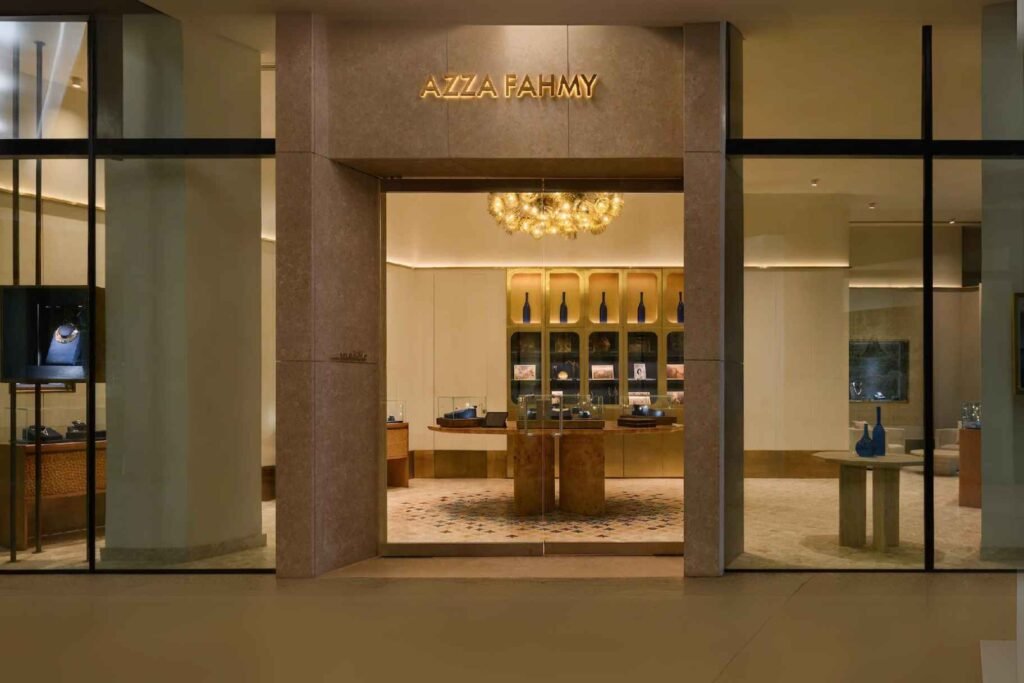
Azza Fahmy opened her first store in 1981, working initially with two employees out of a small apartment in Bulaq, a modest district in central Cairo. For twenty years, she did almost everything herself, designing, making, selling, and building the brand through sheer accumulation of work rather than through investment or institutional support. The signature she developed in those years was specific and immediately identifiable: a combination of 18-karat gold and sterling silver used together, creating a contrast that had not previously been seen in Egyptian jewellery. The stones, turquoise, amethyst, diamonds, and others, were handpicked for each collection. A collection usually takes from six to eight months to create.
The design sources she drew from were deliberately wide: Arabic poetry, Bedouin art, calligraphy, ancient Egyptian architecture, Ottoman floral embroidery, Pharaonic symbolism, Nubian vernacular design, with each collection built around a specific period or tradition that Fahmy researched in depth before a single piece was sketched. The Pharaonic collection launched in 2012 after over ten years of development, commemorating years of researching every symbol and every story. A collection based on Nubian architecture, Houses of the Nile, produced a ring in the image of a mud house, with steps and a stone representing the lake. Her comment on it captured the brand’s entire philosophy: “The beauty of this collection is that most people never thought of wearing mud houses, Azza Fahmy did.”
The Family and the Future
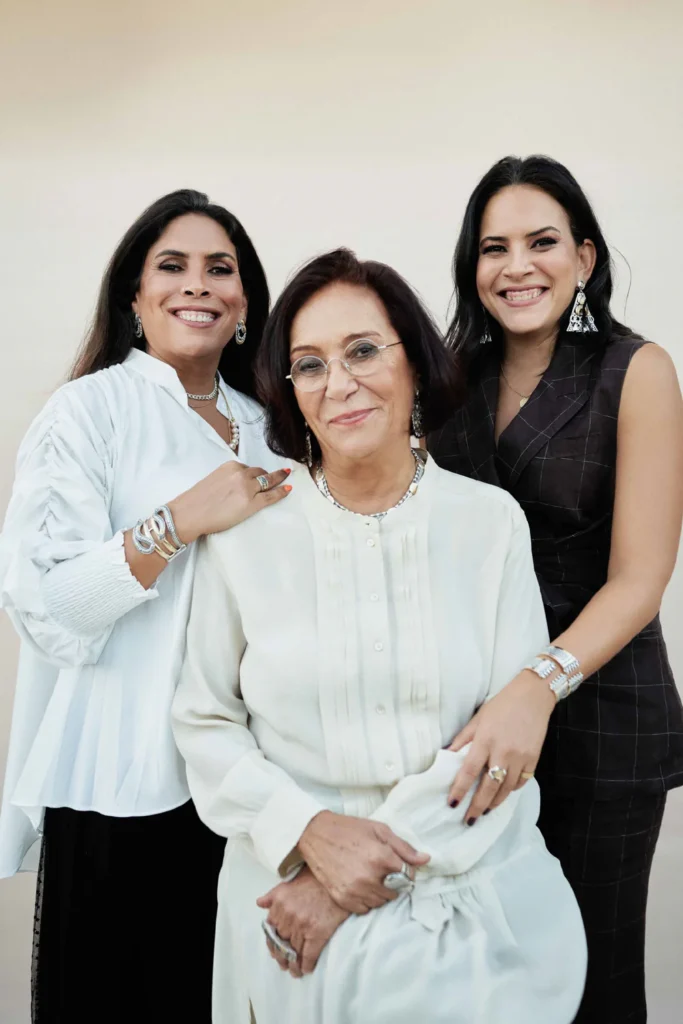
The brand has always been family-owned and female-led. Azza Fahmy’s daughters, Fatma and Amina, are at the helm of the company alongside their mother, with Amina serving as head of design, overseeing a design team that operates within the same research-driven framework the founder established in 1969. Amina handpicks the stones from India for each collection. The feminine sensitivity that runs through the house’s design philosophy is not a marketing position; it is a structural reality, the product of three generations of women making decisions about what Egyptian jewellery should look like and what it should mean.
The brand today employs around 250 people, including 100 craftsmen, operating across seven stores in Cairo alongside an international presence. It has been available at the British Museum in London, for which Azza Fahmy created a custom collection in 2012 based on historic reflections on Islamic pilgrimages to Mecca, and has a boutique at the Grand Egyptian Museum, where the house unveiled an Ancient Egyptian retrospective at the GEM’s inauguration, transforming the space into an immersive experience of the brand’s deep-rooted connection to ancient heritage.
The School
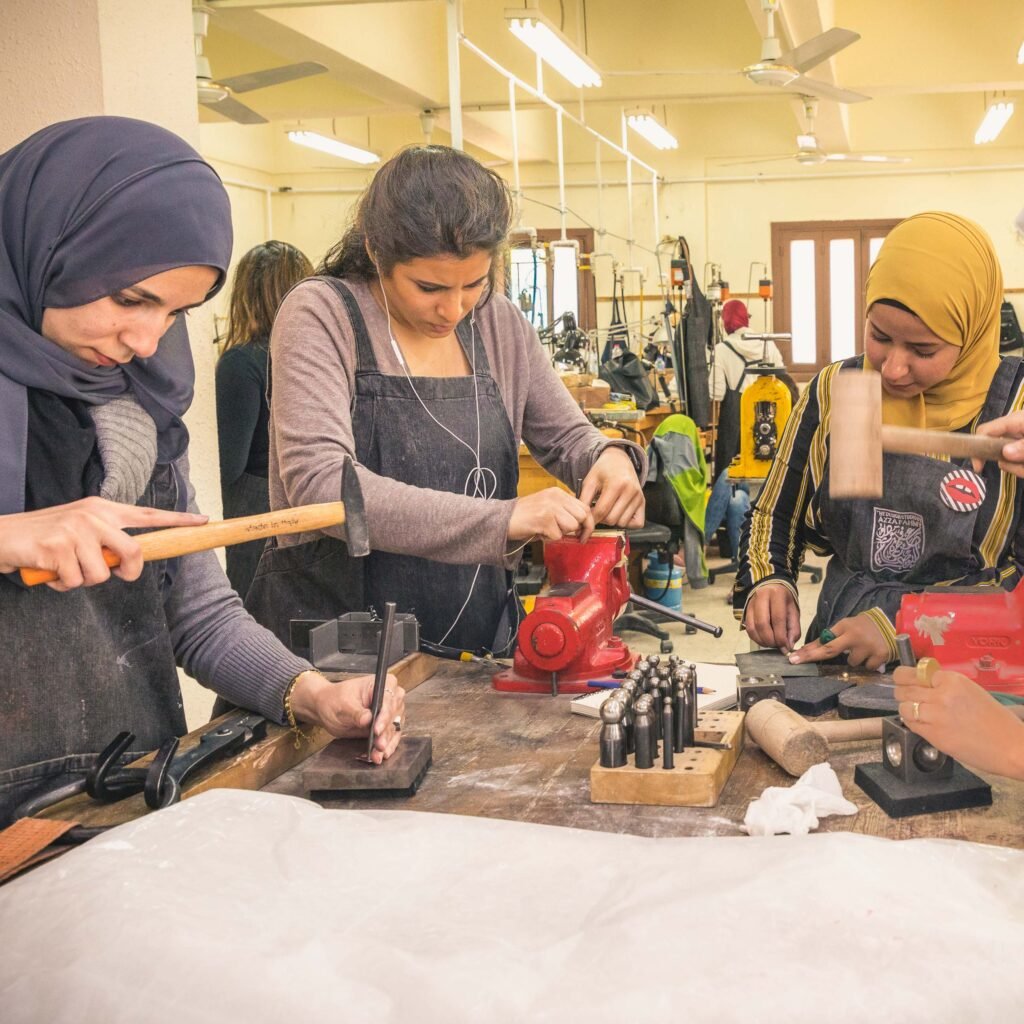
In 2013, Azza Fahmy founded The Design Studio by Azza Fahmy in Cairo, in partnership with the Alchimia Contemporary Design School in Florence, establishing what is recognised as the first and only professional jewellery-making and design school in Egypt and the wider region. The school offers a two-year course teaching both design and technique, with each student working at their own bench with their own tools, learning not only conceptual approaches but the physical skills required to produce finished jewellery to an international standard. Short courses are offered in Cairo and across the Middle East. The school is both a commercial investment in the brand’s supply of skilled craftspeople and a cultural commitment to ensuring that the techniques Fahmy learned in Khan El-Khalili in 1969 survive into the next generation of Egyptian jewellers.
What the House Represents
Fifty-five years after a woman who could not read the language bought an expensive German book and walked into a gold bazaar where no woman had apprenticed before, Azza Fahmy Jewellery stands as the leading luxury jewellery house in the Arab world, internationally distributed, institutionally recognised, and still entirely independent. The design language she established across five decades, Arabic calligraphy rendered in silver, ancient Egyptian motifs translated into wearable form, the history of a civilisation carried on the wrist and at the neck, has influenced an entire generation of Egyptian and Arab jewellery designers, including those who graduated from the school she built to ensure the craft would outlast her.
There are brands in the Arab world that have grown faster, attracted more investment, and achieved more viral visibility. Very few have built something as durable, as deeply sourced, and as genuinely grounded in the country that made them. Azza Fahmy went to Khan El-Khalili with a book she could barely afford and a question about what Egyptian jewellery could be. The answer, built piece by piece across more than half a century, is one of the most significant design legacies this region has produced.