
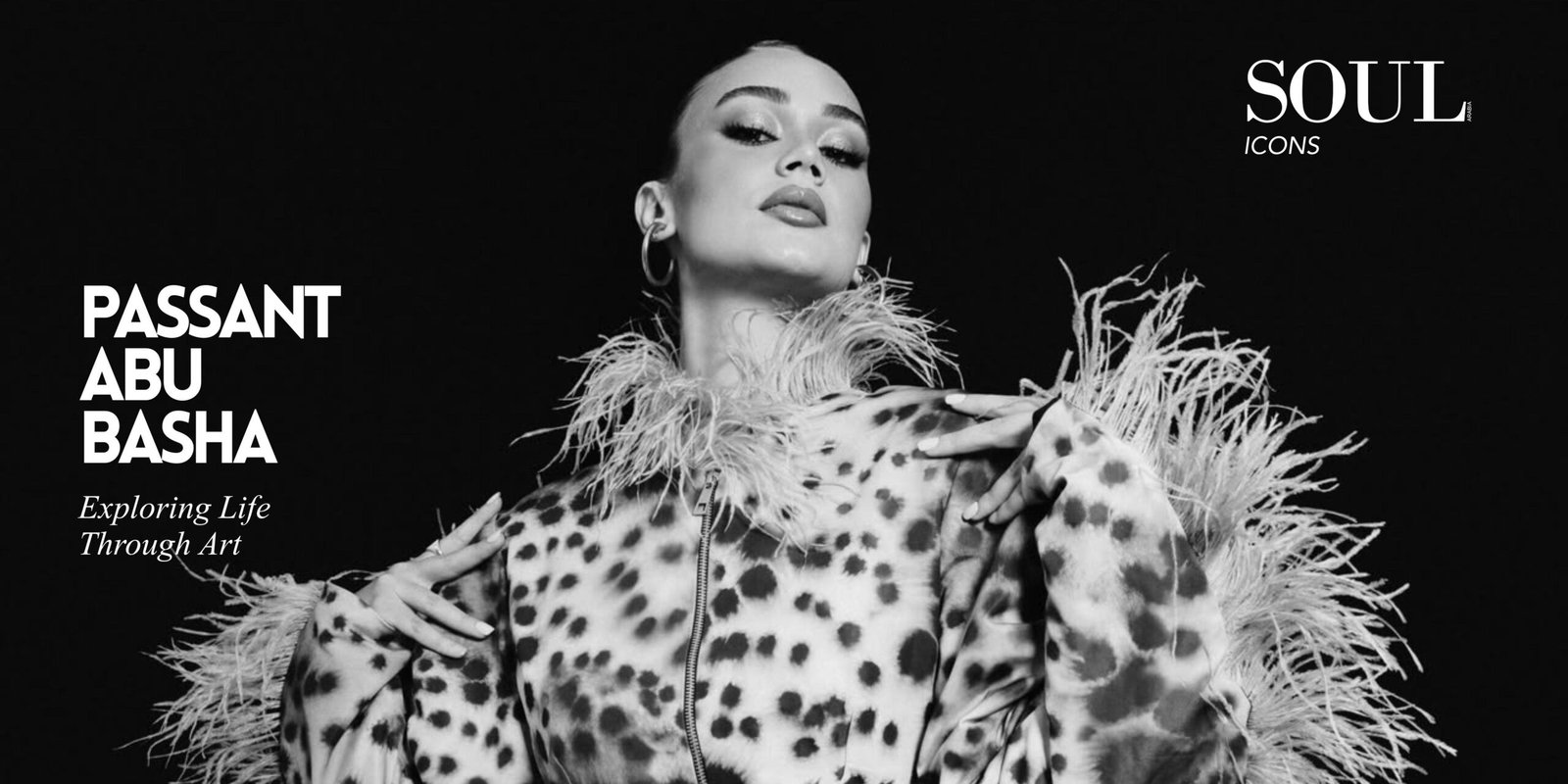
Some lives are built around finding one place to belong. Others are shaped by the courage to keep discovering new ones. For Passant Abu Basha, the stage has always offered that possibility. First through the graceful discipline of ballet, and later through the endless possibilities of acting, she has found different ways to express herself, understand others, and explore lives beyond her own.
Perhaps the most fascinating thing about acting is that it allows a person to become someone else without losing themselves entirely. It invites them to borrow another person’s fears, emotions, and experiences, even if only for a little while. For Abu Basha, this is precisely where its beauty lies.

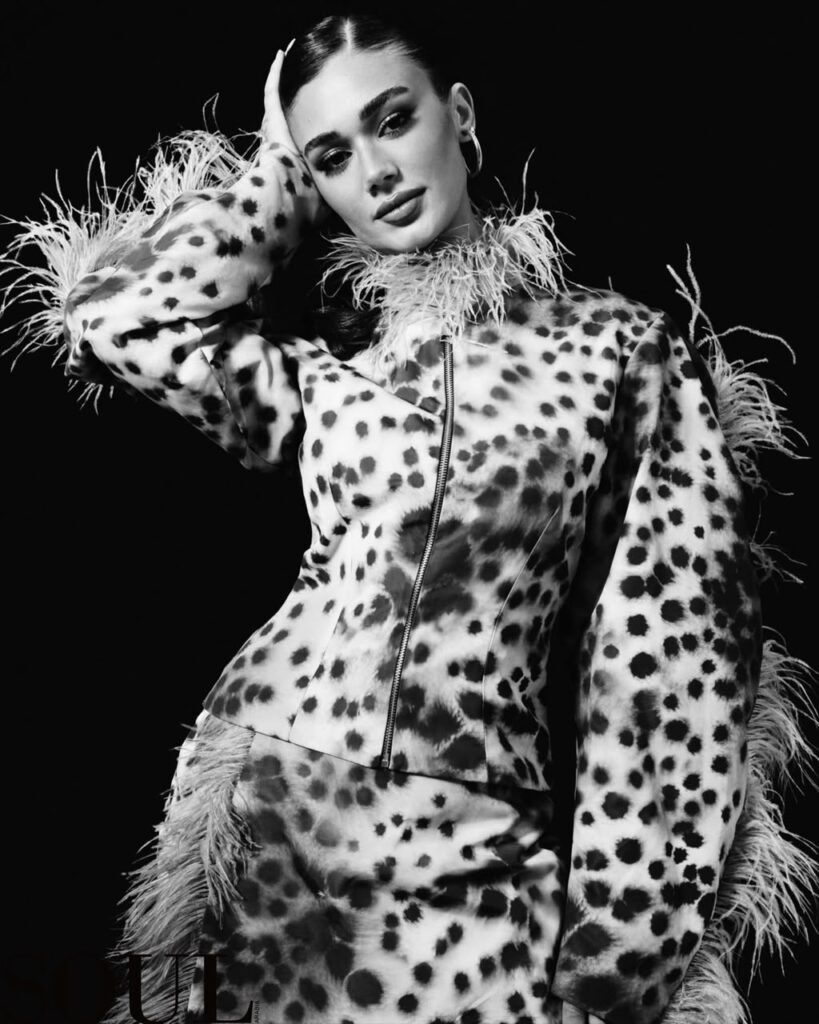
In an exclusive interview with Soul Arabia, the Egyptian actress opens up about the artistic experiences that shaped her, the characters that challenged her emotionally, and the curiosity that continues to guide her career. From her childhood love of ballet to her admiration for Sherihan, she reveals a personality that is as drawn to the past as it is eager to explore what comes next.
From Ballet to Acting: Finding Herself in Art
Long before acting became her profession, ballet gave Abu Basha her first experience of finding confidence through performance. Although she studied business at university, her interests always gravitated towards the arts. Dancing and acting were never competing passions; they simply offered different ways of expressing herself.
“Ballet used to be my first love, but now I love acting,” she says. “I cannot give one up for the other. I love them equally.”

Ballet gave her confidence and exposure besides allowing her to express herself in her own way. Her relationship with acting, however, introduced an entirely different kind of freedom. Rather than expressing herself through movement, she could now inhabit characters whose circumstances and personalities differed entirely from her own.
“Acting is healing. It is beautiful to live through so many characters and explore lives you have never experienced,” she explains. “You get to explore different lives.”
Finding Perspective Through Her Characters
You know when you watch a movie and start explaining the actions of the villain? And try to tell everyone in the room why the villain is acting that way? That’s how acting influenced Abu Basha’s perspective.
That approach has gradually influenced how she sees people in real life. She has become more empathetic, more forgiving, and more willing to consider circumstances before passing judgment.

“When we analyze a character, we try to understand why they behave the way they do,” she says. “Why did someone steal? What brought them to that point? You begin to realize that some people are not just bad or born that way. They’ve simply been through so much.”
It is an interesting perspective to develop through acting: the ability to recognize that people are rarely defined by a single decision. For Abu Basha, the process of understanding fictional characters has become a way of understanding the complexity of real human relationships.
When a Character Follows You Home
Some performances demand more from an actor than others. They require an emotional investment that does not necessarily disappear once filming ends.
One such experience came with Midterm, in which Abu Basha portrayed a young woman living with cancer. The role became particularly difficult during a scene that required her to shave her hair.
“The role affected me deeply,” she recalls. “I felt emotionally exhausted for an entire week. It made me think about the suffering cancer patients experience and how much their lives can change.”
It is a rare thing for an actor to experience another person’s suffering so closely, even when that experience is created for the screen. Yet the emotional weight did not make Abu Basha hesitant about accepting similarly demanding roles.
“These roles can be emotionally difficult because I become very immersed in the character,” she explains. “But they also show what an actor is capable of when they are done well. So yes, I would love to take on more roles like that.”
For her, these performances offer an opportunity to explore the limits of her abilities, even when the experience becomes uncomfortable. She would welcome more roles that challenge her emotionally and allow her to approach unfamiliar human experiences.
A Taste for the Unexpected
Looking back at her performances, Abu Basha is particularly pleased that she has not found herself repeating the same character. From Hoda in Narges and Engy in W T2abel Habeeb to an Upper Egyptian in 2 Ahwa, she has experienced different characters and genres.
Rather than settling into one particular image, she enjoys the possibility of moving between contrasting roles. Comedy and drama each offer different challenges, keeping her relationship with acting open to discovery.
When asked which genre she would particularly like to explore further, her answer is action. It is a direction she would welcome, alongside her interest in historical productions.
Her interests, however, are not limited to contemporary entertainment. Away from the characters she portrays, Abu Basha has a nostalgic side that feels closely connected to another generation.
Though technically a Gen Z, she does not particularly identify with this generation label. Describing herself as someone drawn to the past, old traditions, and the authenticity of earlier eras.

“I love the past, nostalgia, and everything old and authentic,” she says. “Sometimes I wish I had lived in that time.”
That affection is perhaps most visible in her admiration for Sherihan. If given the opportunity to portray someone in a biographical production, Abu Basha would choose the legendary Egyptian performer without hesitation.
“I absolutely adore her,” she says. “I know all her Fawazeer performances by heart, and I have always wished I could do something like that.”
Her admiration goes beyond Sherihan’s celebrity status. Having performed in shows herself during her ballet years, Abu Basha feels a particular connection to the theatricality, movement, and performance style that made Sherihan’s productions memorable.
It is a choice that says something about the kind of performer Abu Basha admires: someone who can bring together dance, acting, and stage presence to create something distinctive.
The Roles Ahead
Abu Basha’s upcoming projects reflect the variety she continues to seek in her career. Each one introduces her to a different creative environment, whether through exploring another period in Egyptian history or working alongside filmmakers she has long admired.
One of these projects is Mustafa Mahmoud: Between Doubt and Certainty, a biographical drama directed by Kamla Abu Zekry and planned for Ramadan 2027. Moving between different periods in the life of the renowned Egyptian philosopher and writer, the production offers Abu Basha the chance to step into a historical setting and explore a world far removed from contemporary stories. She is particularly excited about working with Abu Zekry, whose direction adds another reason to look forward to the experience.
That excitement about creative collaboration also shapes her approach to Al Fil Al Azra2 3. Directed by Marwan Hamed and starring Karim Abdel Aziz, the third instalment brings her into one of Egyptian cinema’s established franchises. Yet, when asked about joining a film with such a successful legacy, Abu Basha focuses less on expectations and more on the opportunity to work with its leading names.
“Having the opportunity to work with Marwan Hamed and Karim Abdel Aziz is a success as it is,” she explains.
Having previously worked with Abdel Aziz on El Hashashin and a theatrical production, she welcomes another opportunity to collaborate with him, this time under Hamed’s direction.
Her recent experience with Crypto, meanwhile, took her beyond Egypt. The action-comedy, which follows a mafia storyline, was filmed in Italy, with Abu Basha portraying a character named Karma. Released in Egyptian cinemas on November 19, the film introduced her to a different production environment, one she remembers particularly for its organisation and discipline.
“The best thing I liked there was that the timings were precise. We filmed according to the schedule, and there was no unnecessary waiting. Everything was organized,” she recalls.
From a historical drama to a major film franchise and an action-comedy filmed abroad, these experiences reflect her interest in moving between genres rather than settling into one familiar territory. And while another Ramadan comedy project has been discussed, she remains cautious about confirming her involvement as the script and plans are still being reconsidered.
Becoming, Without Rushing
There is a certain pressure in acting to move quickly towards leading roles. For many performers, becoming the central character is treated as an important milestone, sometimes even as the clearest indication of success.
Abu Basha, however, seems comfortable allowing her journey to develop at its own pace. She enjoys experimenting with different genres, taking on contrasting characters, and discovering what each experience can teach her.

“I am not in a hurry to reach the leading roles,” she says. “I am happy enjoying the journey and trying different genres.”
Her approach is not about avoiding ambition. In fact. For her, success is not necessarily about being the best in the world. It is about doing something distinctive and becoming good at what you do.
“I do not like the idea of being ordinary,” she says. “I do not have to be the best in the world, but I want to be really good at what I do.”
Perhaps this is where the title of her story finds its meaning. Abu Basha is not simply building a career through the characters she plays; she is allowing each experience to introduce her to another possibility.
After all, becoming an artist is not necessarily about finding one definitive version of yourself. Sometimes, it is about remaining curious enough to keep discovering who else you could be.