
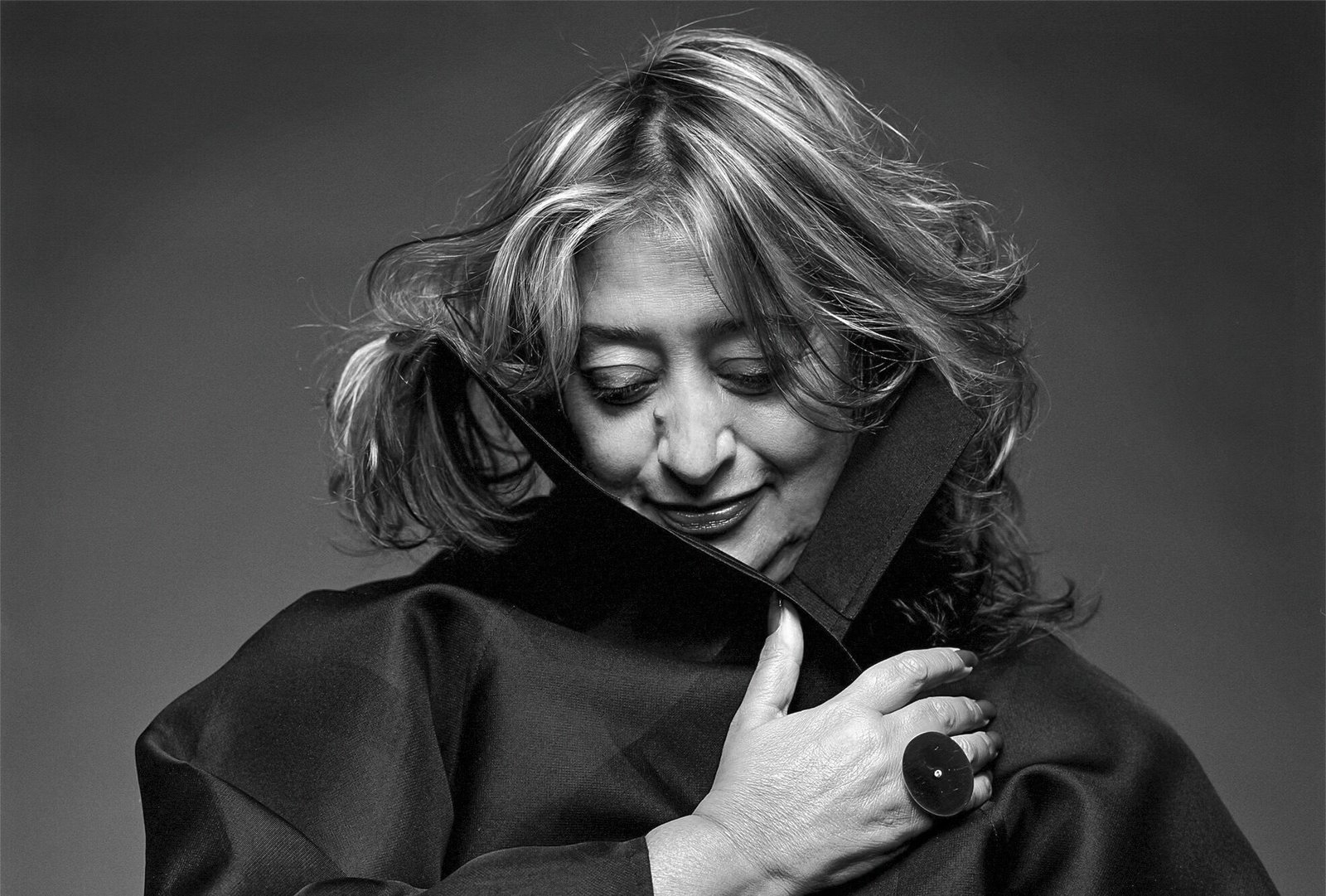
Zaha Hadid spent the first decade of her professional career being celebrated for drawings of buildings that almost nobody would build. She was recognised as brilliant, difficult, uncompromising and probably unbuildable, and she was significant beyond the accidents of her birth for her intellectual toughness and her refusal to compromise on her ideas even when very few of them were being realised in concrete and steel. That refusal eventually produced one of the most distinctive bodies of architectural work of the past century, made her the first woman to win the Pritzker Architecture Prize, and made her the only woman ever honoured by the Royal Institute of British Architects with the Royal Gold Medal. She died in Miami in March 2016 at the age of 65, having spent nearly four decades proving that the things people told her were impossible were merely difficult.
Baghdad, Beirut, London
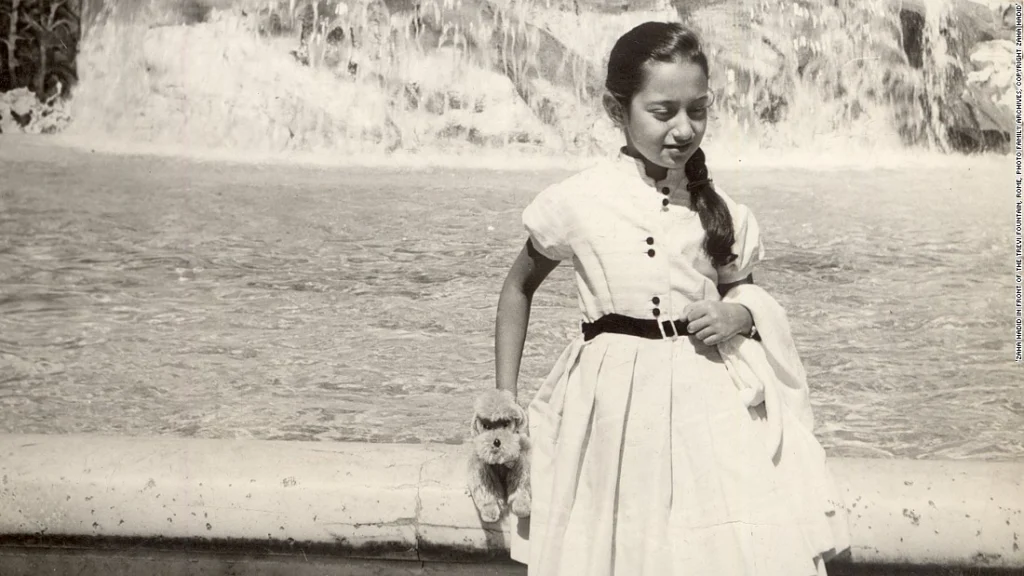
Zaha Mohammad Hadid was born in Baghdad on October 31st, 1950, into a prominent Iraqi family. Her father, Mohammed Hadid, was a leading industrialist and politician who co-founded the National Democratic Party and served as Iraq’s minister of finance following the 1958 coup, and her mother, Wajeeha Sabonji, was an artist. She was educated first at a Catholic school in Baghdad, then at boarding schools in Switzerland and England. Hadid later recalled that as a child she travelled to the ancient Sumerian towns and cities of southern Iraq, and that those trips shaped her interest in architecture, the earliest urban civilisation in human history providing the initial imaginative material for an architect who would spend her career designing buildings that looked like nothing that had come before.
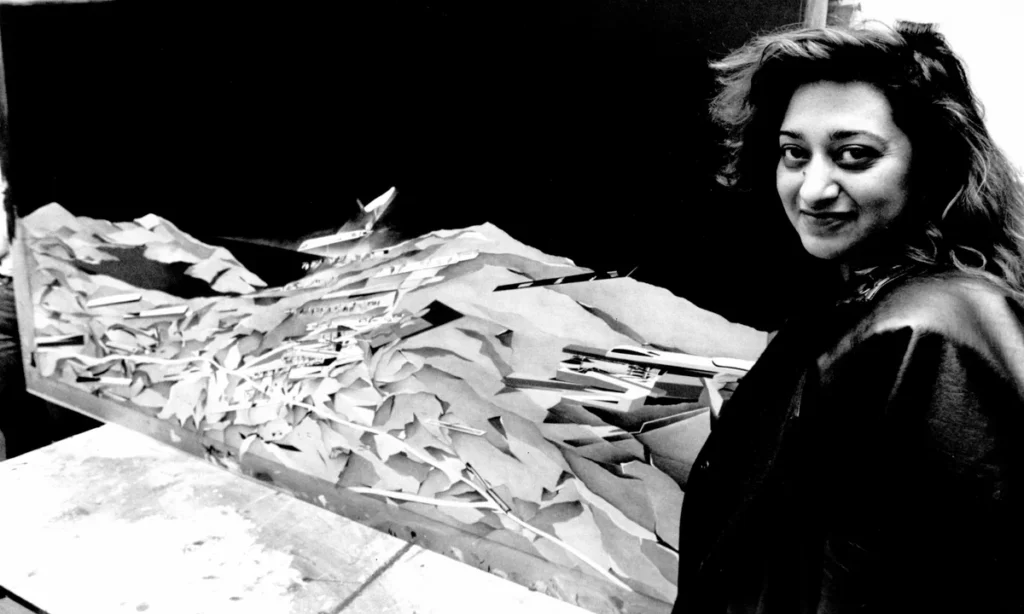
She studied mathematics at the American University of Beirut before moving to London in 1972 to enroll at the Architectural Association, the major centre of progressive architectural thought during that decade. There she studied under and later worked alongside Elia Zenghelis and Rem Koolhaas, joining them as a partner at the Office for Metropolitan Architecture after graduating in 1977. Her graduation thesis was a fourteen-storey hotel proposed for Hungerford Bridge on the Thames, and it already contained the fragmented geometries that would define everything she built afterwards.
The Decade of Drawings
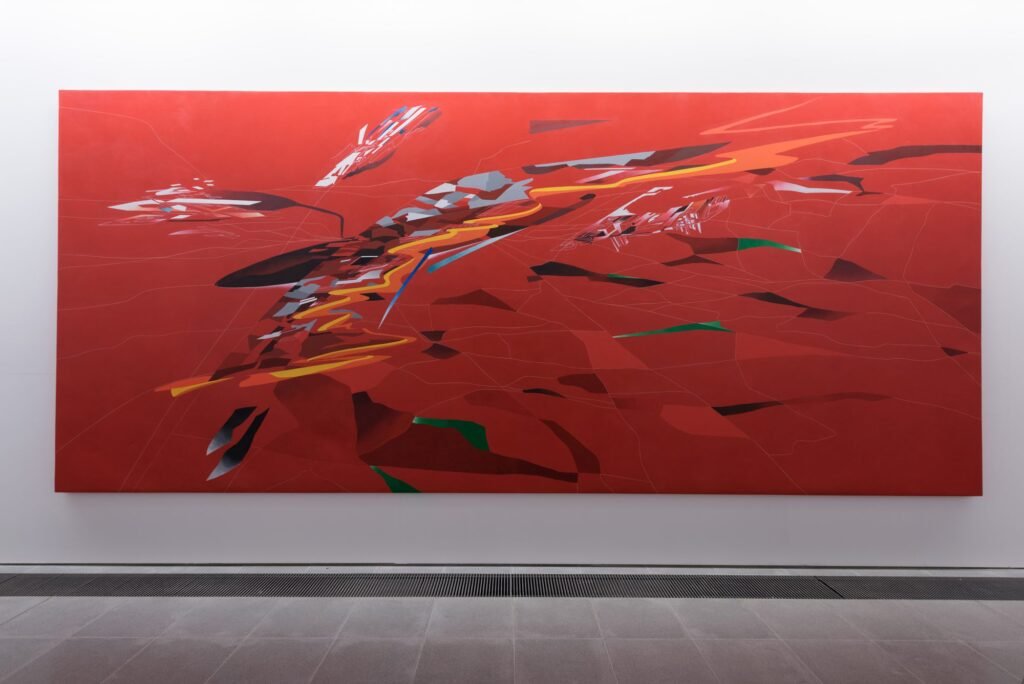
Hadid established her own practice, Zaha Hadid Architects, in London in 1980. International recognition came in 1983 with her unconventional painted competition entry for The Peak in Hong Kong, a project she won but that was never constructed. Peter Cook, writing in Architectural Review, described her work in terms that captured both its ambition and its resistance to conventional evaluation, calling it a unique object that confounds and contradicts the reasonable, architecture as the ultimate statement of theatre. For most of the 1980s and into the early 1990s, Hadid’s reputation rested almost entirely on drawings and paintings; she was known within the profession as a paper architect, a designation that carried a distinct edge of dismissal.
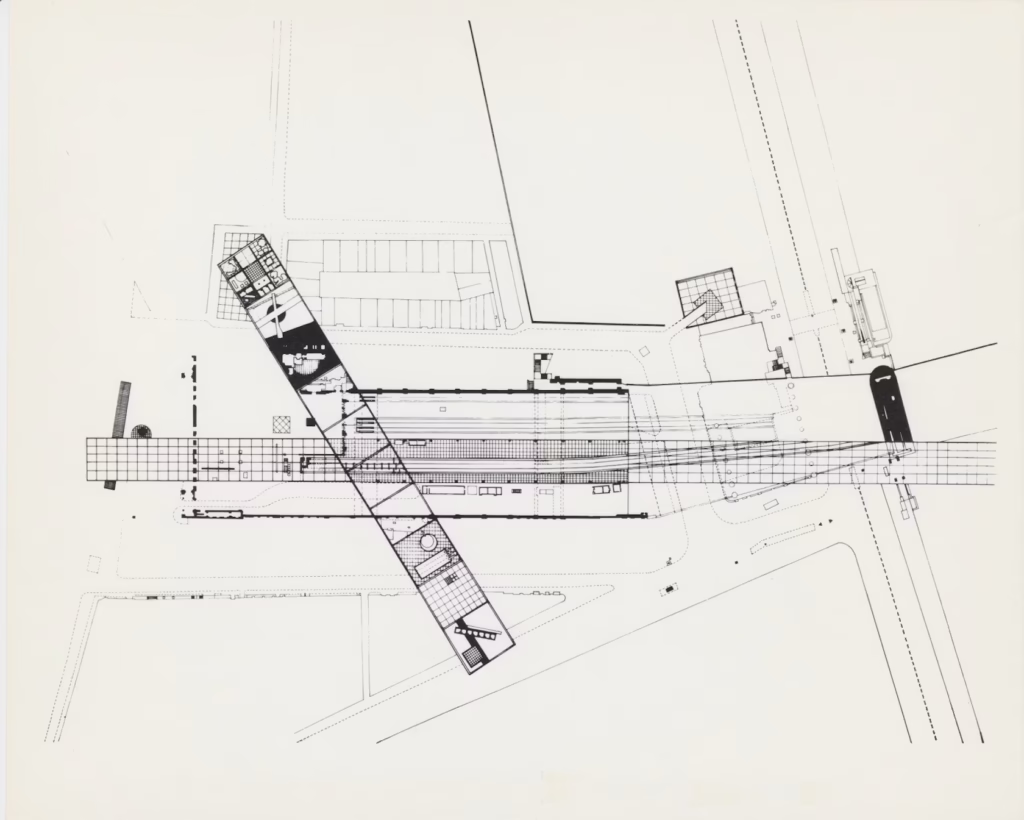
The Vitra Fire Station in Weil am Rhein, completed in 1993, was her first realised building. It was small, sharply angular, and it demonstrated that the geometries she had been drawing for a decade could actually be constructed.
The Buildings
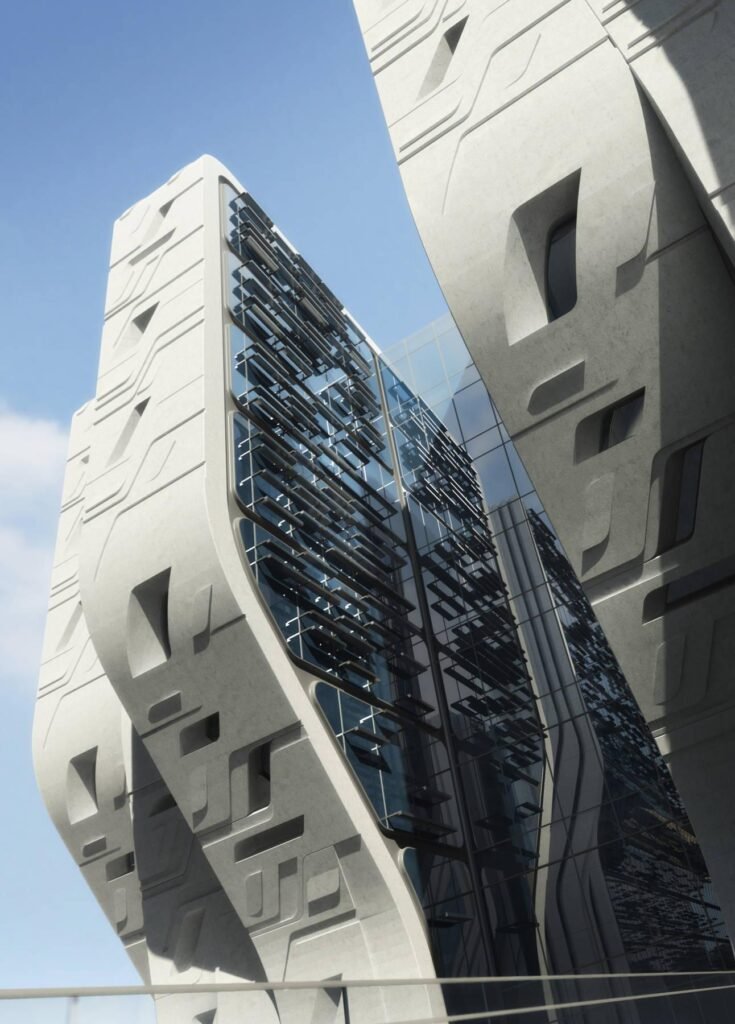
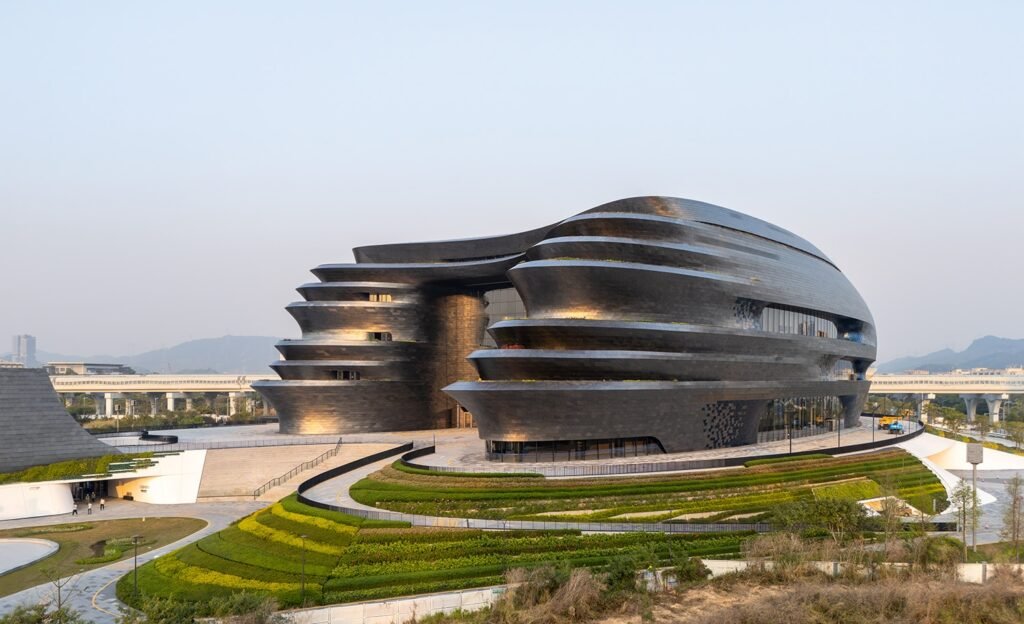
What followed was one of the most prolific and geographically dispersed bodies of work any architect of her generation produced. The MAXXI museum of contemporary art in Rome, developed between 1998 and 2009, gave her a major cultural institution in a city that had resisted contemporary architecture for decades. The Guangzhou Opera House in China, built between 2003 and 2010, remains among her most technically ambitious projects. The Heydar Aliyev Center in Baku, completed in 2013, produced the fluid, seamless white curves that became the most photographed expression of her mature style. The London Aquatics Centre for the 2012 Olympics brought her work to the city that had become her home. Other significant projects include the Riverside Museum in Glasgow, the Contemporary Arts Center in Cincinnati, the Sheikh Zayed Bridge in Abu Dhabi, the Port Authority building in Antwerp, and the Serpentine Sackler Gallery in London.
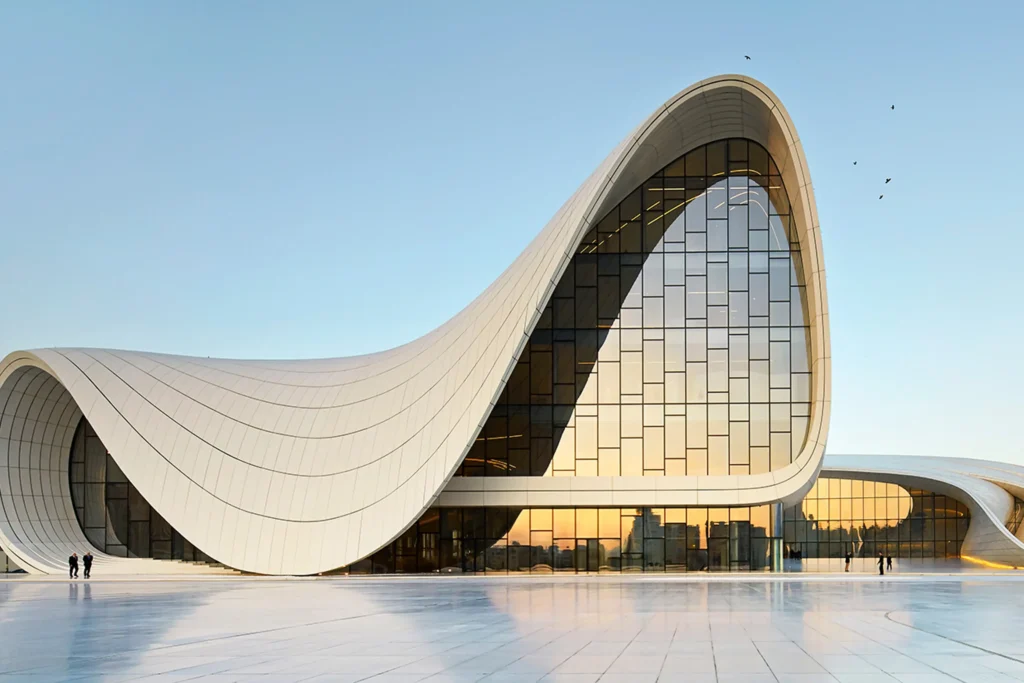
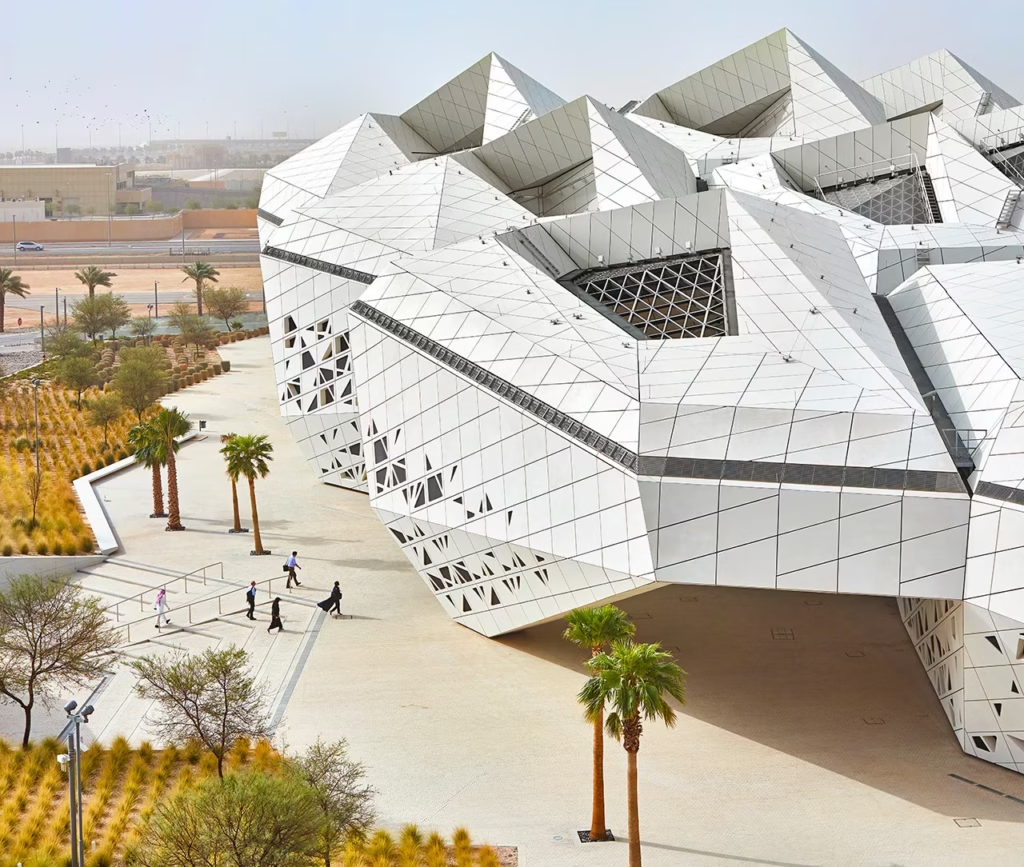
Her buildings became more sculptural and fluid over time, incorporating new technologies and materials that allowed for increasingly complex forms, a trajectory made possible by advances in computational design and fabrication that arrived, conveniently, at exactly the moment Hadid’s ideas needed them.
Iraq, and What Was Left Undone
In 2010, the Iraqi government commissioned her to design the new Central Bank of Iraq building in Baghdad, with the design agreement finalised in London in February 2012. It was her first project in her native country, a fact that says something uncomfortable about the relationship between the Arab world’s most celebrated architect and the place she came from. She did not live to see it completed. In 2012 she won the international competition to design Tokyo’s National Olympic Stadium for the 2020 Games, only for the Japanese government to scrap her design in July 2015 as construction costs escalated, replacing it through a new bidding process.
The Legacy
Zaha Hadid Architects now employs around 400 people from its headquarters in a Victorian former school building in Clerkenwell, London, and has continued under the direction of Patrik Schumacher since her death. Her work challenged fundamental assumptions about what buildings should look like and how people should move through them, and the influence is visible across a generation of architects who came up watching her prove that the drawings could become real.
She was frequently singled out for her Iraqi Arab background and for being a woman in a profession that offered very little room to either, and she was consistently impatient with both framings. The buildings are the argument. They are still standing, on four continents, doing exactly what she said they would.