


The fast fashion industry is worth around $161 billion today and is projected to reach $172 billion in 2026, with estimates of $220 billion by 2030. Those numbers are not a warning sign; they are the context for everything that follows. Fashion has always been an industry built on desire and obsolescence, but online platforms have industrialised both at a scale that would have been unimaginable twenty years ago. The question is not whether ASOS, Shein, and Zara have changed fashion. They clearly have. The question is what they changed it into and whether the trade-off is one that the industry or the planet can sustain.
The Case For: Fashion Finally Became Accessible
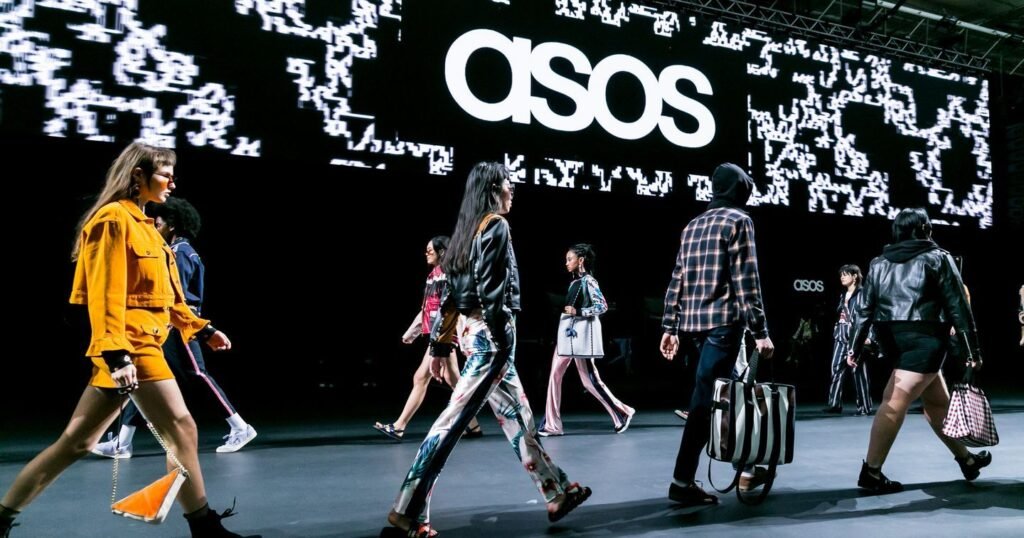
The democratisation argument is real and should not be dismissed. Before the rise of online fashion retail, a teenager in Cairo or a working woman in Amman had limited access to the kind of clothing that reflected global trends. Department stores carried what they chose to carry. Boutiques were priced out of reach. The high street in cities like London or New York was inaccessible by geography alone.
ASOS, Boohoo, and Shein derive the majority of their revenues from online channels, and their apps and websites made the latest fashion accessible in markets that had previously been largely excluded from the global conversation. E-commerce shifted from a supplementary channel to the primary engine of growth for the fashion industry, democratising access and allowing niche brands to reach global audiences without physical stores. For the first time, a woman in the Middle East could buy the same dress that had appeared in a London editorial that morning, at a price that did not require a second mortgage.

Zara’s particular contribution was speed without sacrifice of quality. While traditional brands work around rigid fashion seasons, Zara operates in a constant feedback loop; if a new silhouette starts trending on social media or on the streets of Milan, it can prototype and roll it out globally within weeks. That responsiveness genuinely serves consumers who want clothes that reflect the world they live in now, not six months ago. Social media platforms, particularly TikTok and Instagram, have become powerful drivers of this growth, with viral trends creating demand that the industry has become extraordinarily efficient at meeting.
The Case Against: The Cost Is Being Paid Elsewhere
The destruction argument is equally real, and the numbers are harder to dismiss than the industry would like.
Fashion production comprises 10% of total global carbon emissions, as much as the emissions generated by the European Union. The industry dries up water resources and pollutes rivers and streams, while 85% of all textiles go to dumps each year. Even washing clothes releases 500,000 tons of microfibers into the ocean each year, the equivalent of 50 billion plastic bottles. These are not fringe statistics from activist organisations. They are consistent across multiple independent research bodies.
Shein sits at the end of this model. According to the company’s own sustainability report, Shein emitted 16.7 million total metric tons of carbon dioxide in 2023, more than what four coal power plants produce in a year. Despite a pledge to reach net zero by 2050, Shein’s emissions rose by over 170% over two years; the brand now produces as much annual pollution as the entire country of Lebanon, driven largely by its reliance on air freight to ship individual packages globally. Polyester makes up 76% of its total fabrics, and only 6% of that polyester is recycled. Factory workers at Shein suppliers regularly work 75-hour weeks, over a year after the company pledged to improve working conditions.
In addition to its environmental impacts, fast fashion tends to exploit the workers responsible for its production. Most clothing production is done in the Global South, where laborers have few protections against long hours and unfair wages. Many work 16 hours every day, make very little money, and face retaliation for refusing to work overtime. The convenience of a $12 dress does not mention any of this on the product page.
What Happened to Trends
Beyond the environmental and labour arguments, online fashion giants have done something subtler, and in some ways more permanently damaging, to fashion itself. They have broken the trend cycle beyond repair.
What once lasted an entire season can now disappear within a single week. Both Zara and Shein rely on real-time consumer data, social media analytics, and ultra-fast production systems to react instantly to viral aesthetics. As trends emerge on TikTok and Instagram, products are designed, manufactured, and released at record speed. Shein alone uploads approximately 1,000 new products daily. The result is a consumer culture in which clothing has effectively become digital content, disposable, scrollable, instantly replaceable. The idea of a wardrobe built over years, of pieces that carry personal history, has been replaced by a model that encourages perpetual consumption and perpetual disposal.
This also puts pressure on every other part of the industry. Independent designers find their work copied and undercut before a single unit has sold. Luxury houses respond by accelerating their own release calendars. Emerging brands are forced to compete with a price point that is only achievable through the kind of labour and environmental shortcuts they may not be willing to make.
The Regulation Question
The policy response is beginning to catch up, but slowly. The EU’s Ecodesign for Sustainable Products Regulation came into full effect in 2026, making sustainability no longer optional but a legal requirement for large fashion retailers operating in Europe. As Western markets tighten environmental and labour rules, fast fashion companies have increasingly exploited legal loopholes in manufacturing hubs in Asia to keep profits flowing. Regulation in one market does not automatically clean up the supply chain; it often just moves the damage to where the cameras are not pointed.
The Honest Conclusion
The online fashion giants did not create a problem from nothing. They identified a genuine gap, fashion that was too slow, too expensive, and too geographically exclusive — and filled it with extraordinary efficiency. That efficiency has been genuinely liberating for millions of consumers who had previously been locked out. It has also produced a system of extraction, of labour, of resources, of the environment, that the industry does not have a credible plan to reverse.
The two things are true simultaneously. The same scroll that put a well-cut blazer in reach of a first-generation university student also put a garment worker in Bangladesh in an 18-hour shift. Fashion has always had a complicated relationship with the costs it externalises. Online retail just made those costs harder to ignore, and much, much larger.