
From Palestinian tatreez to Egyptian Sinai embroidery and Moroccan tarz, traditional needlework continues to carry stories of identity, belonging, and heritage across generations.
A piece of embroidered fabric can hold more than a beautiful pattern. It can reflect the place where it was made, the hands that created it, and the traditions passed between generations. Across the Arab world, embroidery has long served as a visual language, connecting clothing and everyday textiles with cultural identity.
These traditions are not interchangeable. Each community developed its own techniques, colors, motifs, and uses. Together, however, they reveal how needlework became an important part of preserving regional memory.
Palestine: Tatreez as a Language of Identity
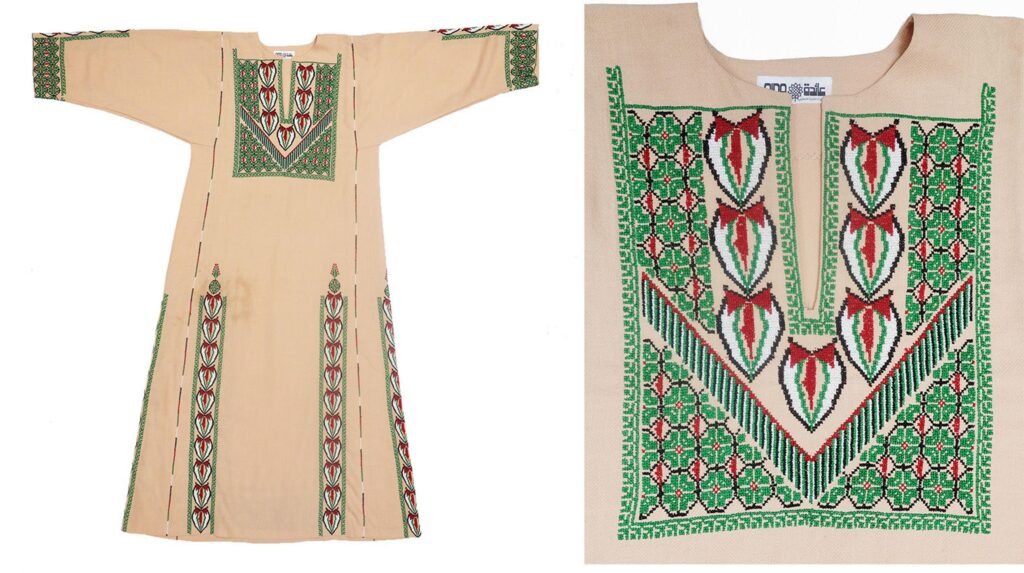
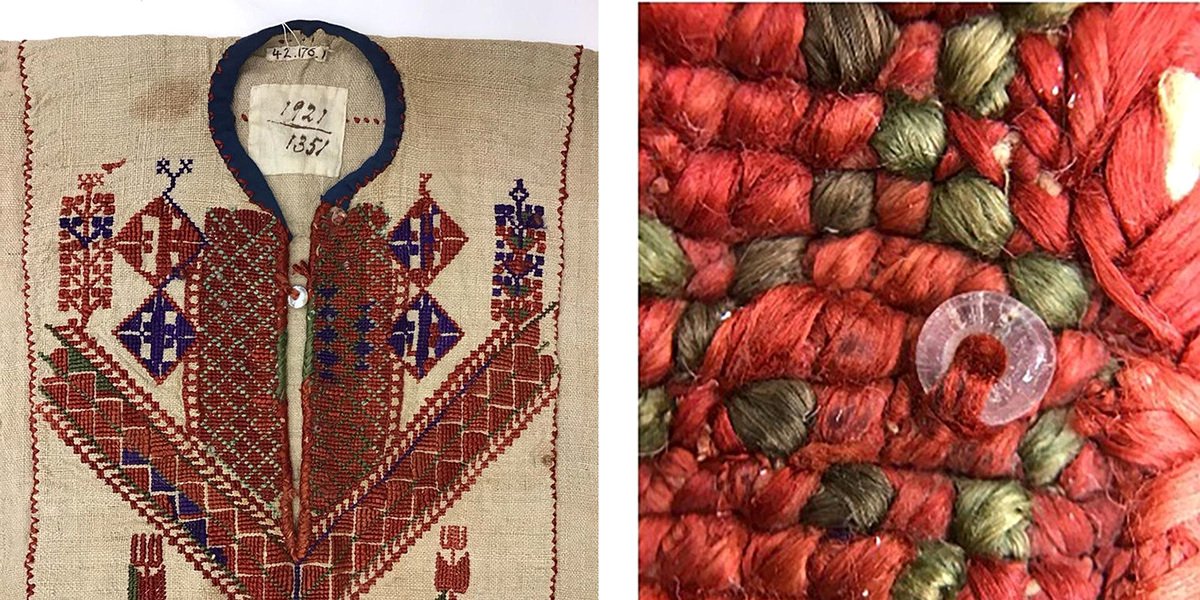
Few embroidery traditions carry as strong a connection to cultural identity as Palestinian tatreez. Traditionally worked onto the thobe, the loose-fitting dress, this embroidery features intricate geometric patterns, often created with silk thread on wool, linen, or cotton.
Historically, the designs and colors could indicate a woman’s regional background, marital status, and economic circumstances. Motifs inspired by birds, trees, flowers, and the surrounding landscape transformed garments into records of the communities that produced them.
The practice also extended beyond the finished garment. Women gathered in homes and community spaces to embroider together, sharing techniques and teaching younger generations. UNESCO inscribed Palestinian embroidery on its Representative List of the Intangible Cultural Heritage of Humanity in 2021, recognizing its social, cultural, and intergenerational importance.
Over time, tatreez also acquired a wider national significance. Following the displacement of Palestinian communities in 1948, embroidery became an important way to preserve connections to villages and family histories. In subsequent decades, its motifs increasingly represented Palestinian identity beyond individual hometowns. Today, Palestinian communities in the diaspora continue to use tatreez to maintain those connections.
Egypt: The Distinctive Traditions of Sinai and Upper Egypt
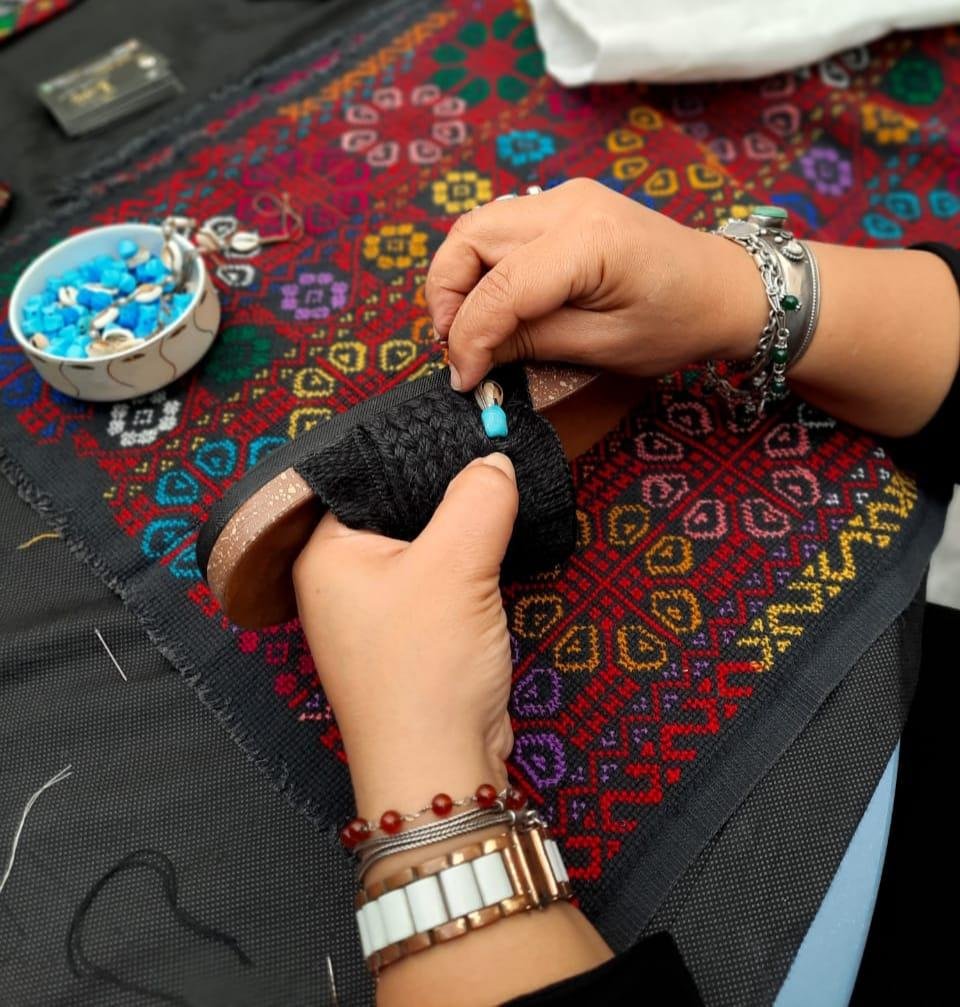
Egypt’s embroidery heritage offers another perspective on the relationship between craftsmanship and identity. In Sinai, Bedouin women traditionally decorate dresses and head coverings with colorful motifs that reflect their communities and surroundings.
The designs are not simply ornamental. Different tribal communities have developed distinctive decorative units, known locally as erq. Motifs include named forms such as the clock, lemon, bride, and sycamore tree. These patterns can communicate social and personal information, including tribal affiliation and marital status.
The National Museum of Egyptian Civilization has supported efforts to introduce this tradition to new audiences. In November 2021, the museum organized a public workshop where visitors explored Sinai embroidery, its stitches, colors, and decorative elements through demonstrations with artisans.
Further south, Upper Egypt preserves another textile tradition known as tally. Associated with Shandawil Island, this craft uses metallic threads to decorate fabrics such as tulle and cotton. Its motifs include geometric shapes, plants, birds, people, and camels. The National Museum of Egyptian Civilization has also organized workshops introducing visitors to its techniques.
Morocco: The Regional Art of Tarz
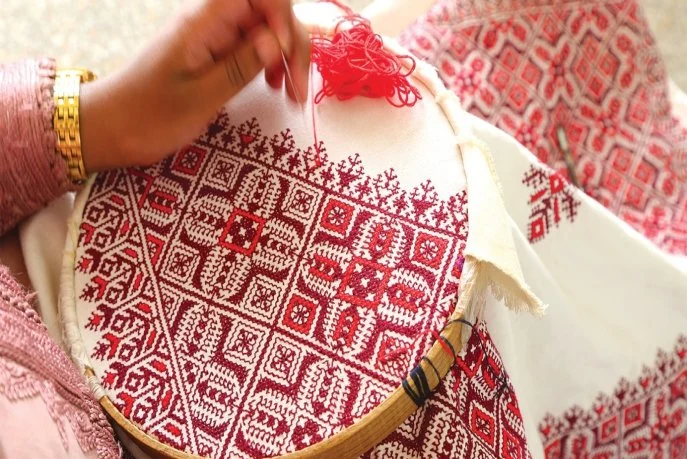
In Morocco, traditional embroidery, known as tarz, developed distinctive expressions across the country’s historic urban centers. Fez, Rabat, Salé, Meknes, Chefchaouen, Tetouan, and Azemmour each contributed to a varied textile heritage.
The techniques include drawn-thread embroidery and counted-thread work, creating different approaches to pattern and composition. Embroidered details appear across household textiles, clothing, and special-occasion pieces.
Unlike a single national pattern, Moroccan tarz reflects the visual differences between cities and their craft traditions. Its continued presence in contemporary clothing and handmade household pieces demonstrates how traditional techniques can adapt to changing tastes while retaining their distinctive character.
Keeping the Craft Alive
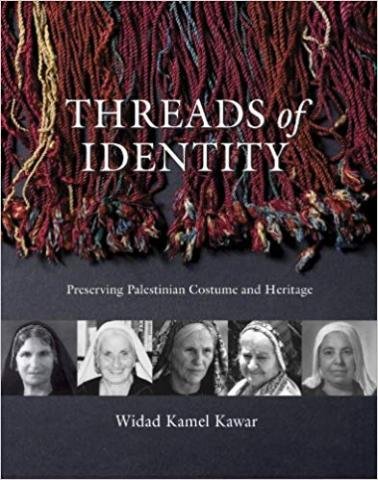
Preserving embroidery requires more than displaying historic garments. It depends on the people who understand the techniques, pass them on, and continue to find ways to use them.
Institutions such as Tiraz: The Widad Kawar Home for Arab Dress in Amman help document this heritage. Its collection contains more than 2,000 costumes and weavings, preserving examples of Palestinian, Jordanian, and wider Arab dress traditions.
Contemporary projects also give embroidery new meaning. Currently on view at Tiraz, Ma’alesh brings together ten Palestinian embroiderers and Irish tailor-artist Lou McGowan. Their collaboration uses linen, cotton, and sheep’s wool to create press jackets honoring more than 200 journalists killed in Gaza. The exhibition runs from August 25 to December 1, 2026.
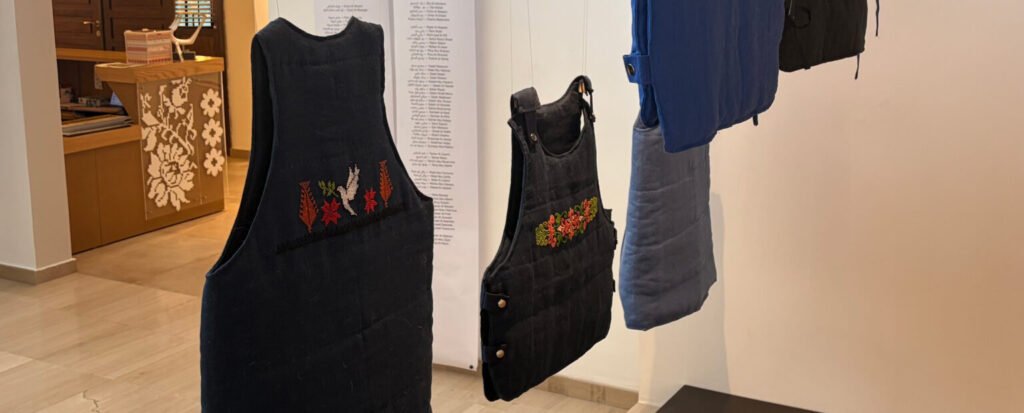
The project demonstrates how traditional skills can respond to contemporary experiences without losing their connection to cultural memory. Each embroidered piece becomes both an act of craftsmanship and a form of documentation.
Across Palestine, Egypt, Morocco, and beyond, embroidery remains a living practice rather than a relic of the past. Its continued relevance depends on the artisans who sustain it, the communities that recognize its meaning, and the younger generations learning to carry it forward. With every new stitch, these traditions gain another chapter.