
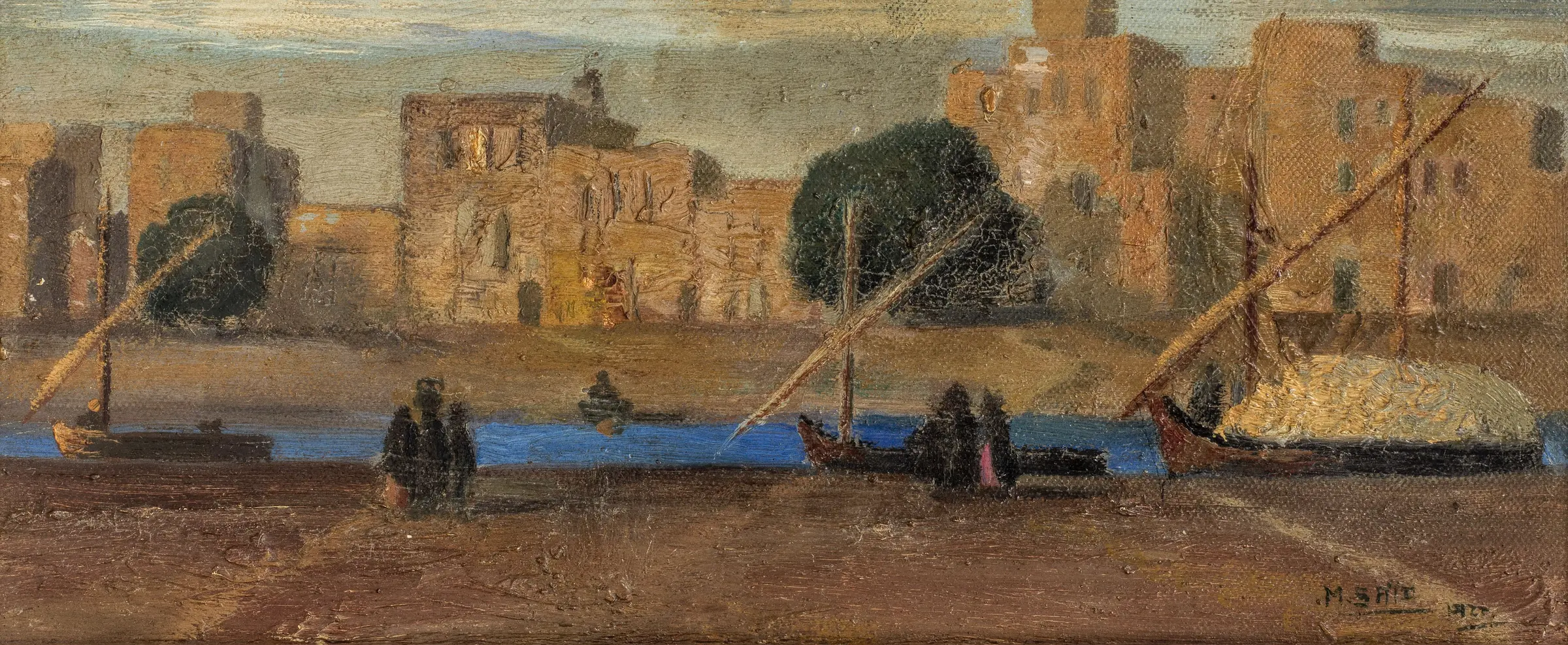
There is a particular kind of courage in spending your entire adult life doing one thing while quietly building something else entirely, and doing it well enough that the second thing eventually eclipses the first. Mahmoud Sa’id was a judge for three decades. He sat in courtrooms, applied the law, and fulfilled every expectation that his family’s name and position placed on him. He also, in the hours that remained, painted some of the most vital canvases in the history of Egyptian art. It was not until 1949, when he was in his fifties, that he retired from his legal career and devoted himself entirely to painting. By then, he had already been doing it for forty years.
Born In Alexandria
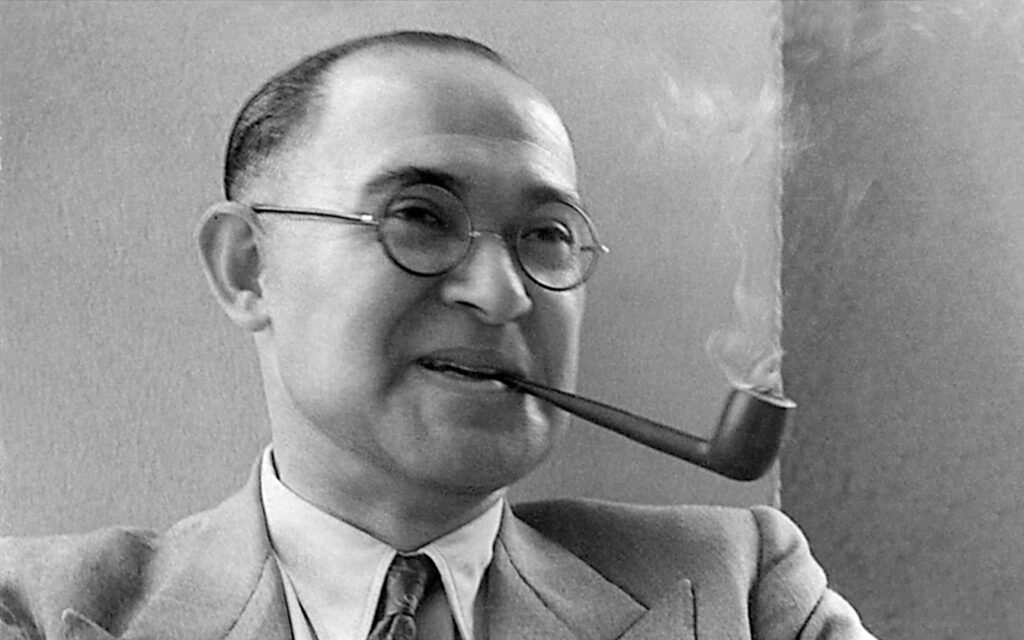
Mahmoud Sa’id was born on April 8th, 1897, in Alexandria, a city that would become the subject, backdrop, and emotional centre of almost everything he painted. His father, Mohammed Said Pasha, served as Prime Minister of Egypt from 1910 to 1914, and his niece, Safinaz Zulficar, would later become Queen Farida of Egypt, reigning from 1938 to 1948. It was a family of extraordinary privilege and public obligation, and Sa’id grew up inside both. His family lived in a luxurious villa in the affluent Gianaclis neighbourhood of Alexandria, the same villa that today houses the Mahmoud Said Museum.
The city shaped him in ways that went deeper than biography. Alexandria in the early 20th century was cosmopolitan in the truest sense, a Mediterranean port city of mixed populations, competing cultures, European influence, and deeply Egyptian soul. Sa’id absorbed all of it. The fishermen, the peasant women, the Sufi ceremonies, the Mediterranean light, the aristocratic drawing rooms, all of it ended up on his canvases, rendered with a richness of colour and a psychological weight that set him apart from everything being made around him.
The Education of an Artist
Sa’id became interested in art in his teens and began studying with a local Italian artist, Amelia Casonato da Forno, from whom he learned to paint in an impressionist style. He later studied with Arturo Zanieri, another Italian painter based in Alexandria, alongside friends including Ahmed Rasem and Cherif Sabry. In 1920, he travelled to Paris and studied drawing at the private Académie Julian, attending classes at his own expense, unlike other Egyptian pioneer artists who travelled on official scholarships, embodying the role of the elite amateur artist.
Paris gave him a technical foundation and exposure to the full sweep of European modernism. But what he built on top of it was his own. In the early stages of his art, his work was influenced by his mentors’ impressionist style. Still, he quickly developed a very unique and distinct style, becoming, according to those who followed him closely, the leading Egyptian artist not just locally but regionally and internationally.
The Work Itself
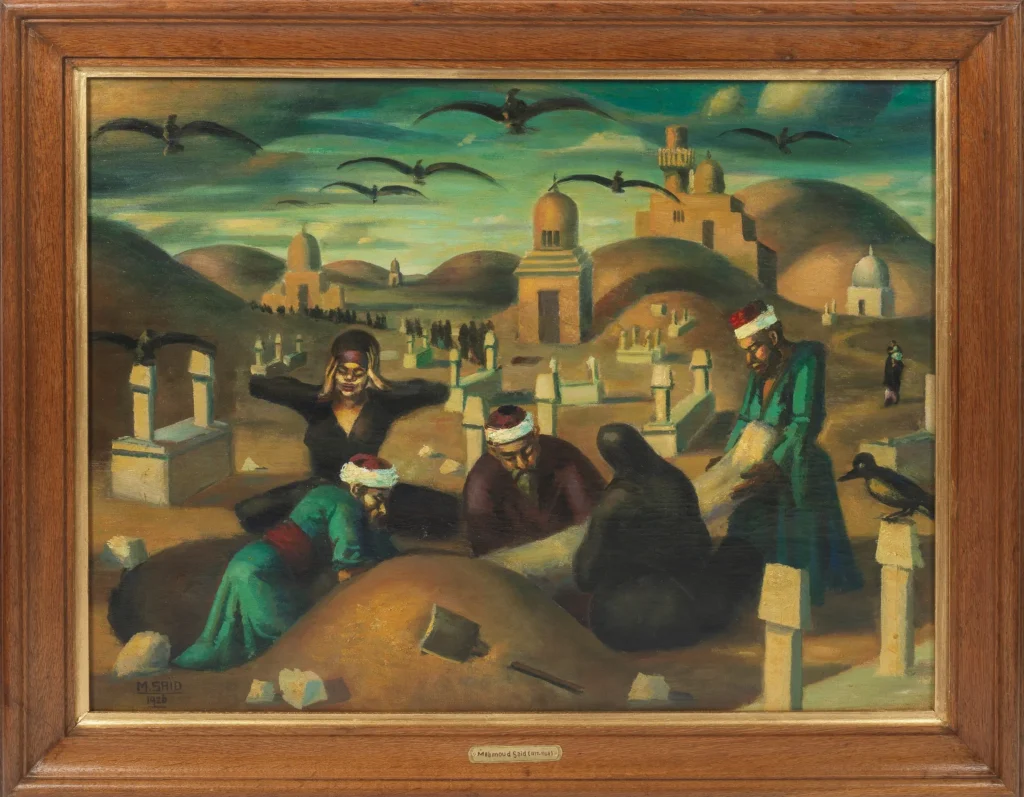
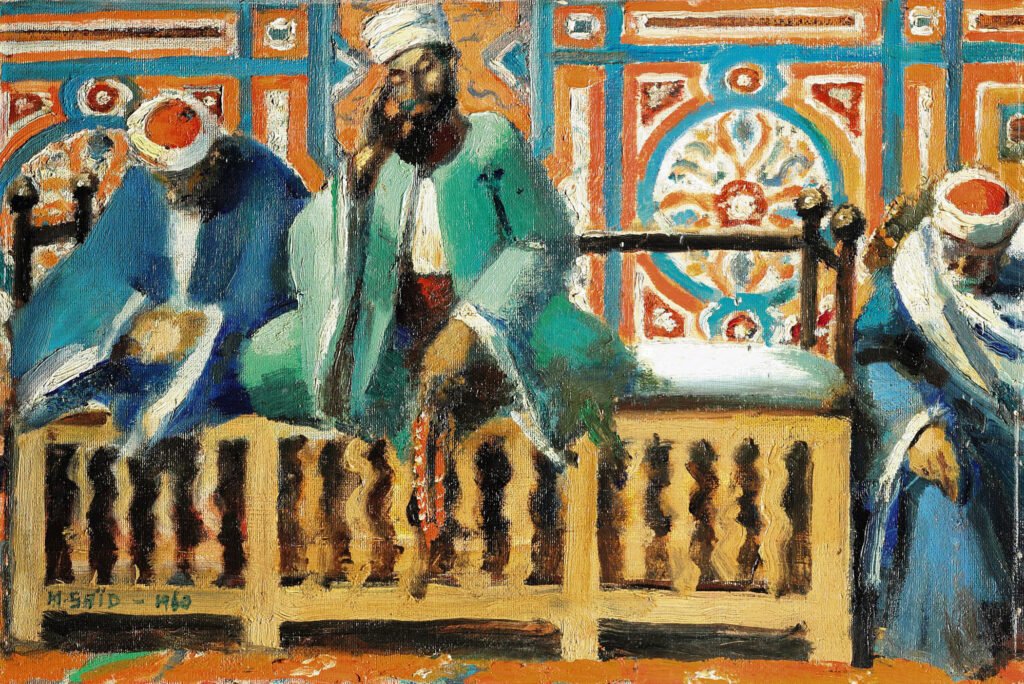
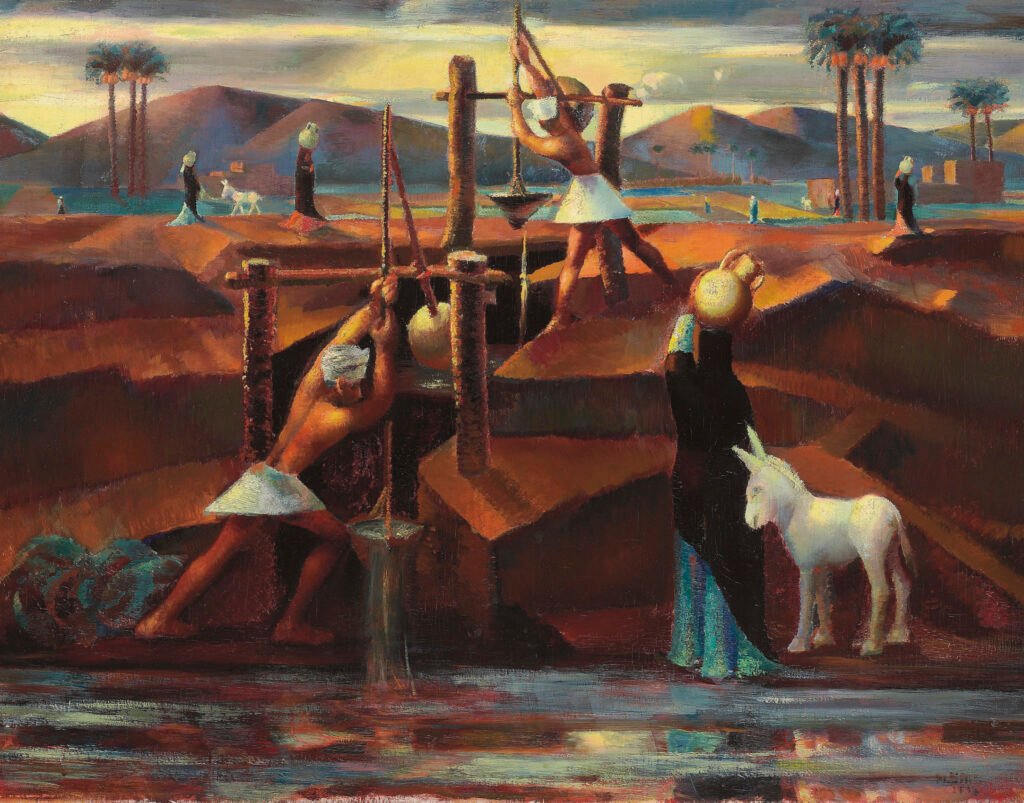
To look at a Mahmoud Sa’id painting is to be placed inside Egypt, not a romanticised or touristic version of it, but a lived one. He focused on scenes from Egyptian society, including landscapes, cityscapes, the working class, nudes, formal portraits, and religious ceremonies such as Sufi whirling. His paintings are infused with lush hues and highlights that create a luminous, almost three-dimensional quality.
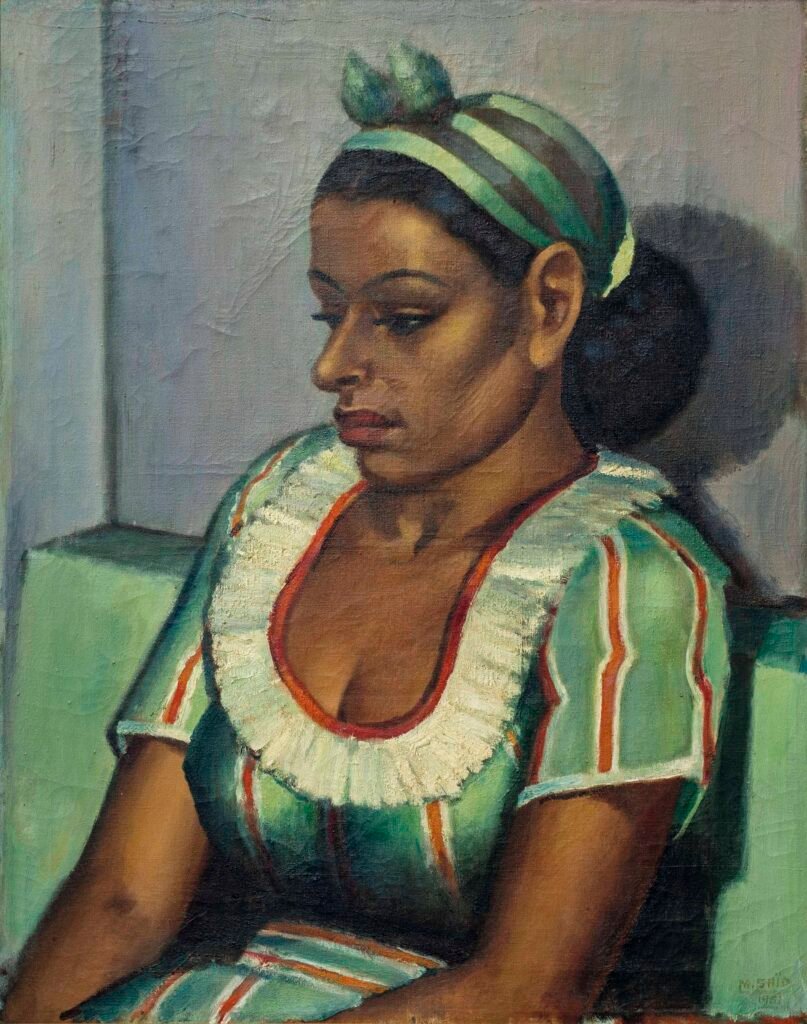
His women are the heart of his legacy. Dark-skinned, full-bodied, painted with directness and dignity, they were radical for their time, not because they were provocative, but because they were so completely and unapologetically present. His vibrant canvases allure viewers with their perplexing range of images, from nude Egyptian women to stylized Alexandrian aristocrats, all rendered with the same seriousness and the same eye. He did not idealise his subjects or exoticise them. He simply looked at them and painted what he saw.
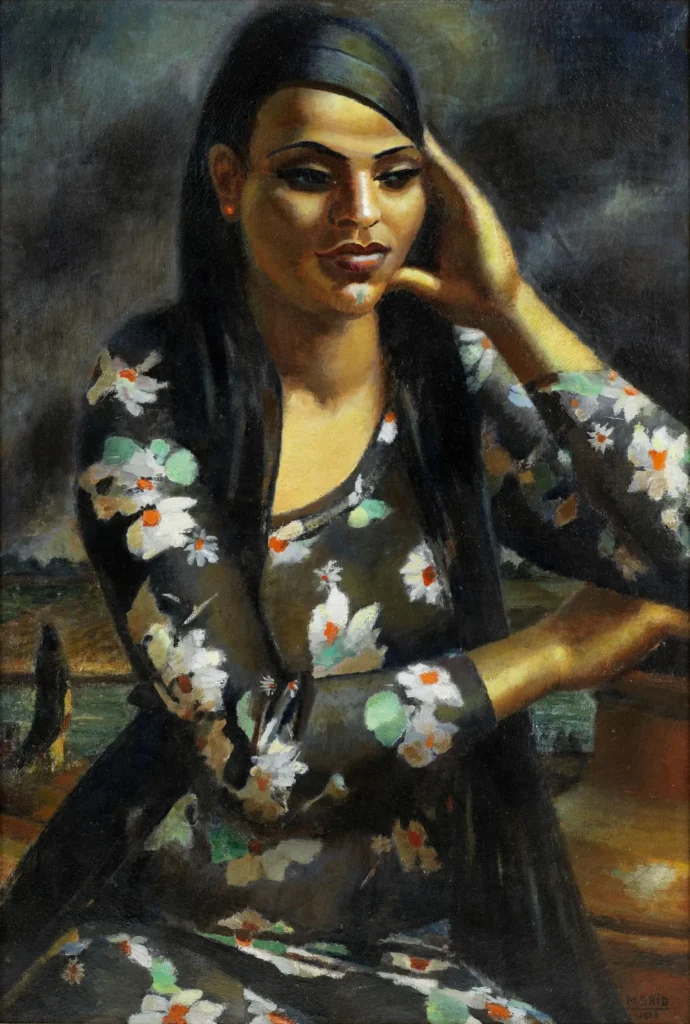
Sa’id went through a variety of artistic periods throughout his career. He began as an impressionist, recalling the style of Monet and Pissarro. His second phase, the blue period, showcased a more poetic inclination. During his Italian period, he discovered the Italian Primitives Carpaccio and Giovanni Bellini, rendering luminosity through an enamel-like technique used by Flemish artists. His final period moved toward a predominance of greens and browns, and a greater tendency toward reasoning rather than pure emotion. Each phase was distinct, and none of them repeated the one before.
Recognition, Belated but Real
Sa’id’s first solo show was organised by the Atelier d’Alexandrie in 1942, and his first major retrospective was held at the Gezira Centre for Modern Art in 1951. Recognition came gradually, and then all at once. In the late 1950s and 1960s, he held many retrospectives and served on organising committees for museums and exhibitions, including the Biennale de la Méditerranée in 1955, 1959, and 1961.
The auction market eventually caught up with what the art world had quietly known for years. Sa’id’s record auction price stands at $2,546,500, achieved at Christie’s Dubai in 2010 for The Whirling Dervishes. His work has been shown at the Musée d’Art Moderne de Paris, Mathaf in Doha, and the Museum of Modern Egyptian Art in Cairo, among many others.
What He Left Behind
Mahmoud Sa’id died on April 8th, 1964, his birthday, and his 67th year. He had a conscious eye that recorded the identity of Egypt in a certain period, documenting its geographic nature and social life in a way that went far beyond the realism of photography. His oeuvre undeniably paved the way for a national identity rooted in modern Egyptian art.
He spent thirty years doing the work he was supposed to do. Then he spent the rest of his life doing the work that mattered. That the two could coexist, and that the second one could outlast both, that, perhaps, is the most Egyptian thing about him.