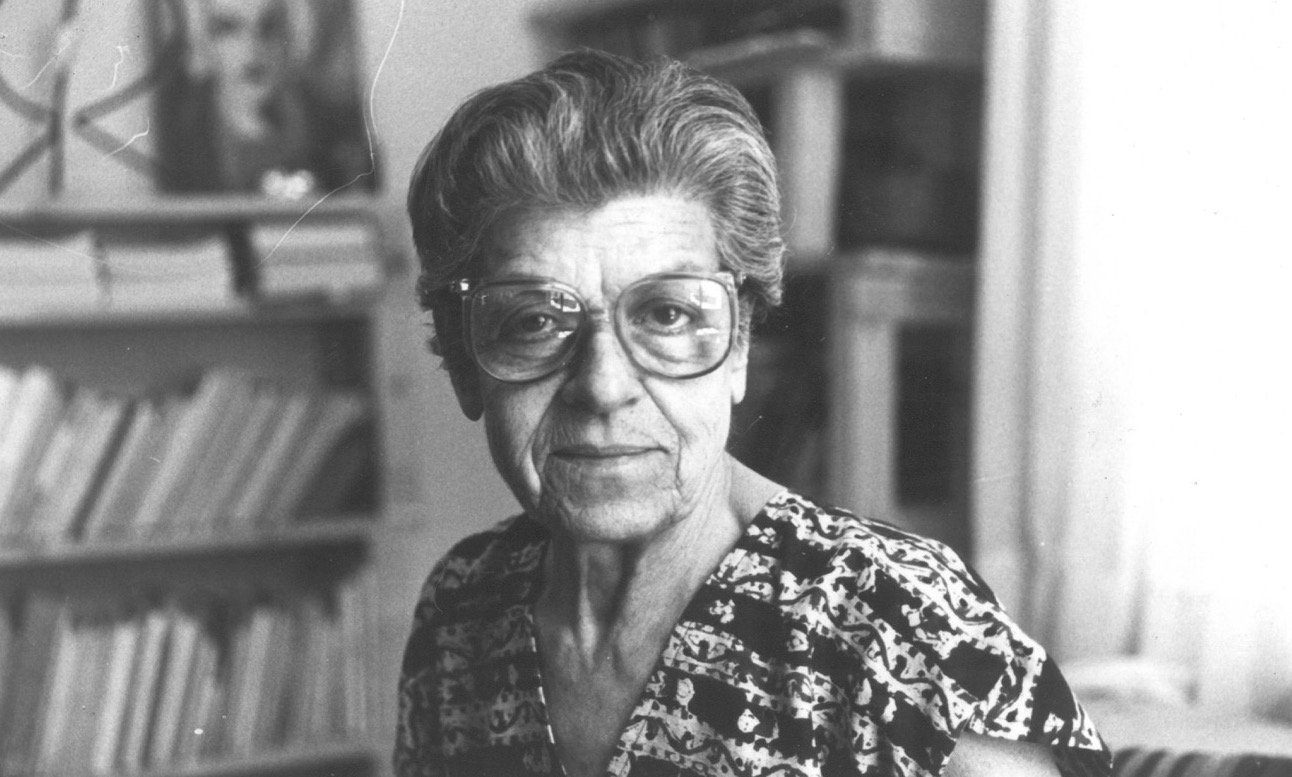
When Tate Modern mounted its first major retrospective of Saloua Raouda Choucair’s work in 2013, the artist was 97 years old. The international art world arrived at her door several decades late. She had already done everything worth talking about, the first abstract painting exhibition in the Arab world, a body of sculpture that had quietly redefined what Arabic form could look like, and a career built in near total isolation from the institutions that later scrambled to claim her legacy. The story of Saloua Raouda Choucair is, at its core, a story about what happens when the world is not ready for what an artist is doing, and the artist keeps going anyway.
Beirut, Cairo, Paris
Saloua Raouda Choucair was born on June 24, 1916, in Ain El Mraisseh, along Beirut’s coastal Corniche. She grew up in a household shaped by intellectual curiosity, her mother was fond of reciting poetry, and her father, who died young while conscripted in the Ottoman army, had been a man of science and letters. The combination would mark her work for life.
Her early formation as an artist was conventional enough. She learnt to draw and paint under Omar Onsi and Moustafa Farroukh, prominent Lebanese artists who adopted impressionist and realist styles. But Choucair was never going to be content with where her teachers pointed. In 1943, she made a trip to Cairo during the Second World War that changed everything. All the museums were closed, so she walked the streets and visited the mosques she encountered. “It was thrilling! I thought this is real art! It endures,” she later recalled. Islamic art gave her something the Western tradition she had been taught had not: a visual language that operated through geometry, pattern, and mathematical logic rather than the representation of the human figure. It did not feel like a discovery so much as a recognition, a confirmation of something she had already suspected.
While enrolled in philosophy classes at the American University of Beirut, she was told by a professor that Greek art was superior to Islamic art because Islamic art lacked human images. This was the catalyst for her commitment to pursue the artistic expression she found so essential. In 1947, before she had even been to Paris, her exhibition at Beirut’s Arab Cultural Gallery is thought to have been the first abstract painting show in the Arab world. She was already ahead of where the conversation was going.
Then came Paris. Saloua travelled to Paris in 1948 on what was supposed to be a few months’ visit. She ended up staying more than three years, studying sculpture, lithography, and fresco techniques. Her involvement with the Atelier de l’Art Abstrait provided stimulation and exposure to other abstract expressionists. “Those were fantastic years for me,” she recalled. The works of Delaunay, Kandinsky, Vasarely, Duchamp, and Mondrian became part of her everyday discourse. But she absorbed Paris without surrendering to it. She was not becoming a French modernist. She was becoming more deeply herself.
The Language She Built
Back in Beirut, Choucair developed a practice that drew on everything, Islamic geometry, Arabic poetry, science, mathematics, Sufi philosophy, and made something that belonged to none of those traditions entirely and yet was rooted in all of them.
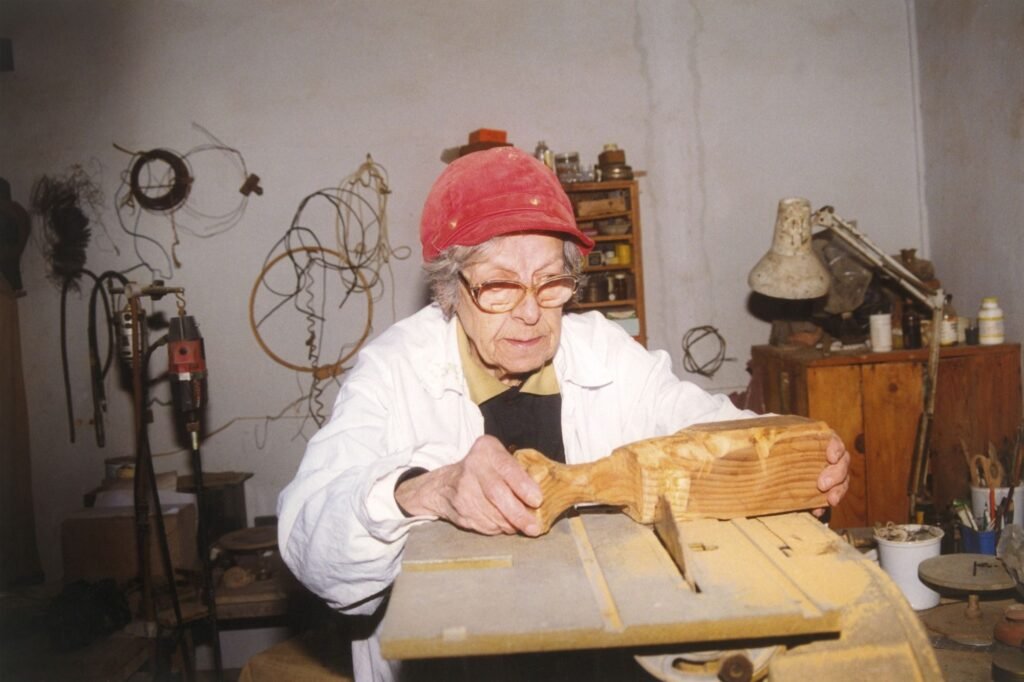
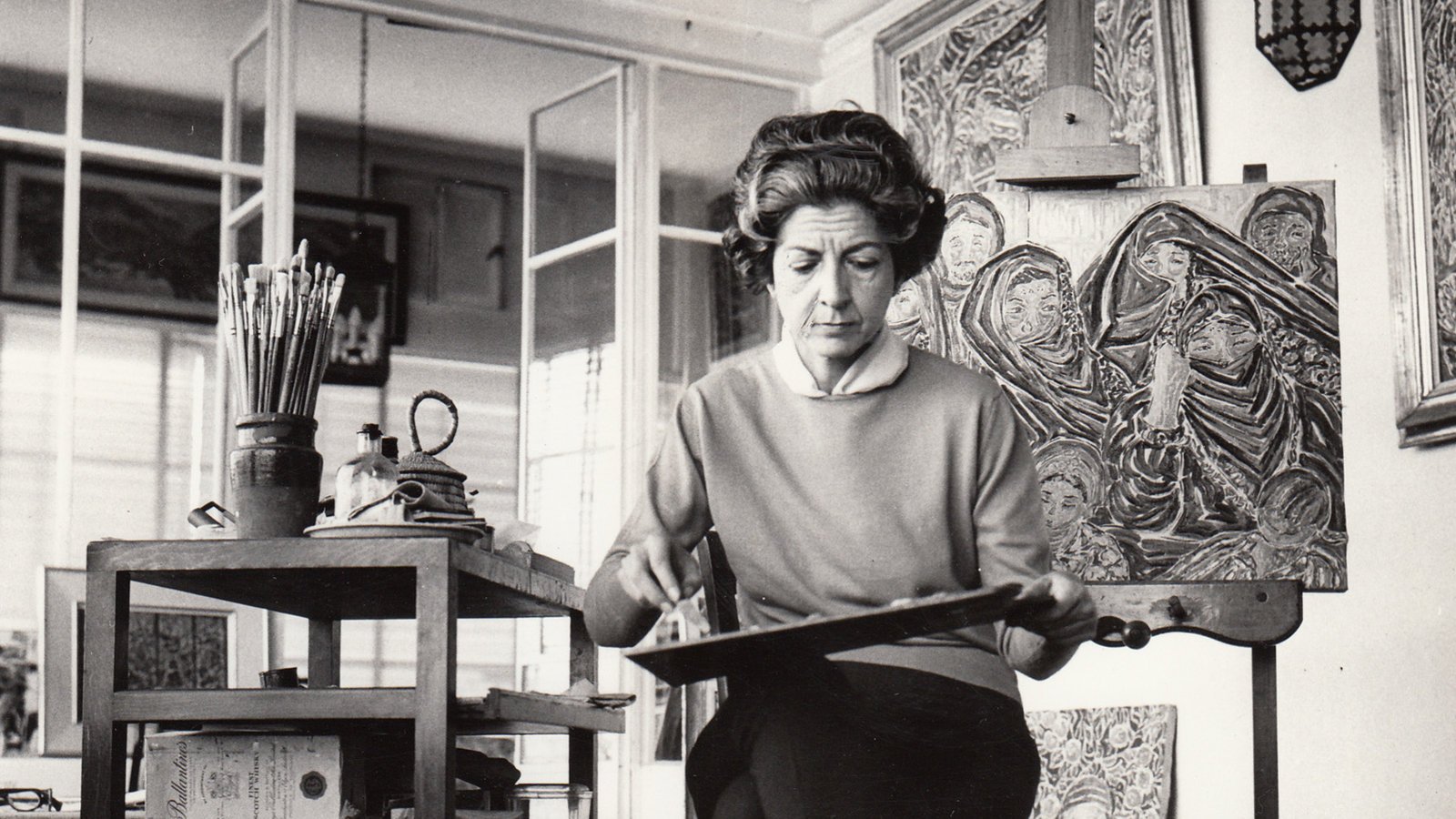
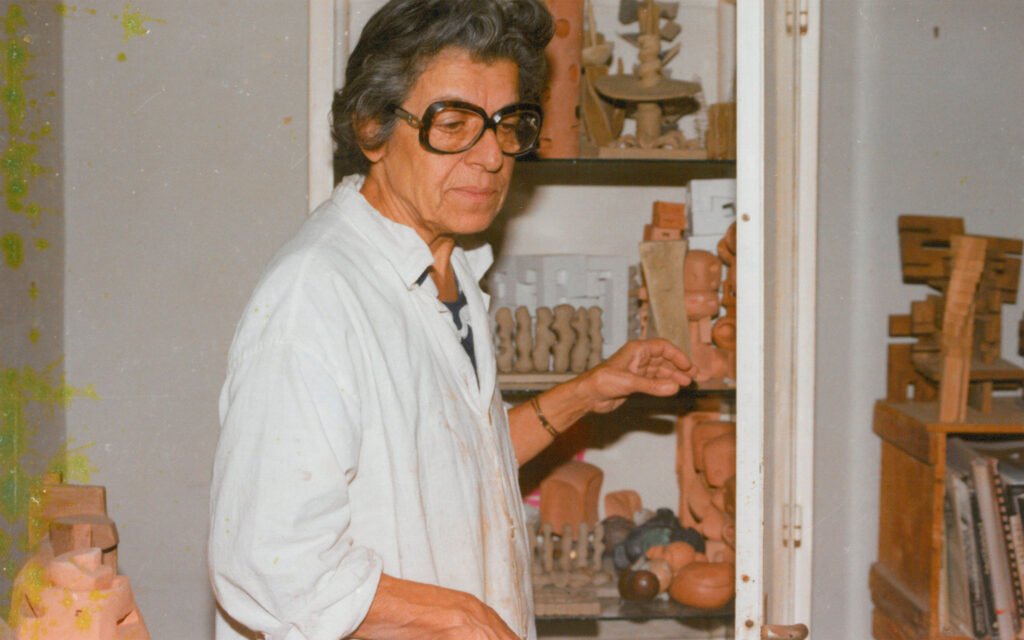
In the late 1950s, working from her home studio, she began modelling in clay and carving wood, exploring the trajectory of a line, its ability to follow a path that allows it to transform itself into numerous shapes. In the 1960s she worked on a series known as interforms: simple cubes or blocks housing intricately carved, complex internal forms.Then came the works she called Poems, modular sculptures with parts that stack together in a flexible way, where each module, like the stanzas of Arabic poetry, may stand alone or be stacked with others to be read as a whole.The Duals followed: two interlocking parts, each incomplete without the other.
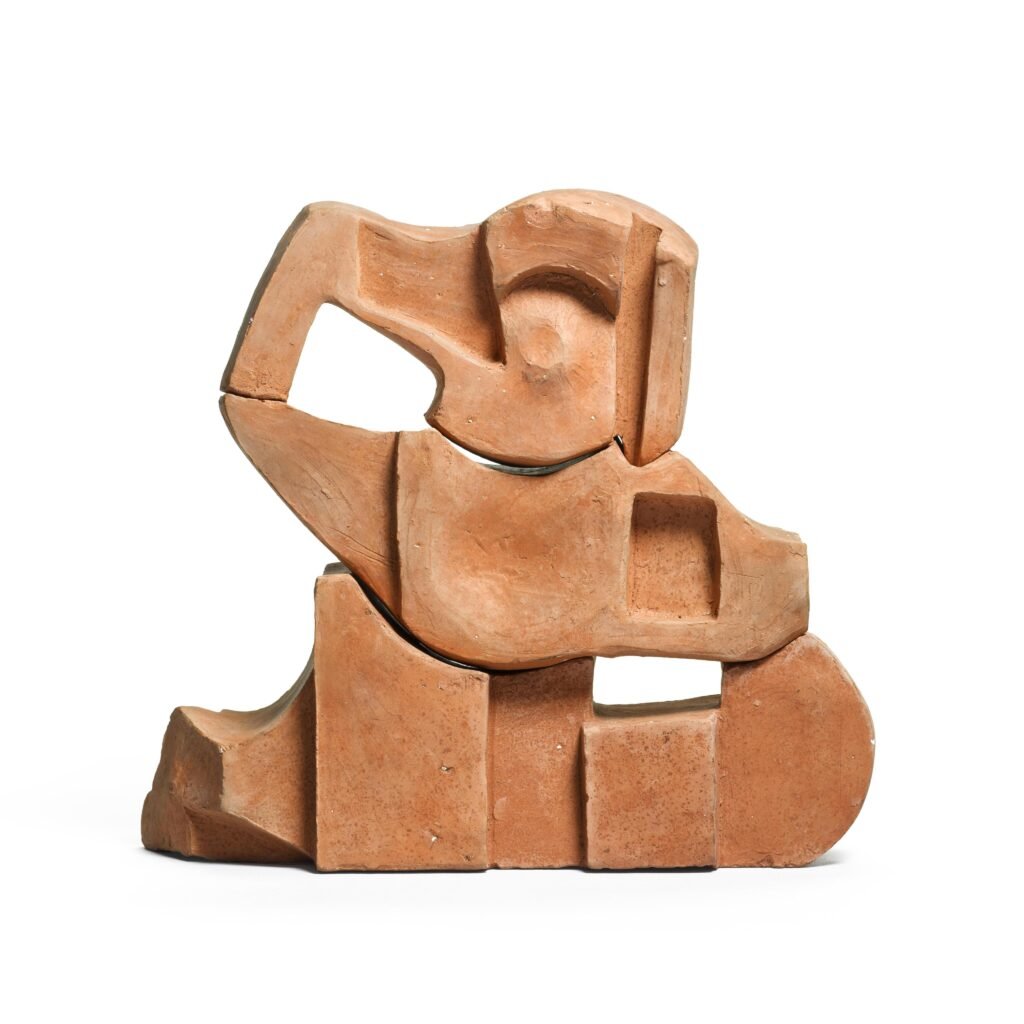
Her geometry is based on the proportions of the circle. “The essence of Arab art is the point, from the point everything derives,” she said.That conviction ran through everything she made. Though she was not religious, she was inspired by Sufi philosophers and thought that the Islamic rejection of pictorial art demonstrated that many parts of the Arab world had a natural inclination and sensitivity towards abstraction. She was not borrowing from Islamic art to give her work exotic credibility. She genuinely believed it was the more advanced visual tradition, and she built her career on proving that argument through the work itself.
Working Through War
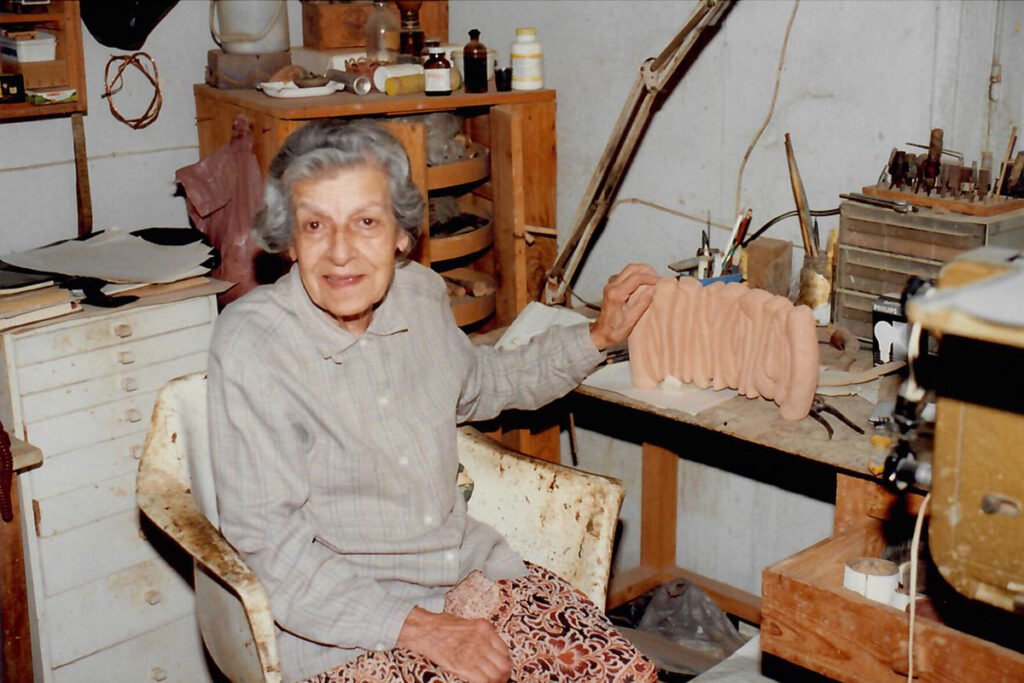
What makes the Choucair story more than an art historical footnote is what she endured in order to keep making the work. Choucair remained in Beirut and worked in her studio throughout the Lebanese civil war.One of her modular paintings from the late 1940s was pierced by shards of shattered glass during a bombing raid in the 1980s. The object bears witness to that history and the circumstances through which Choucair not only survived but also continued to work with energy and enthusiasm. A public sculpture she completed in 1982, commissioned by the Lebanese Lions Club and installed at the southern entrance to Beirut, was vandalised and then disappeared entirely. She responded to that loss the same way she responded to everything: by continuing.
Her daughter Hala said it plainly in 2013: “All the timings were wrong with my mother. She started with abstraction when people in Beirut were just discovering Impressionism. In the ’60s, no one was paying attention to her, and then when they started paying attention, the war started.”
The Recognition That Finally Came
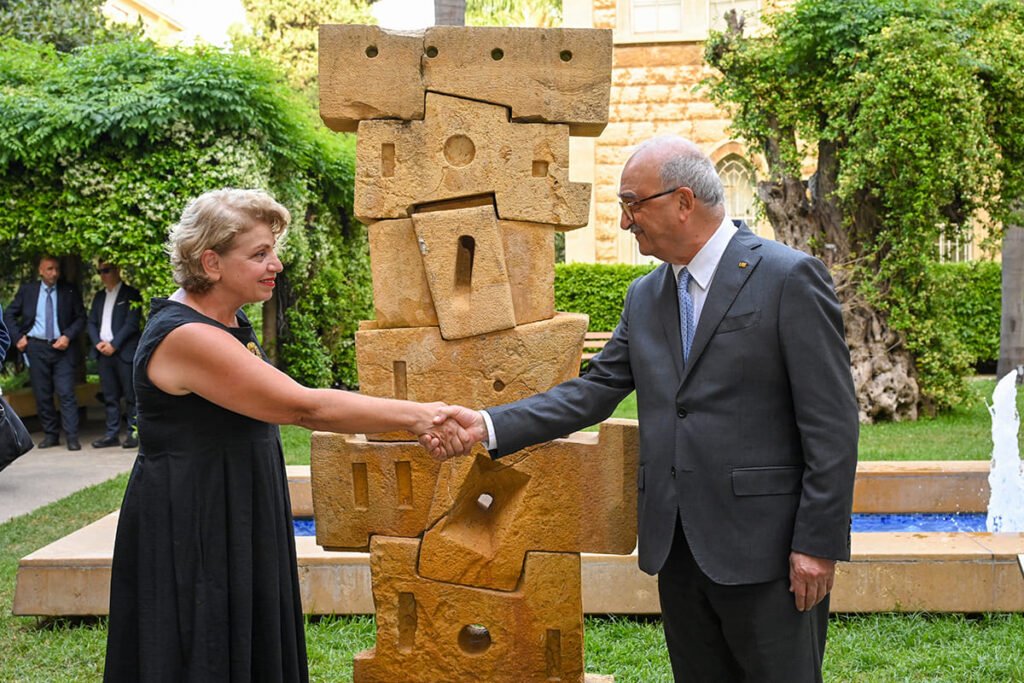
Choucair’s theories and creations went largely unappreciated and misunderstood for many years. She remained largely unknown outside a small circle of art lovers until a major 2011 retrospective in Beirut introduced her to a new generation of national and international audiences. Then came Tate Modern. The 2013 exhibition comprised over 120 works, many of which had never been seen before, bringing together paintings, sculptures and other objects made over six decades. When Tate curators visited her Beirut studio, her entire life’s work was essentially still there, she had not sold much of it. She had simply kept making things, for decades, in a city at war, with or without an audience.
Her work is now held at Tate Modern, the Metropolitan Museum of Art, the Centre Pompidou, Mathaf in Doha, the Sharjah Art Foundation, the Barjeel Art Foundation, and the Art Institute of Chicago, among others. She received an honorary doctorate from the American University of Beirut. She turned 100 in June 2016. She died on January 26, 2017, in Beirut.
Why She Still Matters
What Saloua Raouda Choucair proved, through the body of work she built, largely alone, over five decades, is that Arab abstraction was not a response to Western modernism. It had its own source, its own logic, and its own depth. She built a visual language from Islamic geometry, Arabic poetry, and mathematical form, and she defended it against every institution, every war, and every decade of indifference that tried to bury it. The world eventually found her. But she had never been lost.