
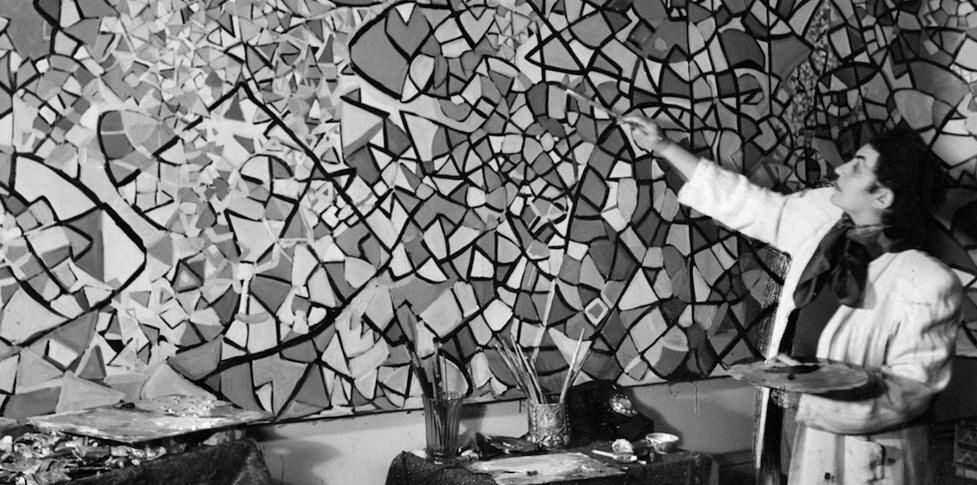
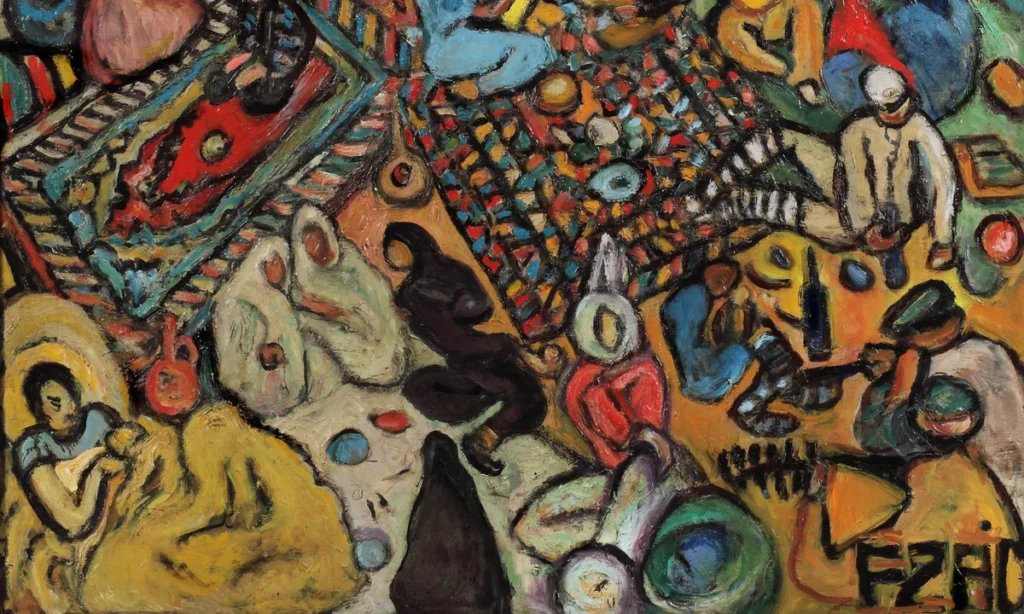
In 2017, Tate Modern organised a major retrospective of her work and called her “one of the greatest female artists of the 20th century.” She was 115 years dead by then. That gap, between what Fahrelnissa Zeid actually was and when the world decided to fully acknowledge it, is perhaps the most telling detail of her story. She spent decades making some of the most ambitious abstract paintings produced anywhere in the post-war period, moving between Istanbul, Berlin, Paris, Baghdad, London, and eventually Amman, and the art world received her with a mixture of fascination and condescension that never quite matched the scale of what she was doing. She outlasted all of it. She died in 1991, in Jordan, at 89, having spent her final decades teaching a new generation of artists in Amman. The reckoning came later, but it came.
Born into Tragedy, Shaped by It
Born into an elite and highly educated Turkish family, the first of the tragedies in Fahrelnissa Zeid’s life occurred at age twelve, when her father was murdered, and her beloved older brother was convicted of the crime. It was a rupture that marked her early life, but it did not halt it. Her family remained deeply connected to European culture and the arts, and Zeid was encouraged, unusually for a woman of her time and place, to pursue painting seriously. She was one of the first women to attend art school in Istanbul. In the 1920s, she travelled extensively across Europe, sketching and studying in museums. A turning point came with her 1928 enrolment at the Académie Ranson in Montparnasse, where she studied under cubist painter Roger Bissière. Paris gave her a framework, but what she built inside it was entirely her own.
Princess, Painter, Exile
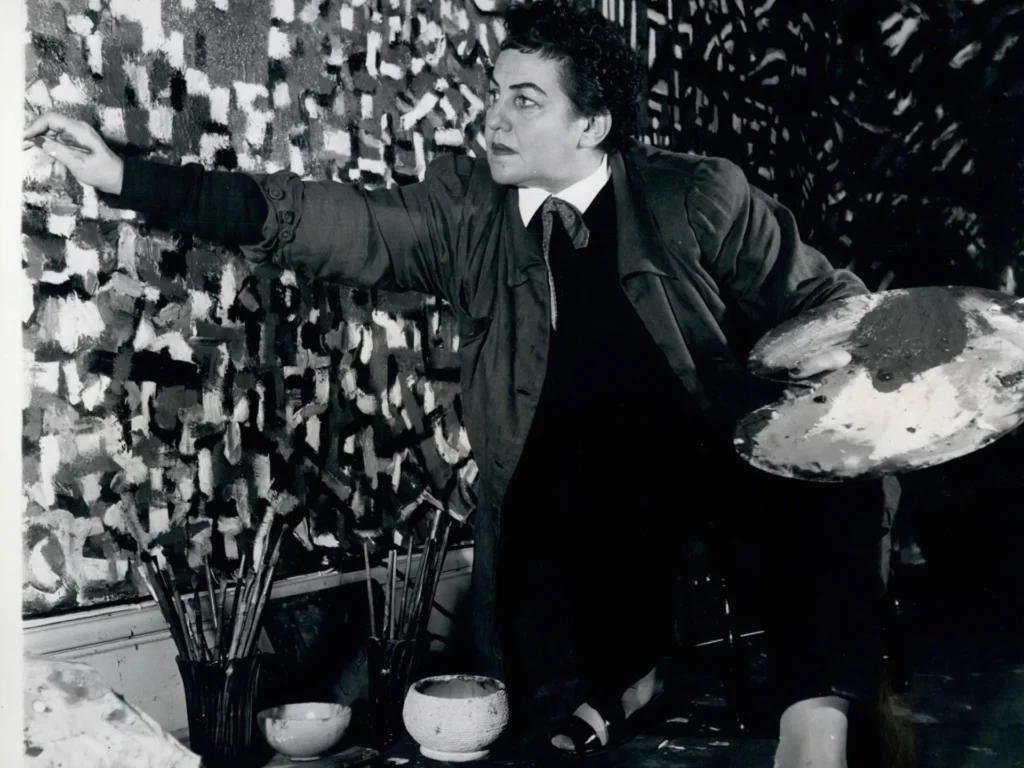
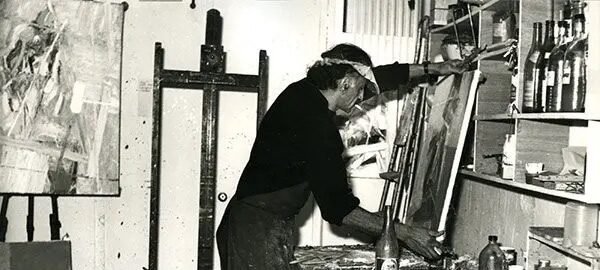
Her personal life was as layered as her canvases. In 1934, she married Prince Zeid bin Hussein, a member of the Hashemite royal family of Iraq. The marriage made her a princess and an ambassador’s wife, roles that came with enormous social expectations and very little room for a working painter. She moved between Berlin, Baghdad, Budapest, Paris, and London following her husband’s postings, carving out studio time where she could. Baghdad depressed her deeply. Paris was where she breathed. At the height of her career, she became friends with Jean-Michel Atlan, Jean Dubuffet, and Serge Poliakoff, exhibiting frequently alongside members of the Nouvelle École de Paris.
Then came 1958. A military coup in Iraq assassinated the entire Iraqi royal family. Her husband, then the Iraqi ambassador to Britain, narrowly escaped. They were given 24 hours to vacate the embassy, and Fahrelnissa Zeid, aged 57, having lived a life of extraordinary privilege, cooked her first meal in a rented London flat. Her career as a painter and society hostess came to an abrupt stop. She later described the period in devastating terms: “I no longer feel any magic in it, any enchantment around me. It is as if I had suddenly become afraid of colours and of life.”
The Work Itself
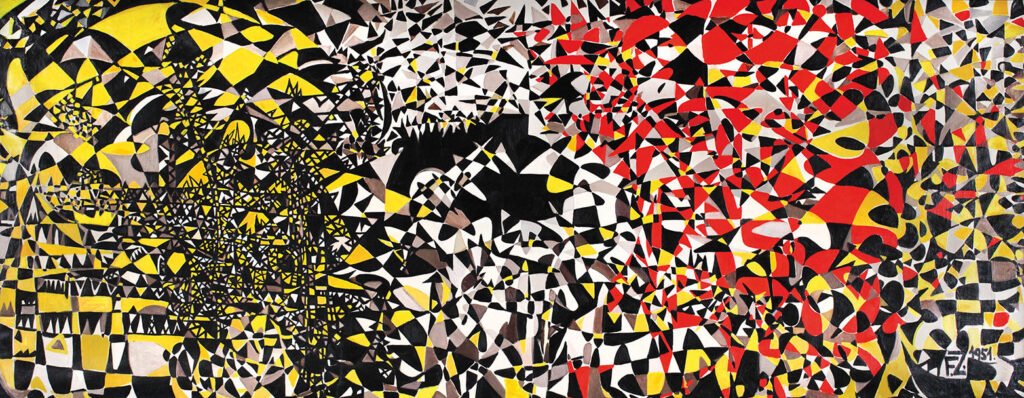
To understand Fahrelnissa Zeid, you have to stand in front of her paintings. She described herself as “a descendant of four civilisations,” and her canvases prove it. Byzantine geometry, Islamic patterning, Persian miniature, and European expressionism collide in works that are simultaneously structured and explosive. Her most celebrated piece, My Hell (1951), is a monumental, kaleidoscopic abstraction, jagged, dark, fractal, consuming. Her family later gifted it to Istanbul Modern, where it occupied pride of place in the gallery. Break of the Atom and Vegetal Life (1950/51) stretches over five metres and feels like looking at a stained-glass window designed for a cathedral that does not yet exist.
She did not set out to be an abstract painter. She once said, “I did not intend to become an abstract painter; I was a person working very conventionally with forms and values. But flying by plane transformed me. The world is upside down. A whole city could be held in your hand: the world seen from above.” That shift, from figurative to abstract, from ground level to aerial, from the conventional to the cosmic, defines the arc of her most powerful work.
Amman, and the Final Chapter
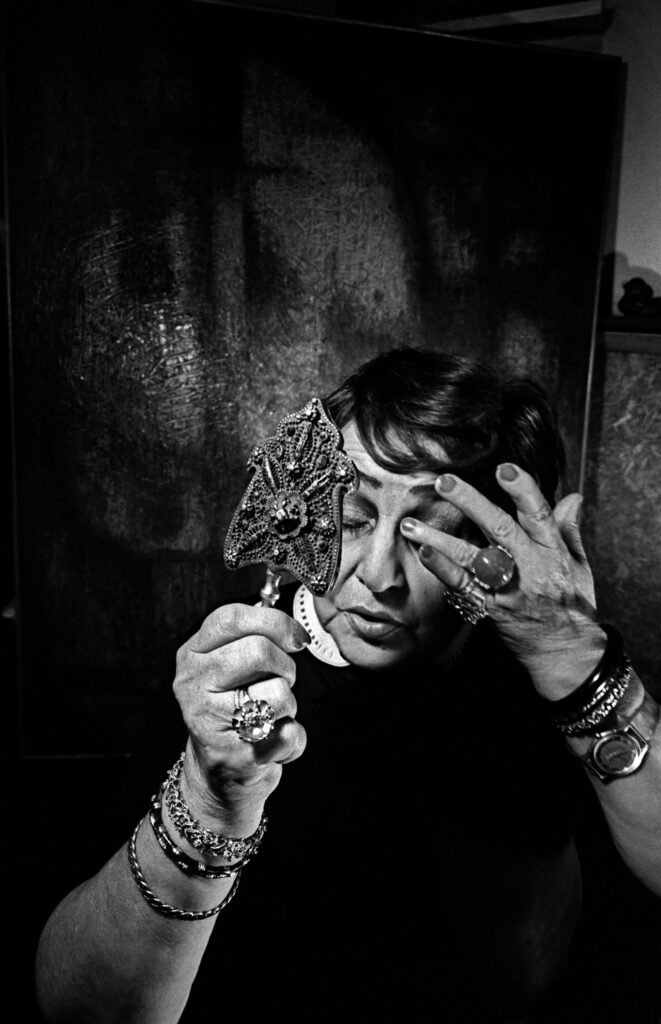
In the 1970s, she moved to Amman to join her son and began teaching art. What could have been a quiet retirement became something more significant. Her seminal 1981 group exhibition, held with her students, contributed to the normalisation of abstraction in Jordan. She was in her eighties, teaching, making work, passing on a visual language that she had spent a lifetime developing across four continents. She remained, in the words of one gallery director, “the most important Turkish and Middle Eastern female artist,” even as her departure from Europe had caused her to fade from the Western art world’s immediate view.
She did not fade from the work. Her record auction price, the USD 2,741,000 sale of Break of the Atom and Vegetal Life at Christie’s in 2013, confirmed what her canvases had always argued: that she belonged at the very top of 20th-century modernism. The Tate retrospective four years later made it official. Better late than never, though Fahrelnissa Zeid would likely have had something sharp to say about the lateness