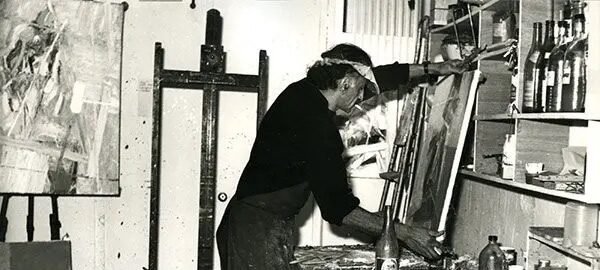
There is a particular kind of artist who leaves their country young and never fully returns, not because they abandoned it, but because they carried it with them so completely that it ended up inside everything they made. Chafic Abboud left Lebanon for Paris in 1947 at the age of 21, and spent the next 57 years painting from a city that was not his birth country, in a language that was not his first, within a movement that had not been built for him. He became one of the most significant Lebanese artists of the 20th century, and most of the world still does not know his name. His work is in the Centre Georges Pompidou, the Tate Modern, the British Museum, and Mathaf in Doha. It deserves to be better known.
Born in the Mountain
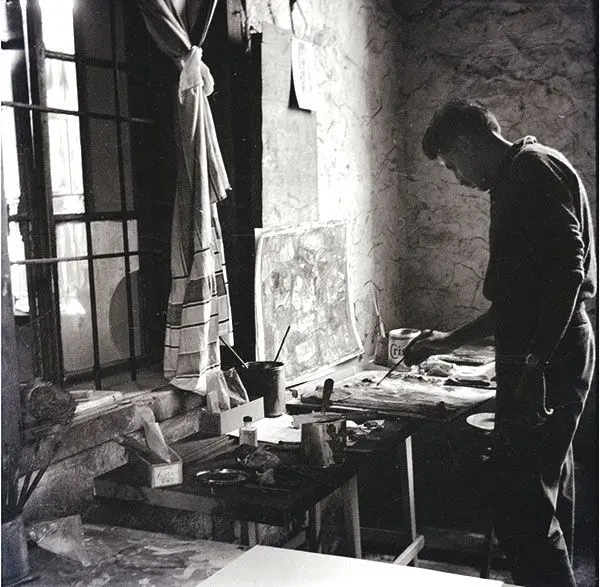
Chafic Abboud was born in 1926 in Mhaidseh, near Bikfaya, in the Lebanese mountains, a village defined by colour, light, and the kind of oral culture that leaves permanent marks on an artistic sensibility. The grandmother who told him stories, the Byzantine icons in the local churches, the landscape of his childhood, none of it ever left him, regardless of how many decades he spent in Paris. Motivated by these childhood memories, he produced two artist’s books, La Souris in silkscreen prints and Le Bouna in black and white etchings, that echoed his grandmother’s stories and drew from his grandfather’s naïve illustrations. The work was always rooted in origin, even when the surface looked entirely abstract.
He attended the Lebanese Academy of Fine Arts in Beirut, where he studied under Cesar Gemayel, a pupil of the acclaimed Lebanese artist Khalil Saleeby. His professors introduced him to Western schools of art and gave him the technical foundation he would need for Paris. In 1947, he went.
Paris, and the Hard Years
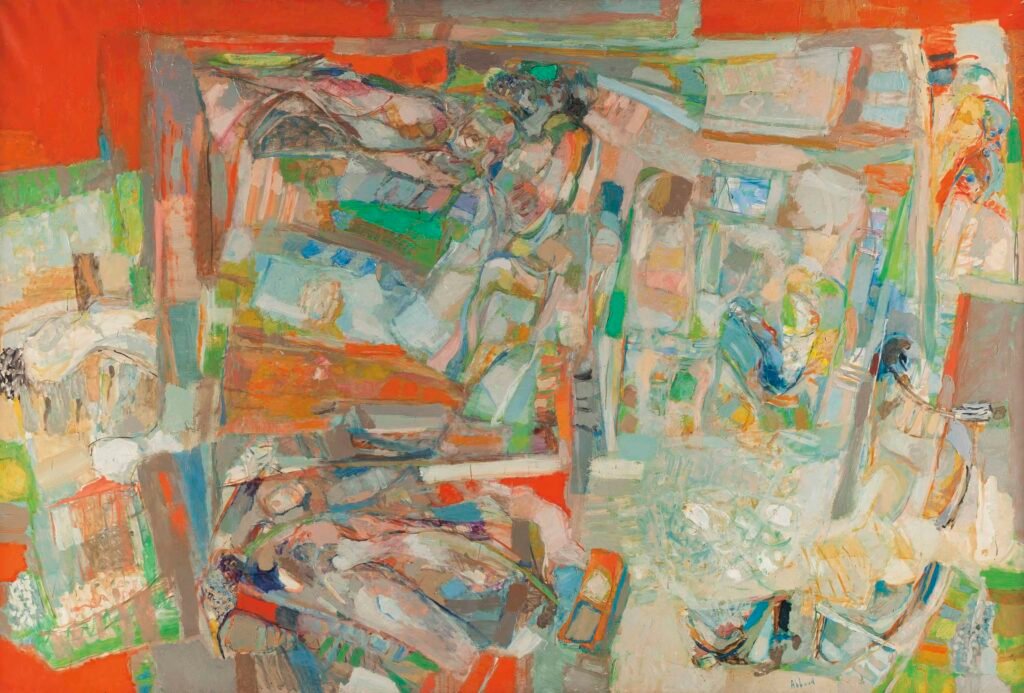
Paris in the late 1940s was the centre of the art world, and arriving there with no money and no connections was its own kind of education. Abboud returned to Paris in 1951, where he worked as a construction painter, a guide at the Louvre, and a server at Royaumont Abbey to sustain himself. He was learning the city from the inside, the way people who cannot afford to observe it from a distance always do. Within this vibrant cultural scene, he befriended intellectuals including the composer André Boucourechliev and the historian Paul Veyne. Paris was giving him a world.
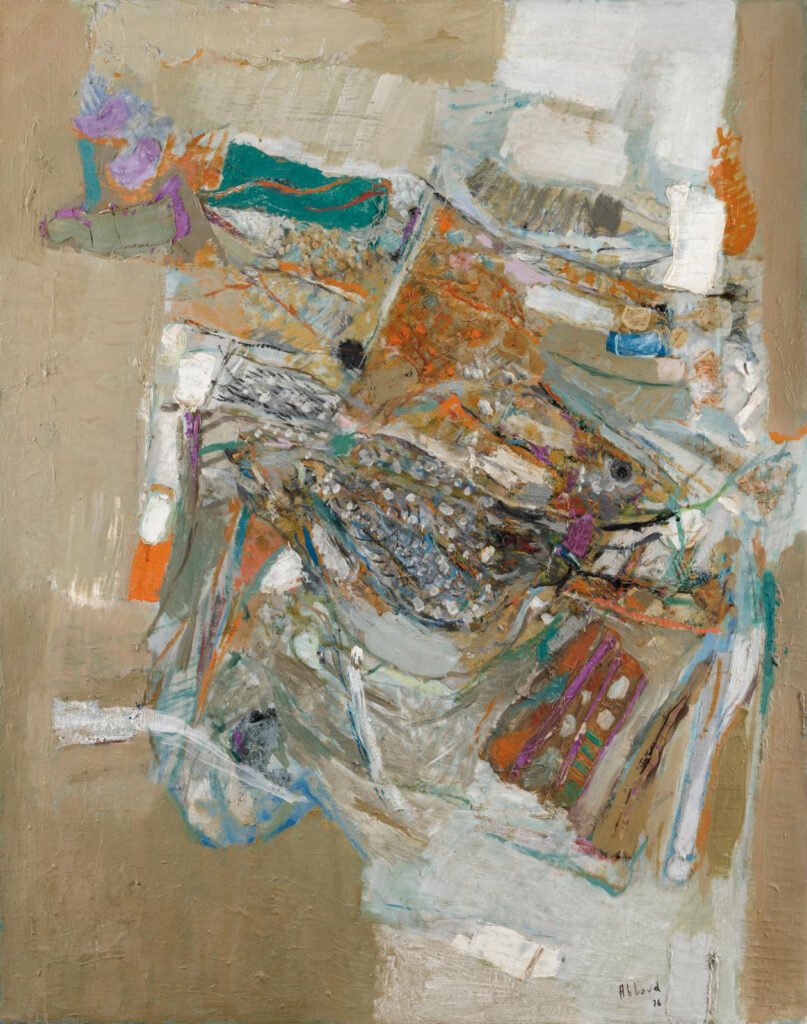
He worked in the ateliers of André Lhote and Fernand Léger, and received a scholarship from the Lebanese government to attend the École Nationale Supérieure des Beaux-Arts in Paris in 1952, studying drawing and engraving. He also travelled throughout Europe, exploring the Netherlands and Italy, absorbing the Flemish masters, the Dutch light, the Italian frescoes, all of it feeding back into what he was building on canvas.
The Turn to Abstraction
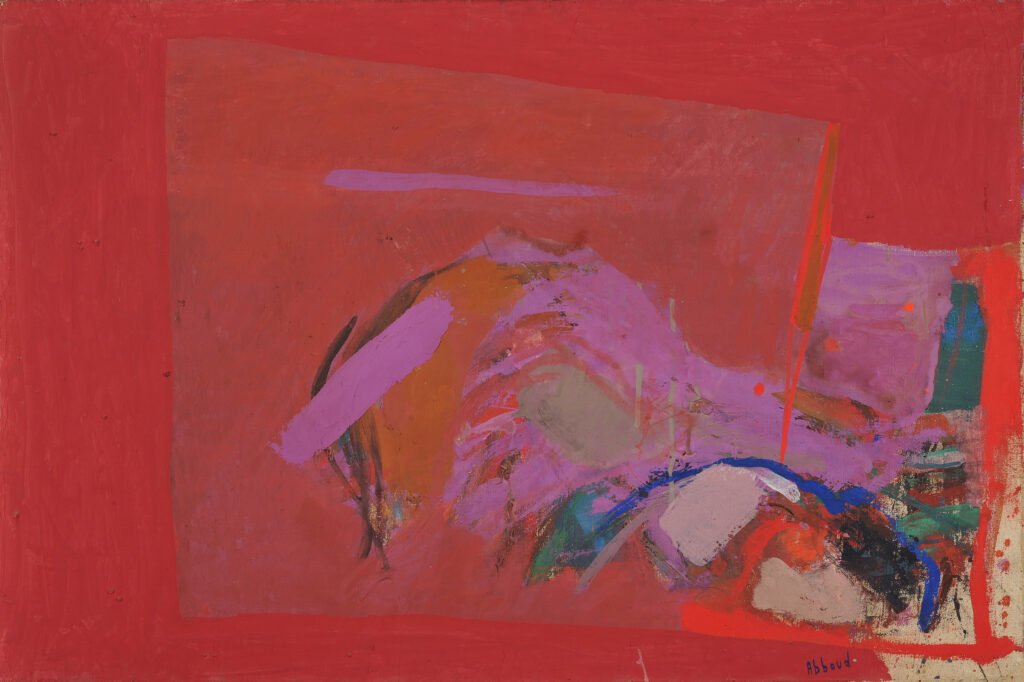
In 1953, Abboud made a decisive choice: he abandoned figuration entirely and yielded to abstraction. It was not a gradual drift but a deliberate break, the kind of decision that defines a career. He had been interested in figurative painting before this point, but it was in Paris, immersed in the modernist and abstract tendencies prevailing in the mid-20th century, that abstraction became his language.
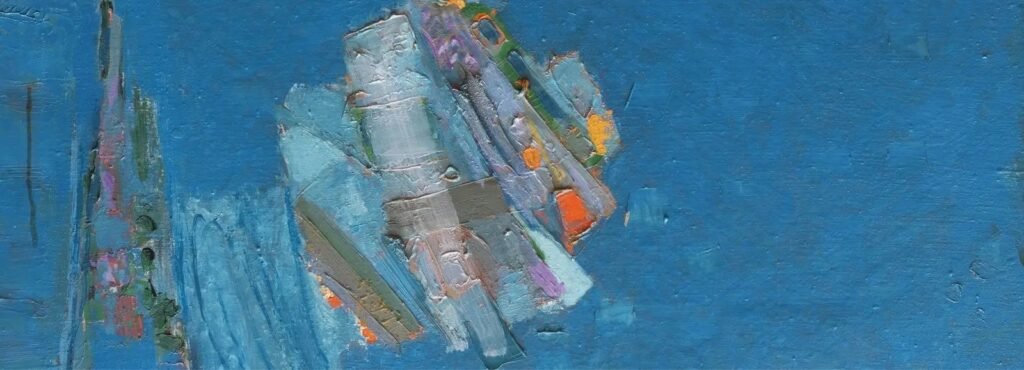
What made Abboud’s abstraction distinct was what it held inside it. Celebrated for his pioneering abstract painting, Abboud was inspired by the colourful landscapes of his youth in Lebanon, incorporating folkloric themes as well as Byzantine and Orthodox Christian symbolism into his work, developing a rich visual lexicon that set him apart. The canvases are luminous, warm ochres, deep blues, earthy reds, with a texture that feels simultaneously ancient and contemporary. They are not decorative. They are inhabited. Every painting contains the memory of a place the artist had not lived in for decades.
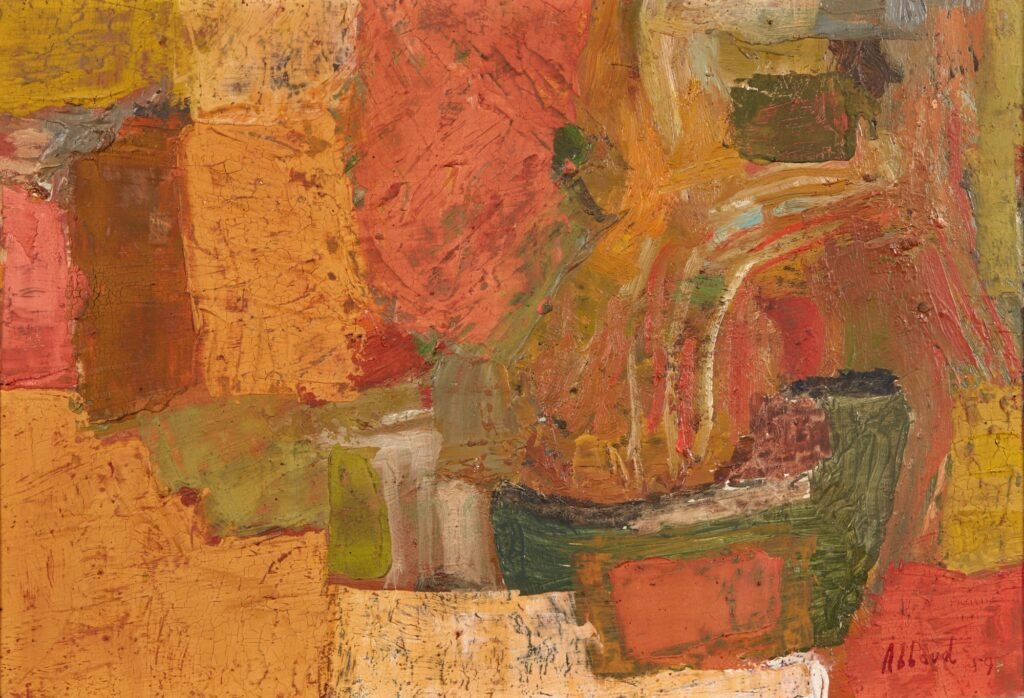
He participated in the Salon des Réalités Nouvelles from 1955, becoming a member of its committee in 1962, and his work was featured in the first Paris Biennial in 1959. He was operating at the centre of the Parisian art world, not at its edges. He also participated in FIAC in 1983, by which point his reputation in France was firmly established.
The Range of His Practice
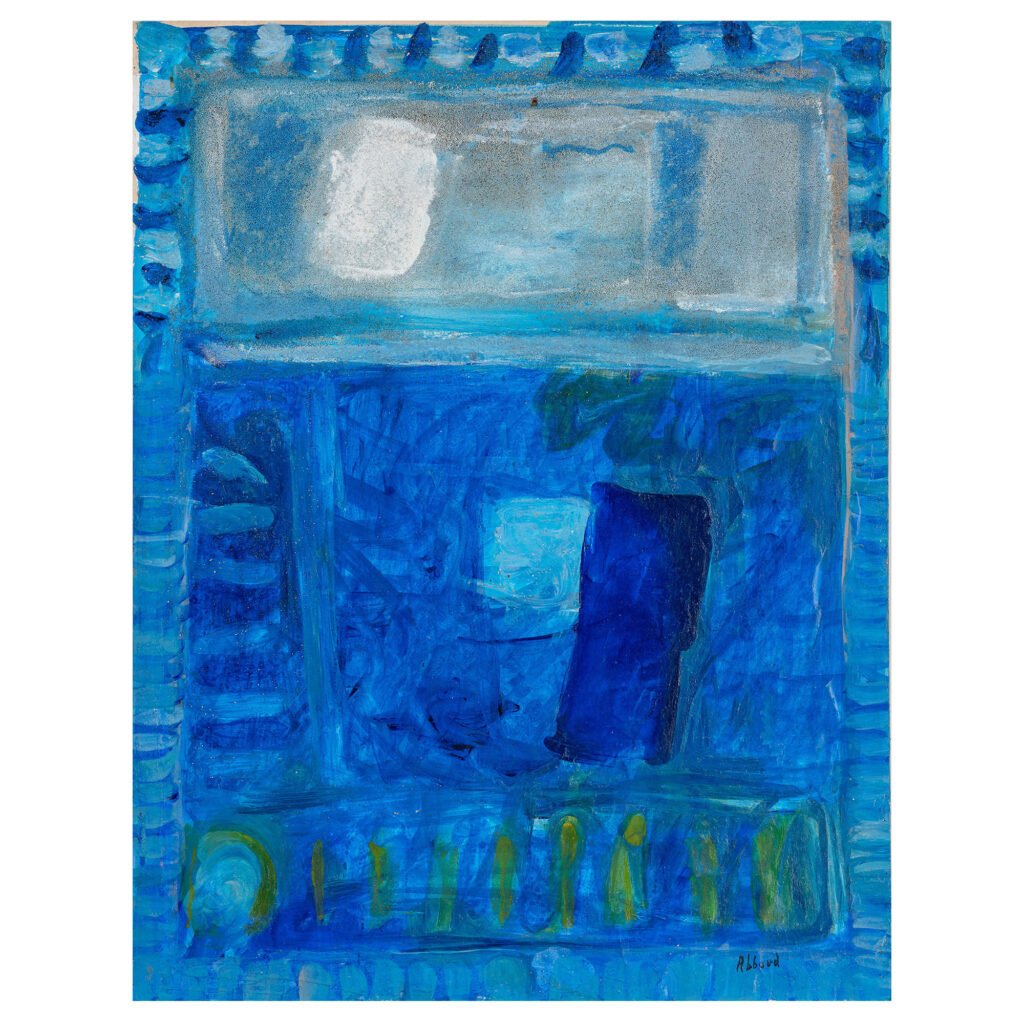
Abboud was not only a painter. Apart from painting, he showed interest in other media, including ceramics, terracotta, carpets, and lithography. He illustrated writings by the poet Adonis and produced important books on art. The breadth of his practice reflected a sensibility that was never satisfied with a single material; he wanted to understand how texture, surface, and form worked across every medium available to him. The results were consistent in vision, even when wildly different in form.
Recognition, Incomplete but Real
Abboud’s work has been widely recognised. He was part of Sajjil: A Century of Modern Art, the inauguration exhibition of Doha’s Mathaf: Arab Museum of Modern Art. In 2011, the Institut du Monde Arabe in Paris hosted a major retrospective, followed by another at the Beirut Art Centre in 2012. His work sits in the permanent collections of the Centre Georges Pompidou, the Tate Modern, the British Museum, the Musée d’Art Moderne de Paris, the Barjeel Art Foundation in Sharjah, and the Jordan National Gallery of Fine Arts in Amman, a global distribution that reflects how far his influence reached, even if his name never achieved the recognition it deserved outside specialist circles.
He died in Paris in 2004, in the city he had arrived in as a young man from the Lebanese mountains with everything still ahead of him. The mountains never left the work. Neither did the light.