
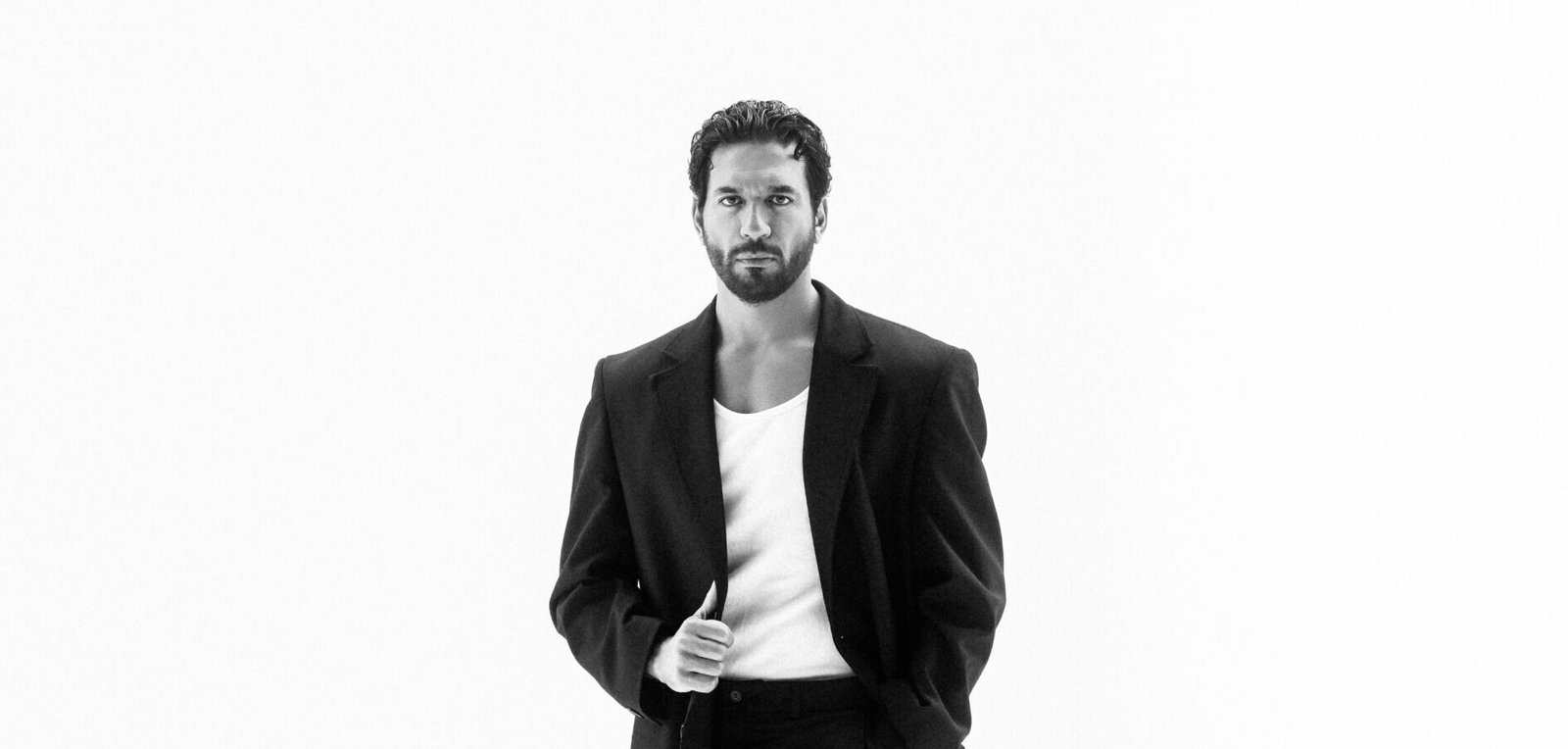
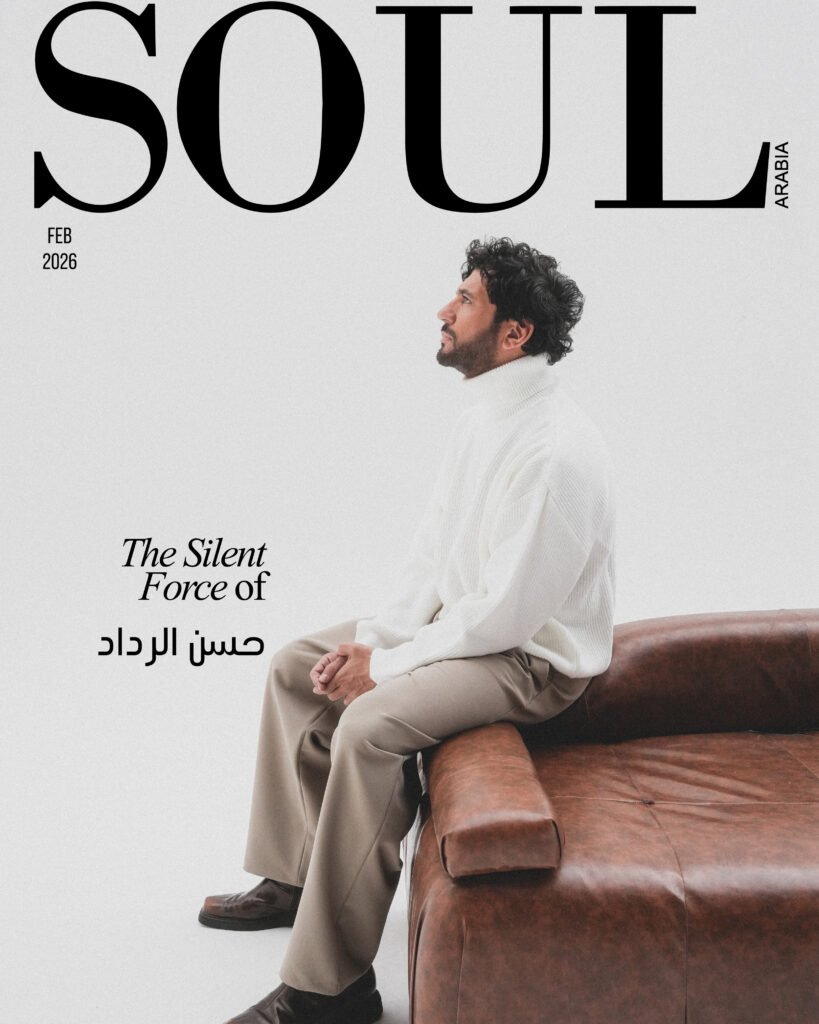
Some stars command a room with volume, and others shift the atmosphere with restraint. For Soul Arabia’s “The Silent Force” cover issue, we spotlight Hassan El Raddad at the exact point where public success walks hand in hand with private clarity, the moment a man stops performing strength and starts living it.
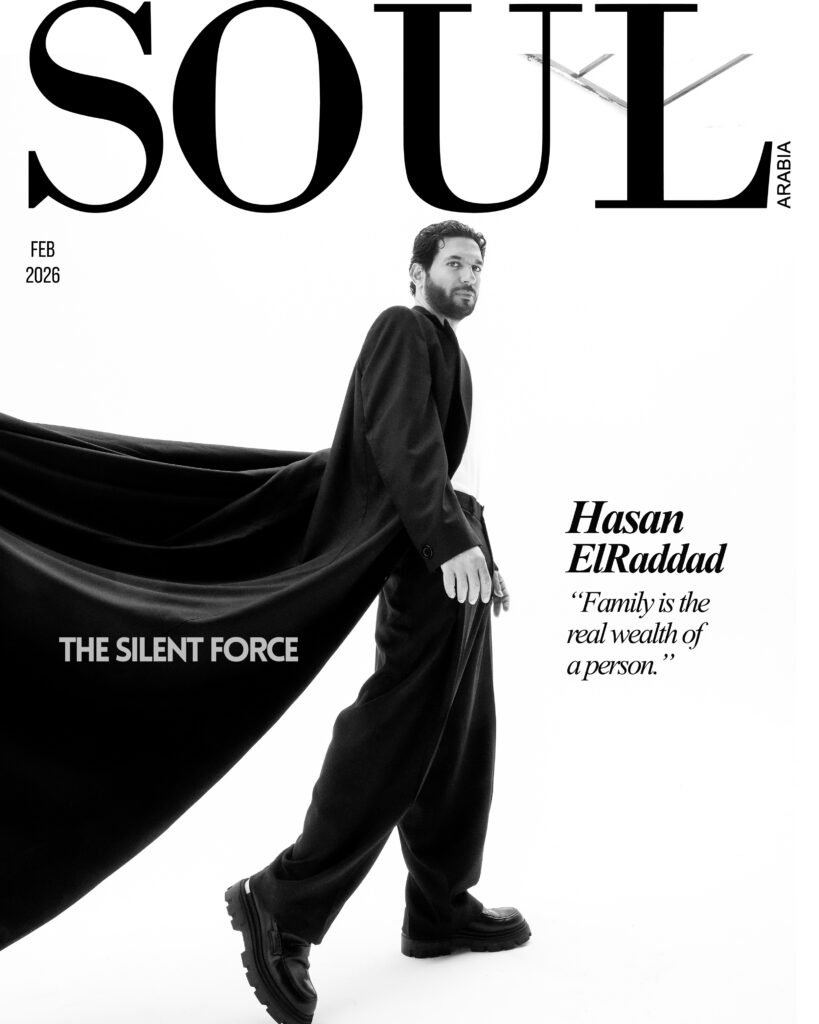
When we asked him who he is away from the public gaze, El Raddad didn’t begin with roles or achievements. He began with what life has carved into him. “I’m someone who has gone through many, many human experiences in my life that have definitely affected me greatly,” he said, not as a headline, but as a fact. Family circumstances, dramatic turning points, and the slow accumulation of perspective have changed the way he moves through the world. “I’ve started to feel like I see things from above. I don’t have much patience for trivial things anymore.”
Seeing What Money Can’t Touch
What feels most “silent” about El Raddad’s force is not distance, it’s discernment. He speaks of a new kind of detachment, an “asceticism, toward all material things,” including the very industry that made him famous. The shift is not bitterness. It’s calibration.
He returns, again and again, to the same core: “I deeply believe that family is the most important thing for a person, it’s the real wealth.” In a world that sells status as safety, he insists on a different truth: “I deeply believe that all the valuable and important things for a human being, money can’t buy. The most important thing is that a person is content and understands life.”
This is the spine of The Silent Force: strength that doesn’t need to prove itself through accumulation, only through alignment.
Fame, With Its Invisible Costs
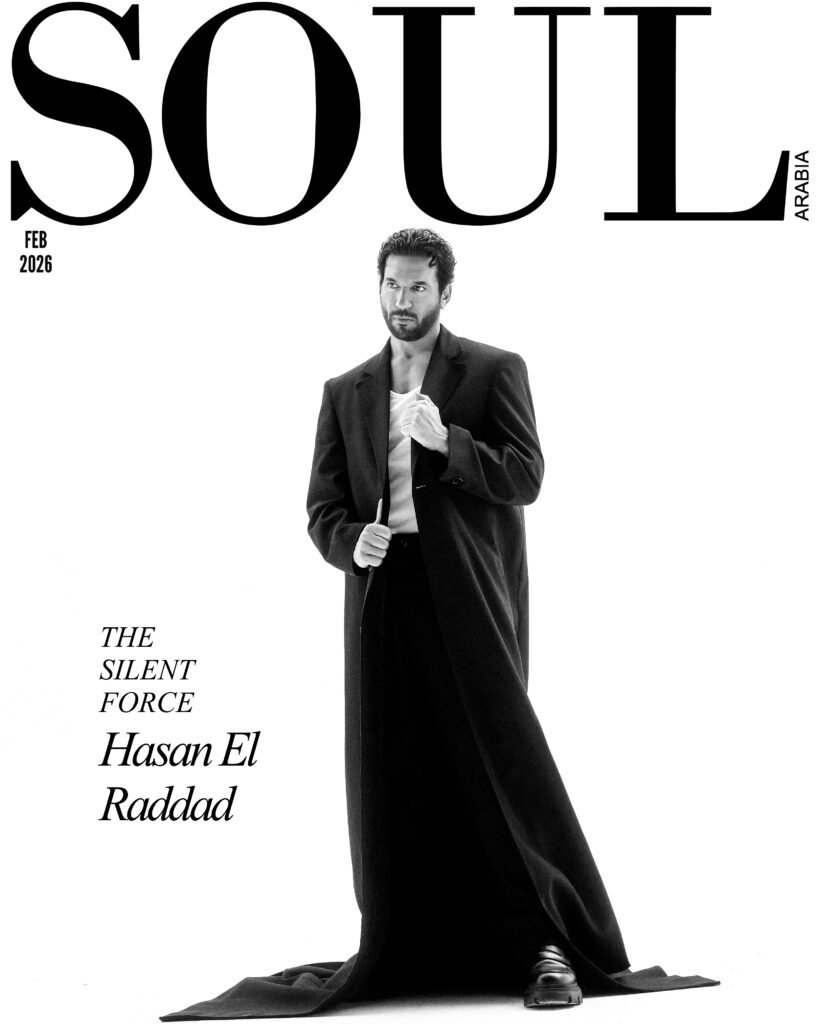
El Raddad is clear about one thing: he didn’t chase celebrity. “I never ran after fame, nor was fame ever on my mind.” Growing up in Damietta, surrounded by the Nile and the sea, and known as the son of a respected father, he says he was already familiar with visibility long before television.
Yet public life has its own rules. “For me, fame is nice for sure, but it comes with many, many restrictions.” He explains that fame takes many things from him, including some of his freedoms. The restriction isn’t only physical, but also where you can go, how you can move, and what can be filmed without consent. It’s also linguistic: the limitation of tone, the policing of expression, the double standards that allow everyone to speak freely except the one who is watched.
And in that tightening, loneliness can form, not because the person is isolated, but because the self is constantly edited in real time.
Responsibility as Quiet Discipline
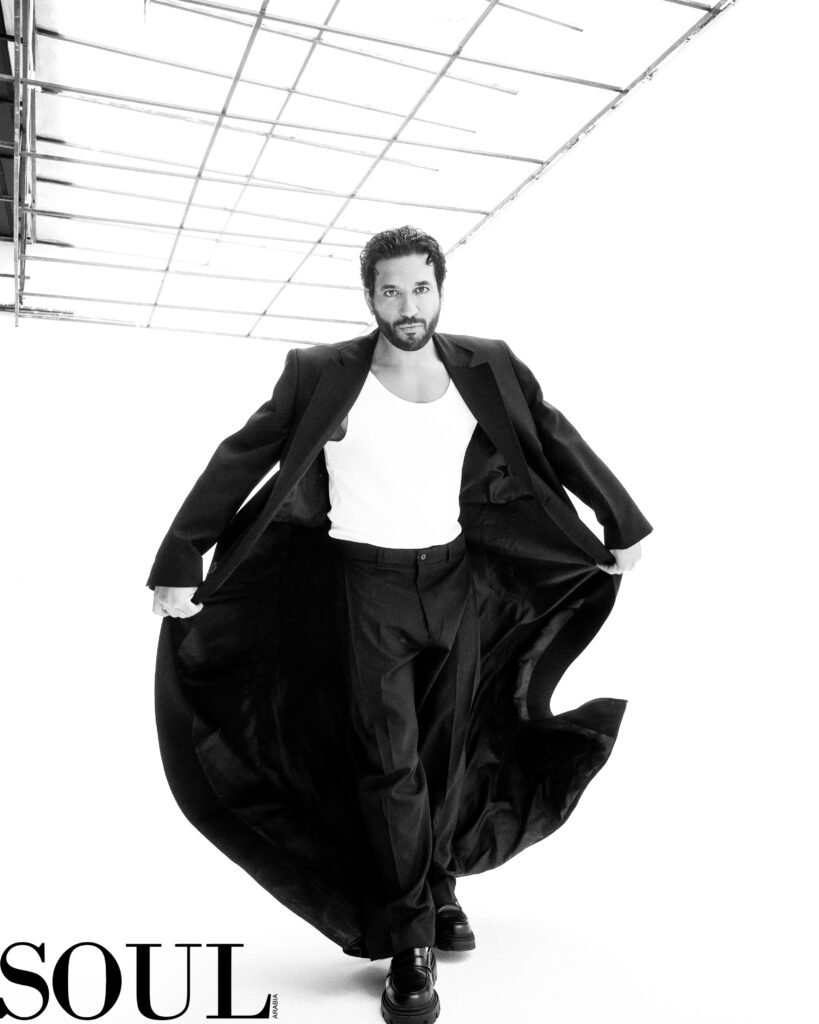
Still, El Raddad doesn’t position responsibility as a burden. He sees it as a duty. “Any person who is influential has a responsibility toward those people who follow him to be a good example.” He speaks about followers and fans who grew up with him, and the daily awareness that his choices land somewhere inside someone else’s life. That awareness becomes a moral compass: “When you feel you affect people, you try to be positive and ask yourself, what can I benefit these people with?”
This is a silent force in its purest form: influence that seeks usefulness.
Masculinity, Redefined Without Noise
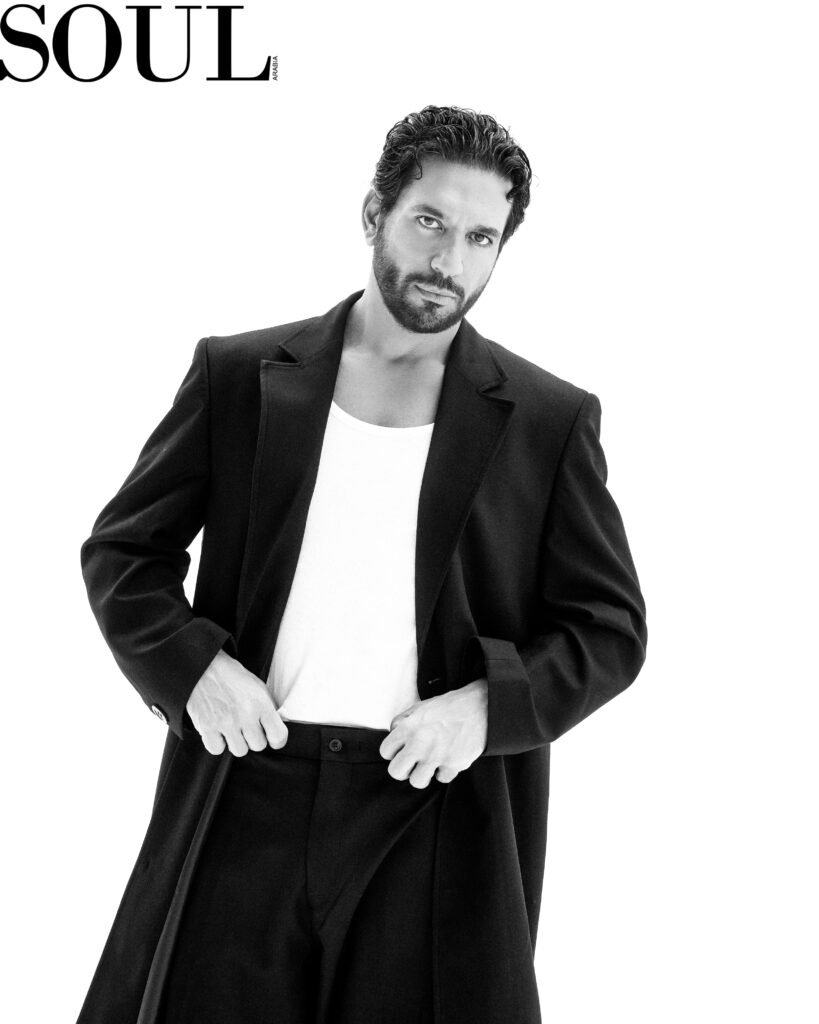
When asked about masculinity, on-screen and off, El Raddad refuses the performance archetype. “Masculinity isn’t a biological classification. Masculinity is the qualities of being a good guy, endurance, responsibility, giving, sacrifice, and loyalty.” A man shows up for his friends, contains and supports his partner, raises his children with care, and holds his principles steady, even as imported narratives attempt to reshape what “the modern man” should be.
It’s not an old model or a new one. It’s a rooted one.
A Chapter Marked by Grief, and a Different Pace
One of the most defining shifts in his rhythm came through loss. After learning of his mother’s illness in 2016, he describes a long period where ambition fell back. “My mother was my priority, and work became thrown way back.” After her passing in 2021, grief didn’t just hurt; it rearranged his relationship with striving. “I turned down many projects, and I found myself working at distant intervals.”
Now, he is learning to balance two selves: the ambitious young man who “carved in rock,” and the older man who sometimes says, “it doesn’t matter.” The silent force isn’t in denying either; it’s in holding both and choosing what deserves energy.
The Rule He Lives By
If El Raddad’s presence feels grounded, it’s because he lives by a simple code. “People to me are all the same.” He speaks about respect, about not treating anyone differently because of status, and about a certainty that stabilizes him: “I understand my provision is on God. I work hard and strive to deal with people equally.”
And that, ultimately, is why he sits at the center of this cover: not because he is loud, but because he is clear.
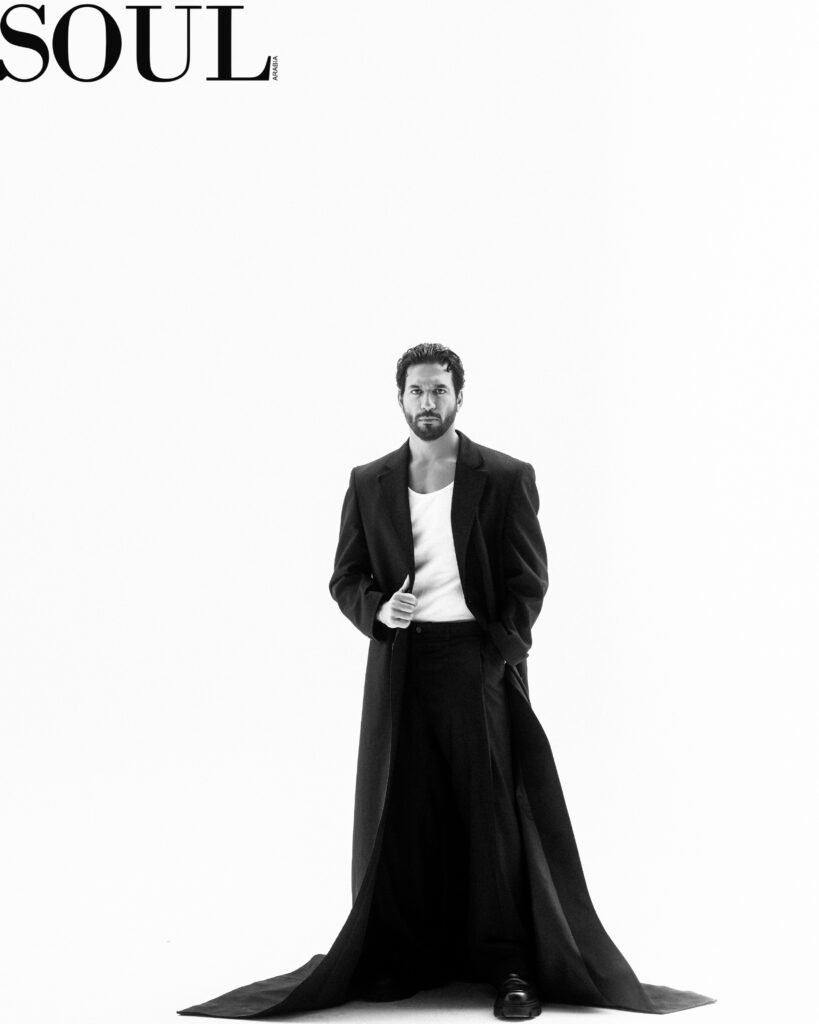
Editor-in-Chief: Sultan Abu Tair, photographed by Christine Saliib and styled by Waksa, Hassan’s black suit from Davanti tailor, White Knit & Taylored Trousers from Seven, words by Mohamed Alaa.