
There is a particular kind of thrill that comes from slipping into a shoe designed decades ago and realising it looks just as sharp today as it did the first time it appeared on a runway, a film set, or a royal’s foot. Not because fashion is cyclical, though it is, but because certain shoes were simply designed beyond their era. They landed so perfectly, so completely, that time never really had anywhere to take them.
These are not just collector’s items or museum pieces. They are shoes that women still hunt down in vintage markets and pre-loved boutiques from Beirut to London, shoes that designers still reference and replicate season after season without ever quite matching the originals. This is our edit of the five vintage designer shoes that did not just make fashion history, they became it.
The Chanel Two-Tone Slingback, 1957
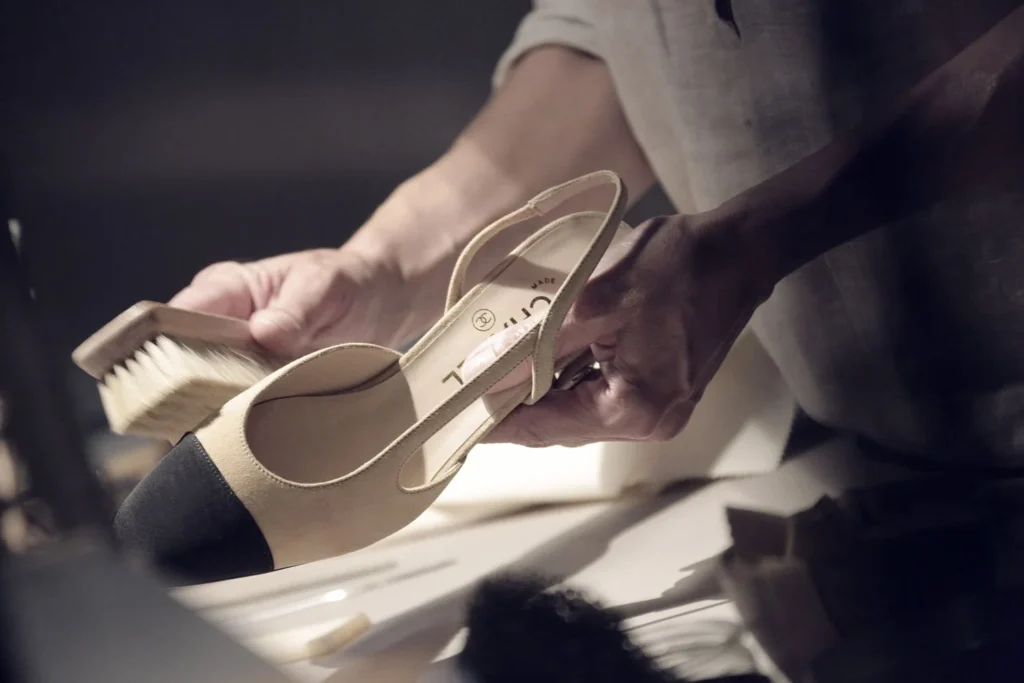
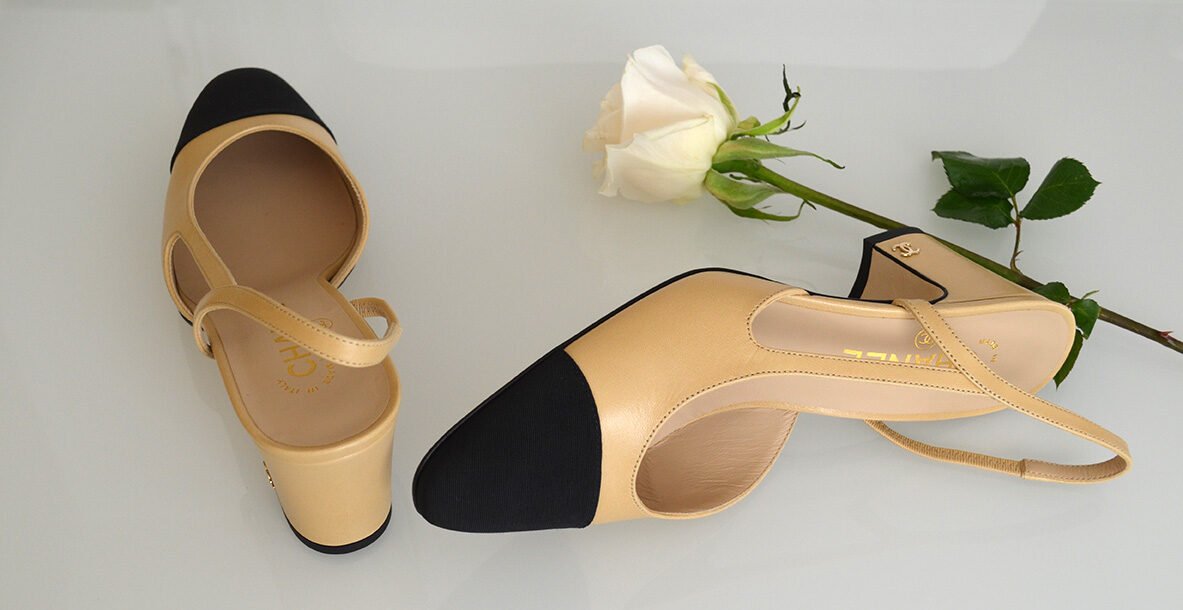
Before Coco Chanel designed this shoe, women’s heels were either torturously impractical or aggressively sensible. She wanted something in between, something that was elegant but would not destroy your evening. The cap-toe two-tone slingback, which arrived in the late 1950s, was designed to lengthen the leg while visually shortening the foot, a clever optical trick that the beige-and-black combination pulled off perfectly. Nothing about it was accidental. The nude tone was chosen to extend the line of the leg, the black cap to protect the toe and add contrast, and the low heel to keep things wearable without sacrificing any elegance.
The press called it the “New Cinderella Slipper” when it first appeared, and it has been in near-constant production ever since. More than six decades later, it is still the first thing many women reach for when they want to look put-together without thinking too hard about it. That kind of longevity is not luck. It is genius.
The Roger Vivier Belle Vivier Pump, 1965
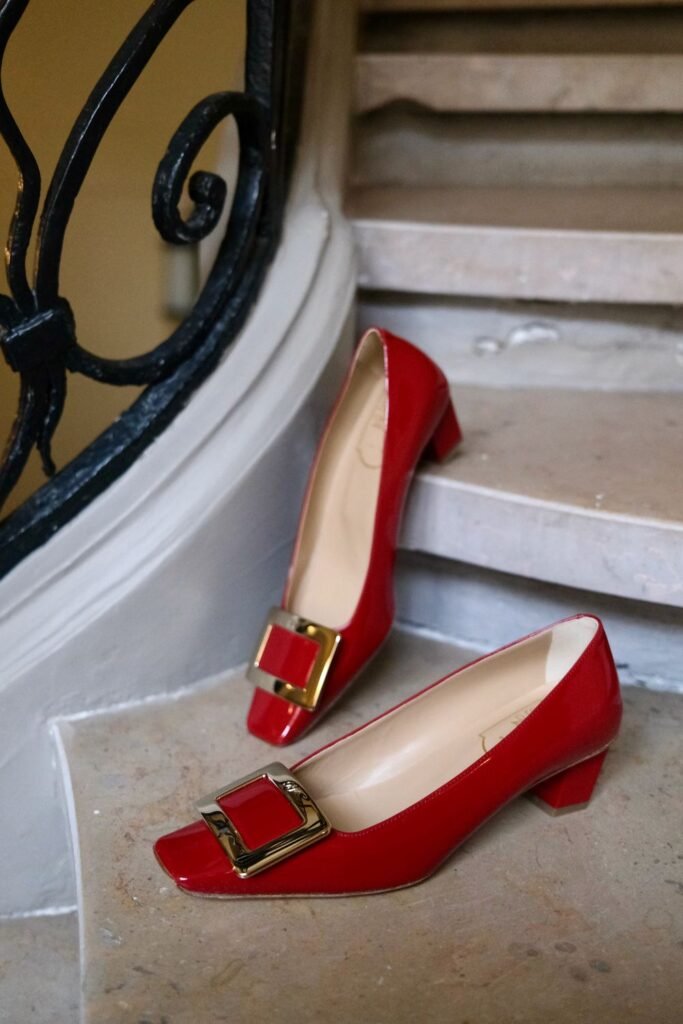
Roger Vivier spent his career quietly being responsible for things that other designers got credited for. He is widely credited with developing the metal shaft inside the heel that made the slim stiletto possible, which means that every sky-high heel you have ever worn traces its existence back to this man. But his most enduringly beautiful creation is not the stiletto itself. It is the Belle Vivier pump.
First launched in 1965, the Belle Vivier’s square-heeled silhouette with its pilgrim-style buckle became iconic two years later when Catherine Deneuve wore it in Luis Buñuel’s Belle de Jour. This film somehow made icy elegance look devastatingly dangerous. That association never left the shoe. It still carries that energy today: polished on the surface, complicated underneath. If you ever find a vintage pair, you do not walk past them.
The Salvatore Ferragamo Rainbow Wedge, 1938
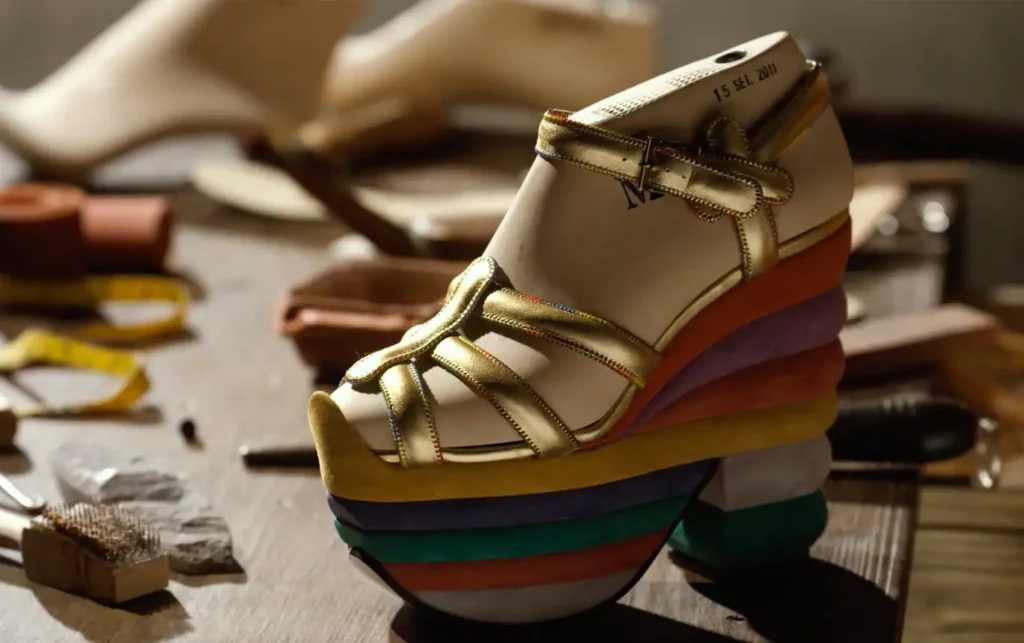
The story behind this shoe is almost too good to be true, but it is all fact. Salvatore Ferragamo created the Rainbow Wedge during the Great Depression, when material shortages forced him to use cork and wood. He made the first one for Judy Garland, and it became the first platform sandal of the 20th century.
What Ferragamo understood, which many shoemakers still do not, was that beauty and engineering are the same conversation. He studied anatomy to understand how weight is distributed across the foot. The Rainbow Wedge, with its stacked layers of multicoloured cork rising in a perfect arc, was the result of that thinking: a shoe that was genuinely comfortable, wildly original, and completely ahead of its time. Platform soles have never really gone away since, and every time they come back around, this is where it all started.
The Gucci Horsebit Loafer, 1953
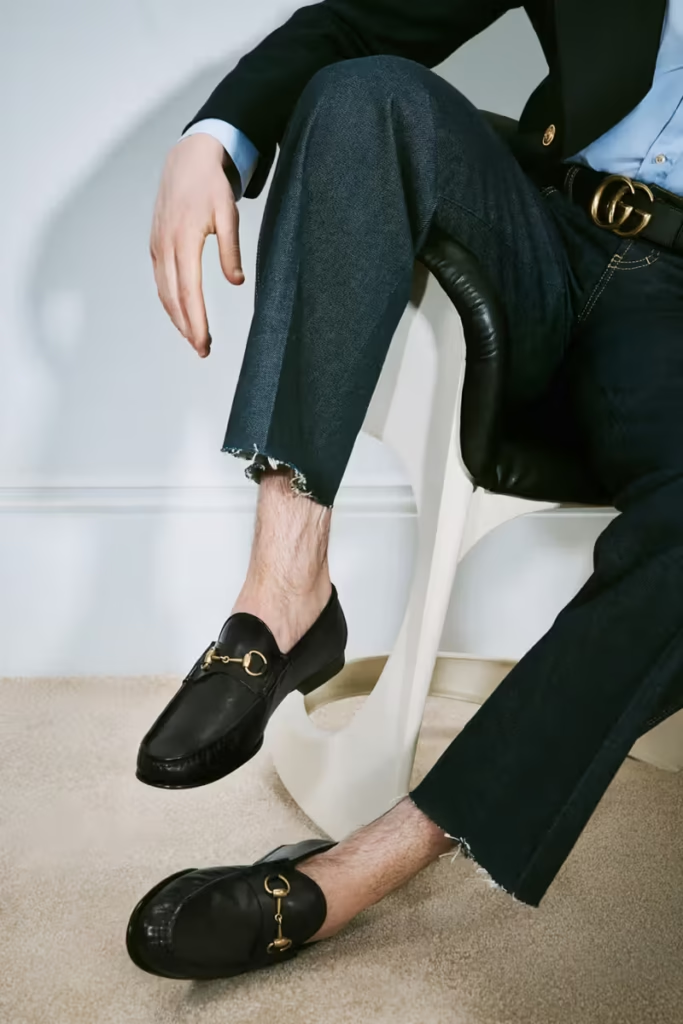
The Gucci Horsebit Loafer is one of those rare fashion objects that has been worn by genuinely contradictory kinds of people: Wall Street bankers, Italian aristocrats, 1970s rock stars, and downtown art school students, and somehow looked right on all of them. Aldo Gucci, son of the brand’s founder, took inspiration from the loafer silhouettes he spotted during a trip to New York, then topped the leather upper with a gold horsebit as a nod to the brand’s deep connection with equestrian culture.
That was 1953. The shoe has barely changed since. It is still made today in something close to its original form, which is either a sign that Gucci got it completely right the first time or that the world simply refuses to let it go. Probably both.
The Manolo Blahnik Hangisi, 2008
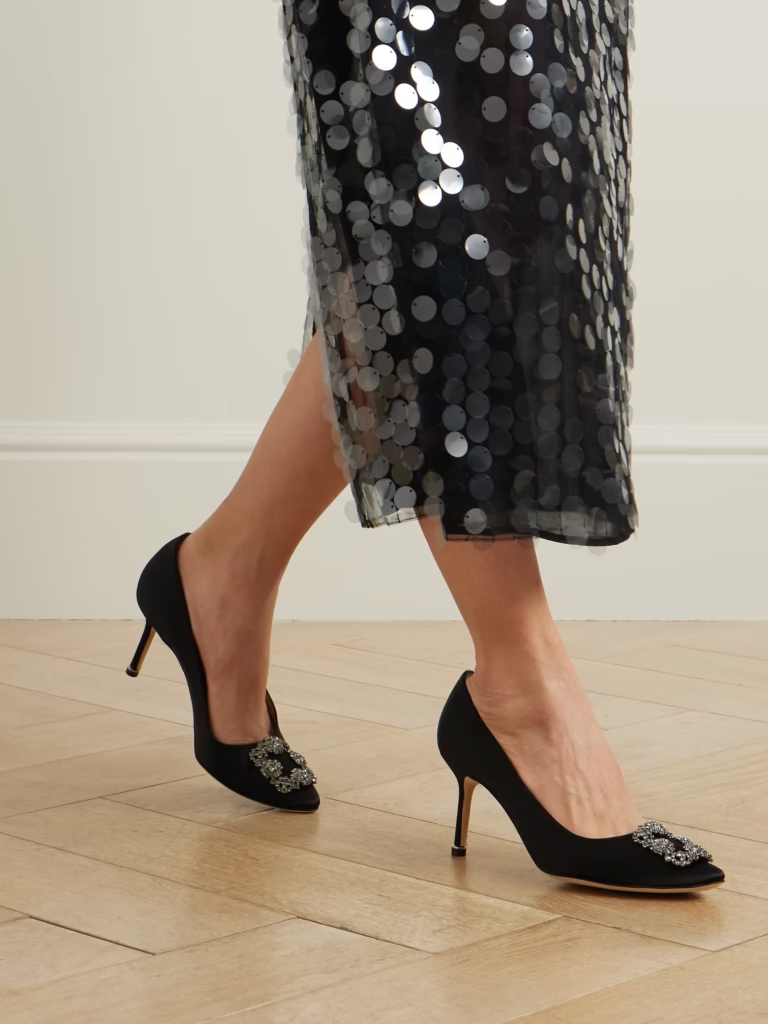
The Hangisi is the youngest shoe on this list, but it earned its place faster than almost anything else in contemporary fashion. The crystal-buckle pump launched for spring 2008, and its cultural moment arrived almost simultaneously, when Mr. Big got down on one knee with a pair in hand in the first Sex and the City film. It was unscripted, apparently. Just a shoe that was so right for the moment that it wrote itself into the scene.
What makes it vintage in spirit, though, is what Manolo Blahnik was actually doing: referencing a much older tradition of embellished court shoes, the kind Roger Vivier had been making since the 1960s, and making them feel urgent again. The Hangisi in blue satin has since become the most requested “something blue” for brides around the world. It went from new release to icon in about twelve months, and it has never lost that status since.
The best vintage shoes all share one quality: they were made by people who were not trying to follow what was happening, but to create something that would last past it. That instinct, to build beyond the moment, is exactly what makes them worth finding, worth keeping, and worth writing about decades later.