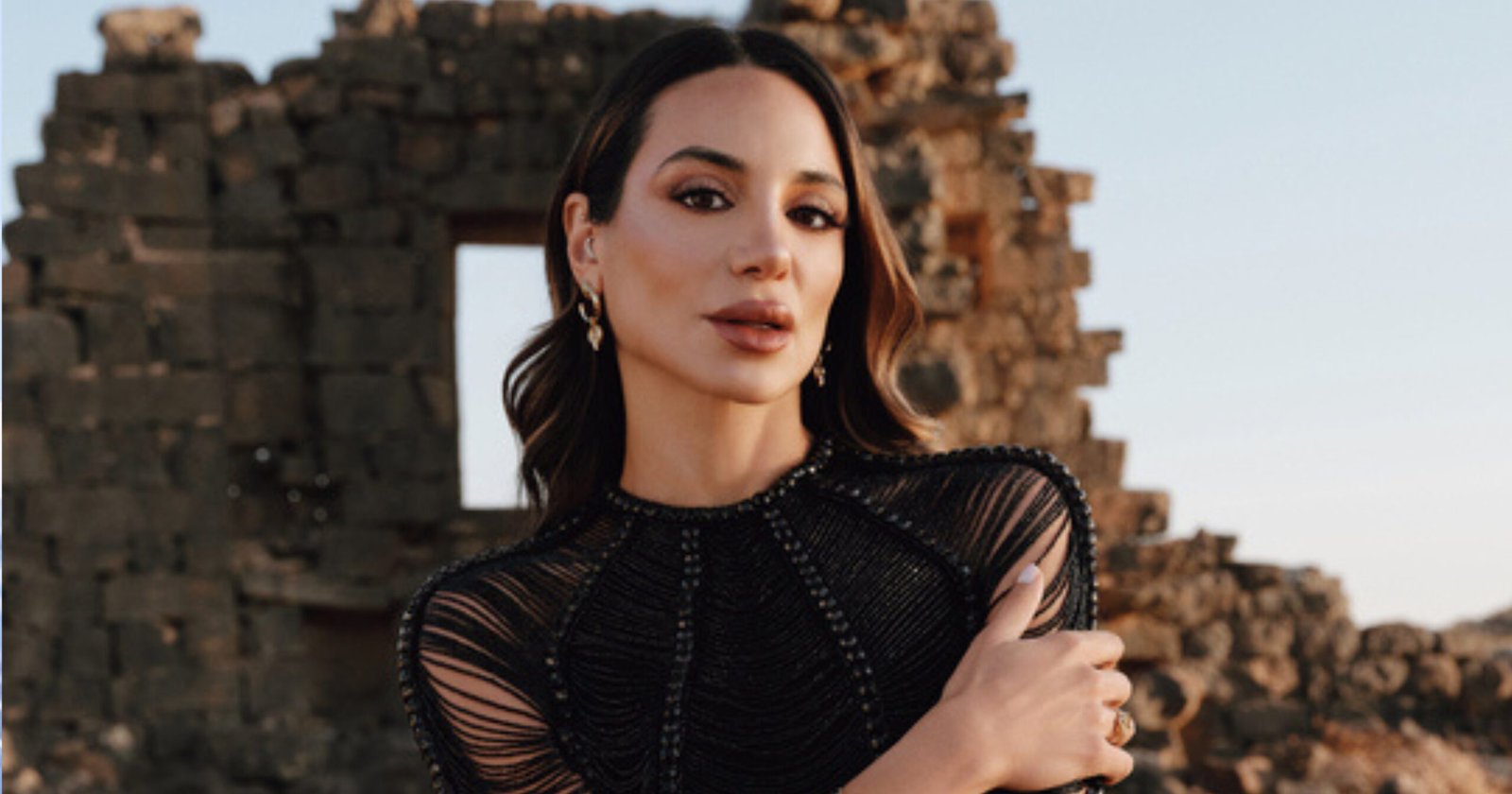

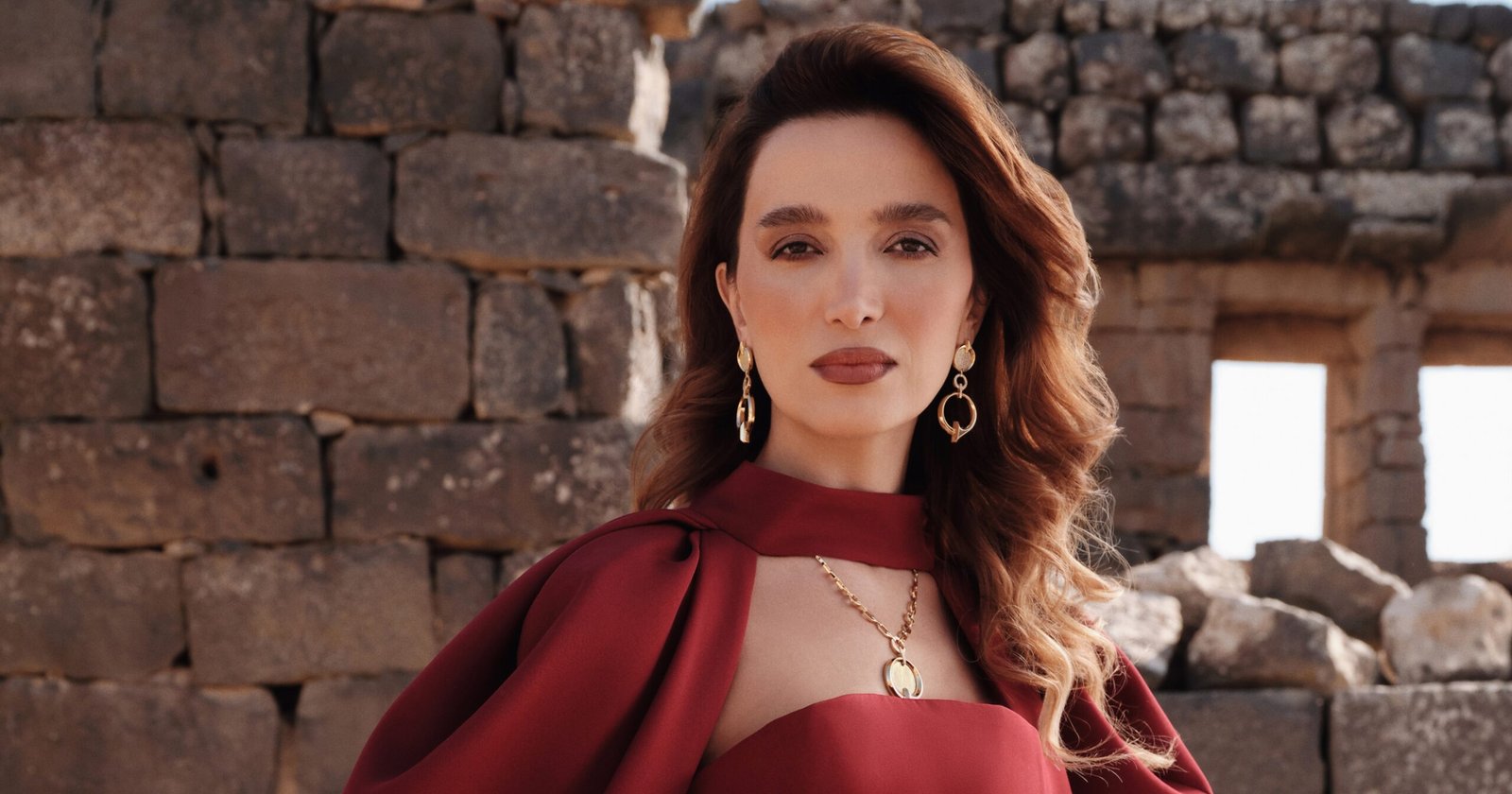
Growing up in Jezzine, a mountain town in South Lebanon that lived under occupation until the year 2000, marked her childhood by fear, hiding, and bombardment. “You couldn’t go in or out,” recalls the TV host Lana Medawar, describing how it was hard to live in an area completely closed off with checkpoints everywhere. “My real window to the world, discovering people, ideas, everything, was through books.”
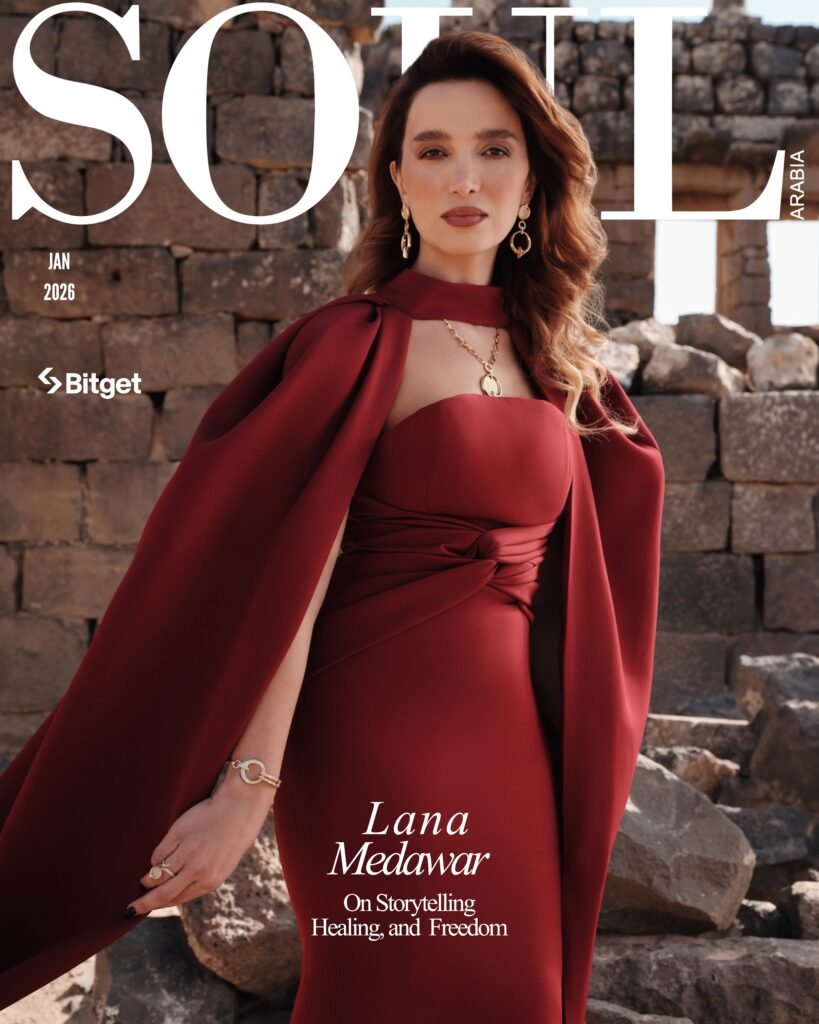
In that confined place, she found freedom through stories. And in her imagination, she saw herself on television. “I would always imagine myself on television, presenting, and I would play with my friends pretending I was the TV host.” Everyone knew this was her dream. “Sometimes, when you grow up in a very difficult environment, a war environment, you naturally start searching for ways to free yourself. Not intentionally, but subconsciously. It becomes what they call a coping mechanism, and my coping mechanism was rooted in novels.”
Now, the Lebanese journalist and founder of the Storytelling School and Solist Mindfulness Hub embodies what happens when childhood dreams forged in hardship transform into tools for collective awakening. With over 1 million Instagram followers, Lana represents a shift from traditional political media to human journalism, a transition rooted in personal necessity and a belief that building the human comes before building political opinions.
Multiple Births
For Lana, rebirth isn’t a single moment but a continuous process. “A person keeps creating new beginnings. They keep reinventing themselves,” she explains. “Your first birth is the day you come into this world. After that, you continue creating new births, because you cannot evolve unless you kill older versions of yourself. Unless the old dies, unless you shed your skin and make yourself anew.”
The biggest professional rebirth came when she left a 19-year career in political media, transitioning completely to digital media. “All of this happened at the same time; it was like everything old in me had to die so I could create a new version of myself.”
“I love challenges more than successes,” she says, “because real growth, true growth, happens when you’re at the bottom, not at the top. The top is simply the result of how far down you went before rising again.”
From Politics to the Human
Around 2019-2020, when the revolution in Lebanon began, Lana felt her beliefs start to change. From her position in political media, she had very little ability to create change. “My entire existence in life is to create change. My role as a mother, my role as a media professional, my very being as a human, all have to have meaning in this universe.”
She found herself in a space where change no longer felt possible. “I reached a point where I didn’t even know what my opinion was anymore. I no longer wanted to speak. I had become so understanding of everyone’s opinions, political, social, so understanding of all people’s starting points.”
During a full year not working, she did a deep review of her professional life. “I discovered that what we need the most today in Lebanon and the Arab world is building the human before building political opinions or social debates. We need to build ourselves as people.”
She summarizes the state of the Arab citizen in one sentence: “They don’t know their own worth, and they are not proud of themselves.”
Human Journalism
This realization led to what Lana calls human journalism. “Journalism that begins with the human being, that talks about their struggles, problems, psychological battles. This means more to me than the external accomplishments people mention. All of those accomplishments hide something even more important: failure, trauma, moments when people didn’t believe in you.”
She launched “Nothing is Impossible,” featuring people who had done the impossible. The show stopped after October 7. Lana says: “Everything became impossible after what happened. After the genocide in Gaza, everything shifted”.
But the stories left permanent marks. A man who had a cluster bomb explode on him in South Lebanon. “His brain literally came out of his skull. When I met him with his family and saw how he was still holding on to life, it deeply affected me”,she says, visibly affected. “Every time I remember him, my eyes tear up.”
An Iraqi woman whose husband left her during chemotherapy. “She, while going through treatment, found a job, rented a home, and took her daughters, maybe five daughters, and raised them alone. Whenever I start complaining about life, about being tired or overwhelmed, I remember her,” says Lana emotionally.
Building Community

The Storytelling School began when Lana started making content on social media about books and discovered she was naturally using storytelling techniques. People asked her to teach them, and her approach helped them communicate better.
The Solist Mindfulness Hub was founded three months after October 7. “It’s a community space for people interested in mindfulness, meditation, and personal growth.” She named it Solist because “it’s for people who draw inspiration from the sun, as a reminder that there is always a new day, that the sun always rises, and that you always have another chance to become the person you hope to be.”
Balance and Healing
Lana discovered something with age: “When you live surrounded by too much movement and social activity, you eventually lose your identity. Every person needs to withdraw physically from the noise and crowd.”
She lives in Cyprus now. “I travel for work, I go into the noise, then I return here. My life here is very boring, and that boredom is what makes me creative.” Her routine includes morning meditation and two hours of evening reading.
Before, Lana deeply identified with every story she heard. “Every time someone told me something painful, my head would hurt, my body, everything would collapse.” She later came to understand that this response was rooted in unhealed trauma “That’s why I was merging emotionally with everyone else’s stories.”
Understanding and healing her own wounds changed everything. “Now I enjoy hearing people’s stories. I no longer merge with them emotionally. When the interview ends, the story ends for me.”
“Literature and stories are a window to your soul, and if you feel they’re too heavy, it means there is heaviness inside you that needs to be released,”Lana reflects.
Renaissance Through Women
As someone with a platform, Lana takes responsibility for every word. “Words are the most powerful tool that can influence your mind and behavior. A single sentence can inspire me and change my entire life.”
But she isn’t interested in replicating her mindset in others. “My goal is to inspire others to think, to consider all the possibilities, to see how much diversity there is in life, how many ideas and truths exist that their minds may still be closed to.”
When she looks at Arab women creators shaping a renaissance, she sees deeper awareness of self-worth and role in society. “When I look at my role as a mother today, I don’t just see it as simply raising my children. I see it as shaping the ideas of the generations that are coming after us.”
“One thing I love about Arab women is this: Even though they work and are ambitious, they still place immense value on family, on motherhood, on their children. That is something we should never lose as women,” she confirms.
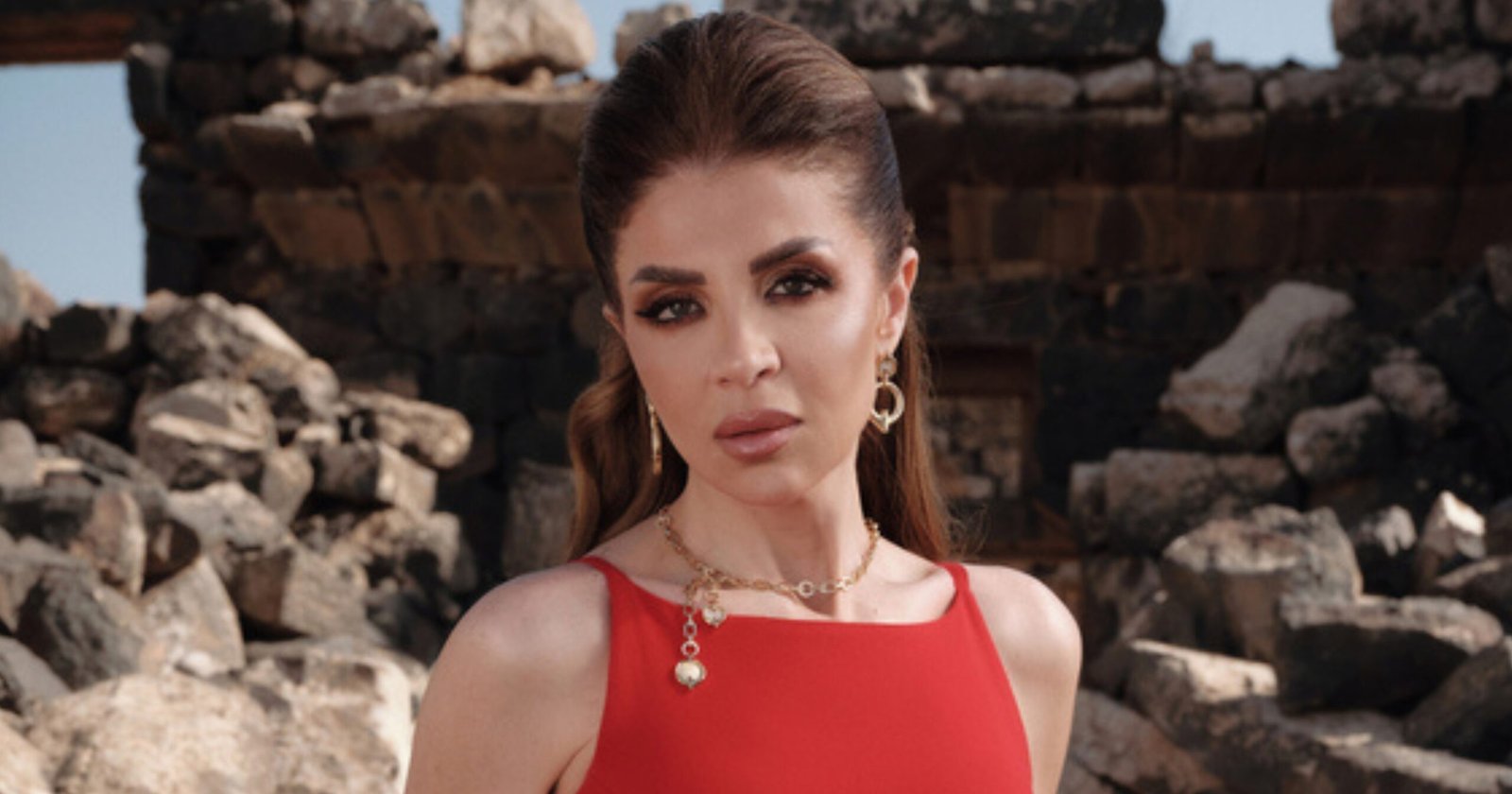
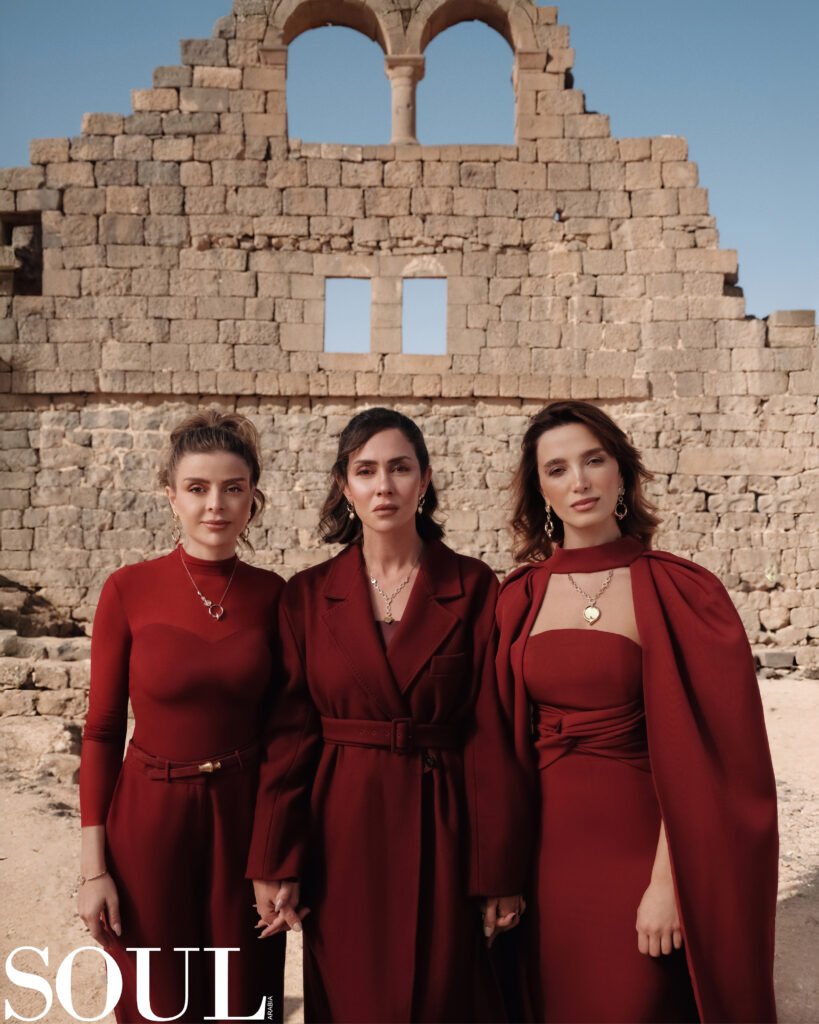
Standing among a group of prominent female figures at Umm el-Jimal, Lana Medawar embodies unity forged through understanding diverse perspectives. Her work demonstrates that renaissance means continuously shedding old versions of yourself, that rebirth comes from building the human before building opinions, and that true freedom emerges when stories become windows not just to the world, but to the soul. The child who found liberation through books became the woman opening windows for millions, reminding them that the sun always rises, and they always have another chance.
Black dress & Red dress are by Joanna Andraos
Editor-in-Chief & Visual Director: Sultan Abu Tair, Produced by ThreeSixty Mena and photographed by Cihan Alpgiray, Styling by Jony Matta, Lana’s Black dress & Red dress from Joanna Andraos, words by Amira Shawky & Mohamed Alaadin, and special thanks to Grand Hyatt Amman