
Something unexpected is happening in theaters across Cairo, rooftop bars in Beirut, and polished venues in Dubai: people are laughing. Not politely, not quietly, but with the kind of cathartic release that comes when someone finally says what everyone’s been thinking.
The Middle East’s comedy scene isn’t just growing, it’s surging. And it’s doing something far more significant than entertaining crowds. It’s creating a new cultural language, one that navigates identity, politics, and daily absurdities with wit sharp enough to cut through years of unspoken tensions.
Cairo’s Underground Revolution
In Cairo, stand-up comedy has found its home in unexpected spaces. Small venues host open mic nights where young comedians test material about everything from traffic nightmares to family dynamics to the peculiar contradictions of modern Egyptian life. These aren’t sanitized routines designed for export; they’re raw, local, and deeply specific to the lived experience of a generation navigating tradition and modernity simultaneously.
Comedians like Bassem Youssef paved the way, proving that Arab audiences were hungry for satire that didn’t shy away from complexity. Now, performers like Elena El Sabbagh are building on that foundation, creating comedy that feels less like performance and more like conversation, the kind you’d have with friends who actually understand.
Dubai’s Digital Disruptors
While Cairo’s scene thrives in intimate physical spaces, Dubai’s comedy has grown significantly online. Instagram and TikTok creators are crafting short-form satire that resonates across the Gulf and beyond. Creators like Roooka tackle everything from the absurdities of expat life to the contradictions of luxury culture to the hilariously specific dynamics of Khaleeji family gatherings.
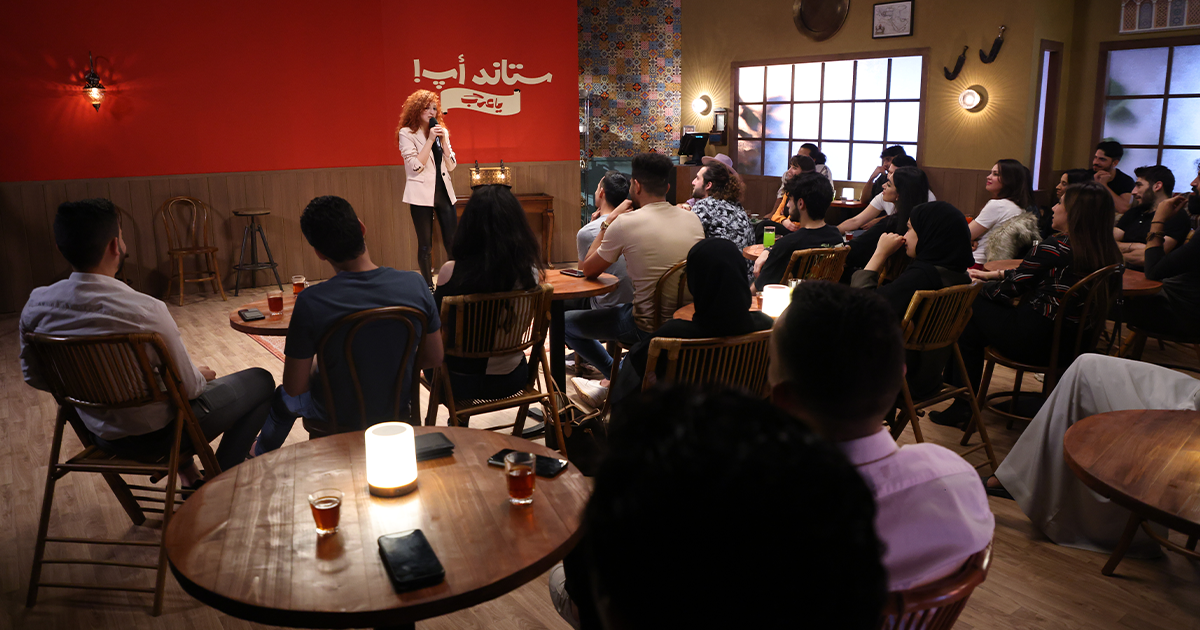
In 2025, collectives like Comedy Gang have gained traction, bringing together regional voices for collaborative projects that feel authentically Middle Eastern while appealing to global audiences. OSN has also entered the space, commissioning original comedy series “Stand Up! Ya Arab” that gives regional comedians wider platforms and production support.
Beirut’s Defiant Joy
Lebanese comedy has always carried a particular edge, humor as a survival mechanism, laughter as defiance. In a country that has weathered economic collapse and political turmoil, comedians continue performing in venues that sometimes lose power mid-set. The shows go on anyway, often by phone flashlight, because the alternative, silence, isn’t an option.
Why It Matters Now
This comedy surge isn’t about entertainment alone. It’s about a generation claiming the right to define their own narratives, to laugh at their own contradictions, and to say things out loud that previous generations whispered.
Stand-up comedy, by its nature, is intimate and immediate. It requires audiences to sit in a room together and collectively decide what’s funny, what’s true enough to laugh at. In a region often defined externally by headlines and stereotypes, these comedians are offering something else: nuance, self-awareness, and the kind of sharp observation that only comes from living the complexity.
The Middle East has always had humor, embedded in poetry, in family gatherings, in the everyday exchanges that make life bearable. What’s different now is the platform, the permission, and the growing understanding that laughter isn’t frivolous. Sometimes it’s the most honest thing in the room.
Comedy, it turns out, is becoming a vital cultural voice because it’s the one that insists on being heard, even when, especially when, the subject matter isn’t easy. And audiences across the region are showing up, ready to laugh at themselves, their circumstances, and the absurdity of trying to explain either to anyone else.