
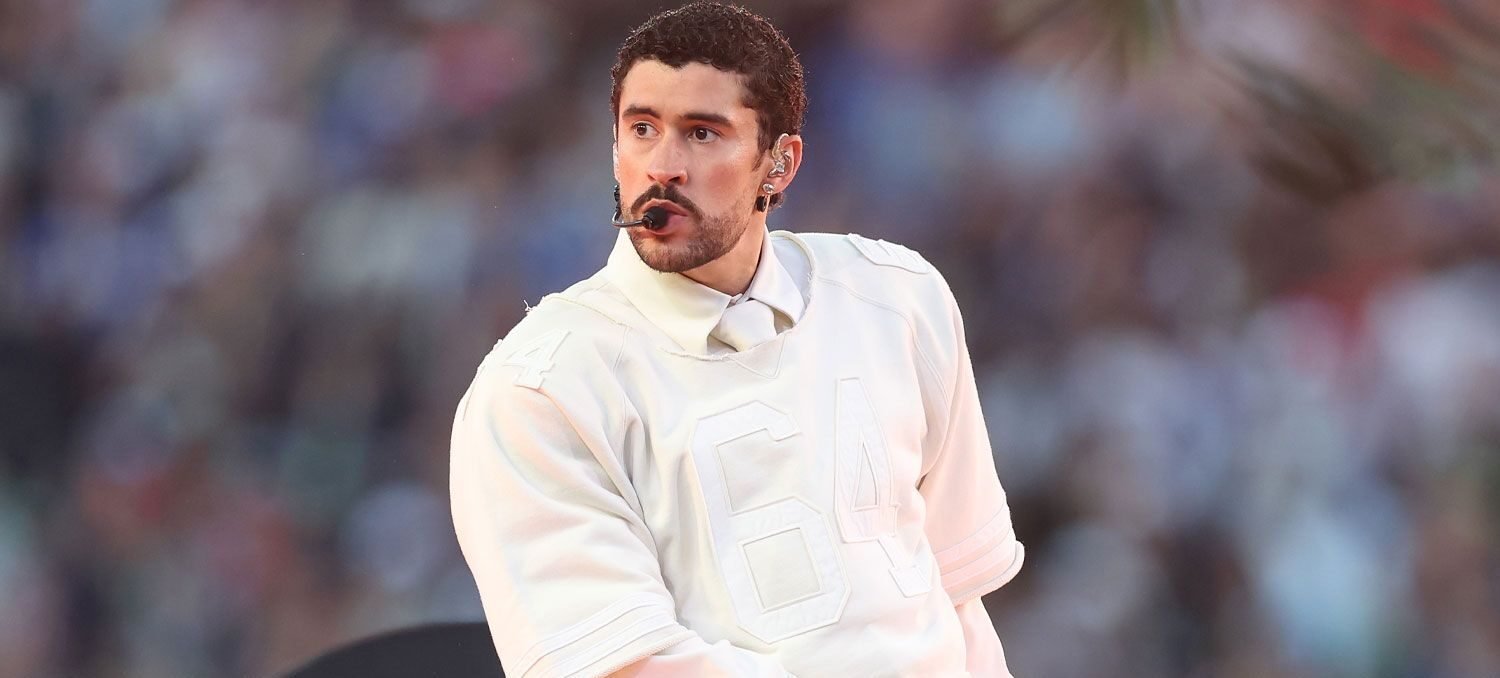
On February 8, 2026, Bad Bunny took the stage at Levi’s Stadium in Santa Clara, California, delivering a halftime show that will be remembered as a watershed moment for Latin representation at one of the world’s biggest sporting events. The Puerto Rican superstar, born Benito Antonio Martínez Ocasio, became the first Spanish-language artist to headline the Super Bowl halftime show, bringing an electrifying celebration of culture, unity, and resilience to over 100 million viewers.
Bad Bunny’s Puerto Rican Stage Design
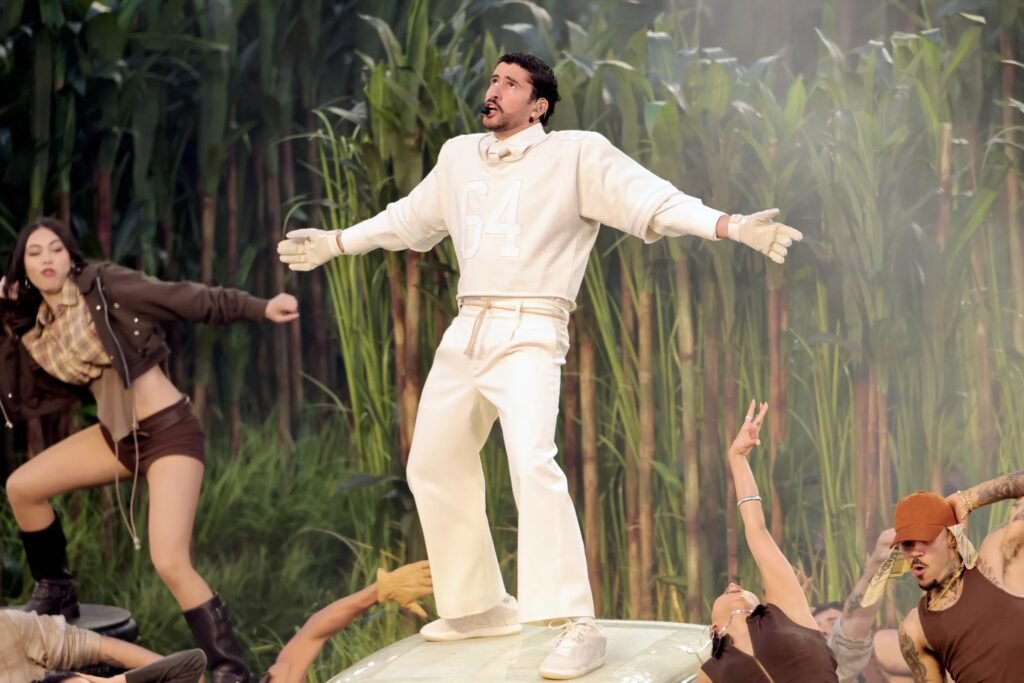
Bad Bunny opened the show wearing an all-white suit with his last name emblazoned on the back, launching into “Titi Me Pregunto” as the stadium floor transformed into a vibrant miniature Puerto Rico. The set featured prop plants, power lines, piragua stands, and street scenes that brought the island to life on football’s biggest stage.
“My name is Benito Antonio Martínez Ocasio,” Bad Bunny said in Spanish. “If I am here today at Super Bowl 60, it is because I never, ever stopped believing in myself.”
Lady Gaga and Ricky Martin Guest Appearances
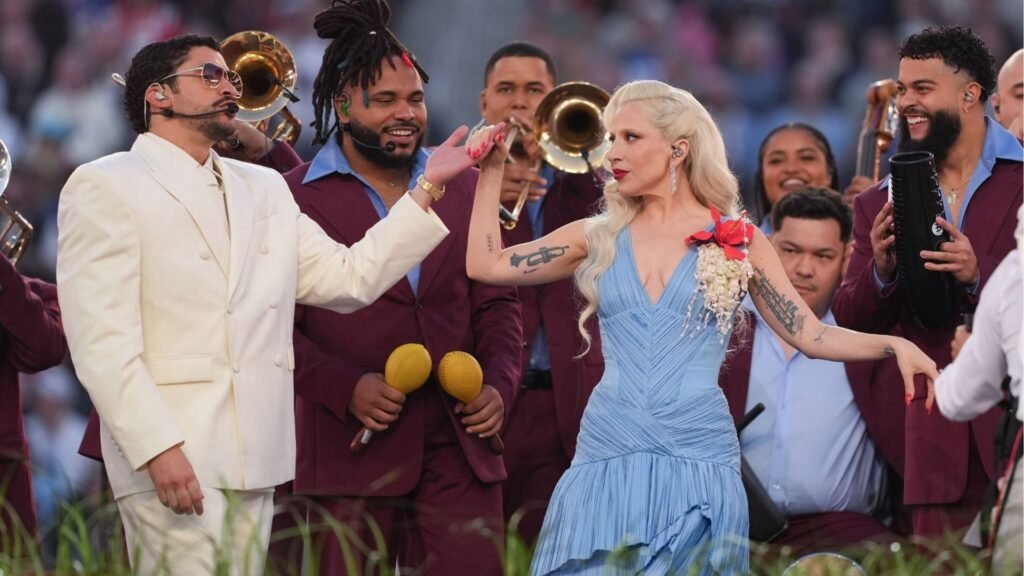
The show featured celebrity cameos from Ricky Martin and Lady Gaga, who each performed, along with appearances from actors Pedro Pascal and Jessica Alba, rapper Cardi B, and singer Karol G. Lady Gaga delivered a salsa-infused rendition of her hit song alongside Bad Bunny. At the same time, Ricky Martin belted out a performance that had the crowd on their feet.
In a particularly memorable moment, Bad Bunny danced on top of a car, passed his Grammy Award to a young child, and told him in Spanish, “Always believe in yourself.” The performance even featured a live wedding ceremony officiated by the artist himself.
Latin Representation and Cultural Unity
While Bad Bunny promised a “huge party,” the performance carried deeper significance. He plastered “THE ONLY THING MORE POWERFUL THAN HATE IS LOVE” on the big screen and passionately shouted out Latin American countries one by one before displaying a football with “Together We Are America” written on it.
Notably, Bad Bunny didn’t speak a word of English throughout the entire show outside of stating “God Bless America” near the very end, making a powerful statement about cultural pride and representation. The performance included a snippet of Daddy Yankee’s “Gasolina” and showcased the breadth of Latin music’s influence.
The Impact of Bad Bunny on NFL Culture
The halftime show represents a major milestone for the NFL and American culture at large. Coming on America’s 250th anniversary, Bad Bunny’s performance demonstrated how far the country and the league have evolved in embracing diversity and Latin representation on its biggest stage.
Experts are calling the performance more than just entertainment. Two professors explained why Bad Bunny’s halftime moment matters beyond the music, highlighting its cultural and social significance for Latin American communities across the United States.
The show provided a much-needed energy boost to what had been a lackluster game, with the Seahawks eventually dominating the Patriots 29-13. But for millions watching at home, Bad Bunny’s historic performance will be what they remember most about Super Bowl LX.