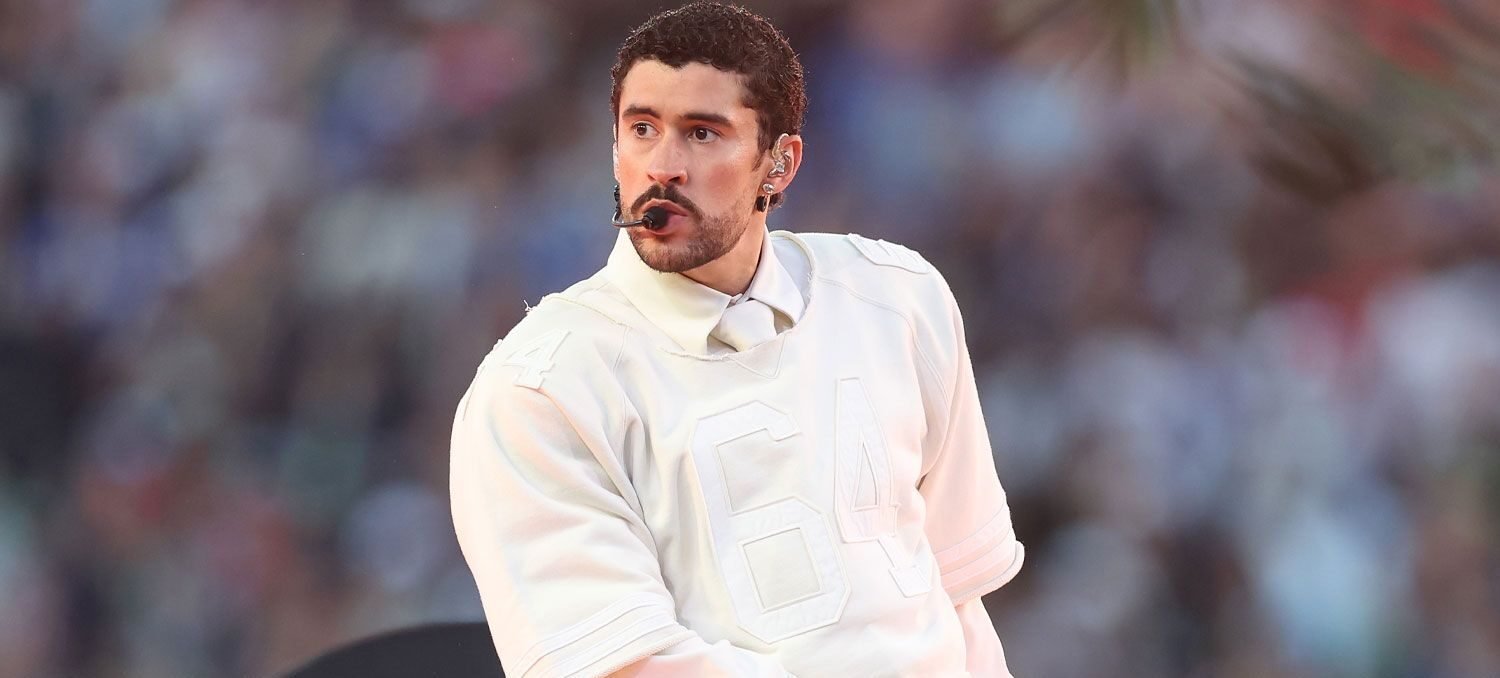

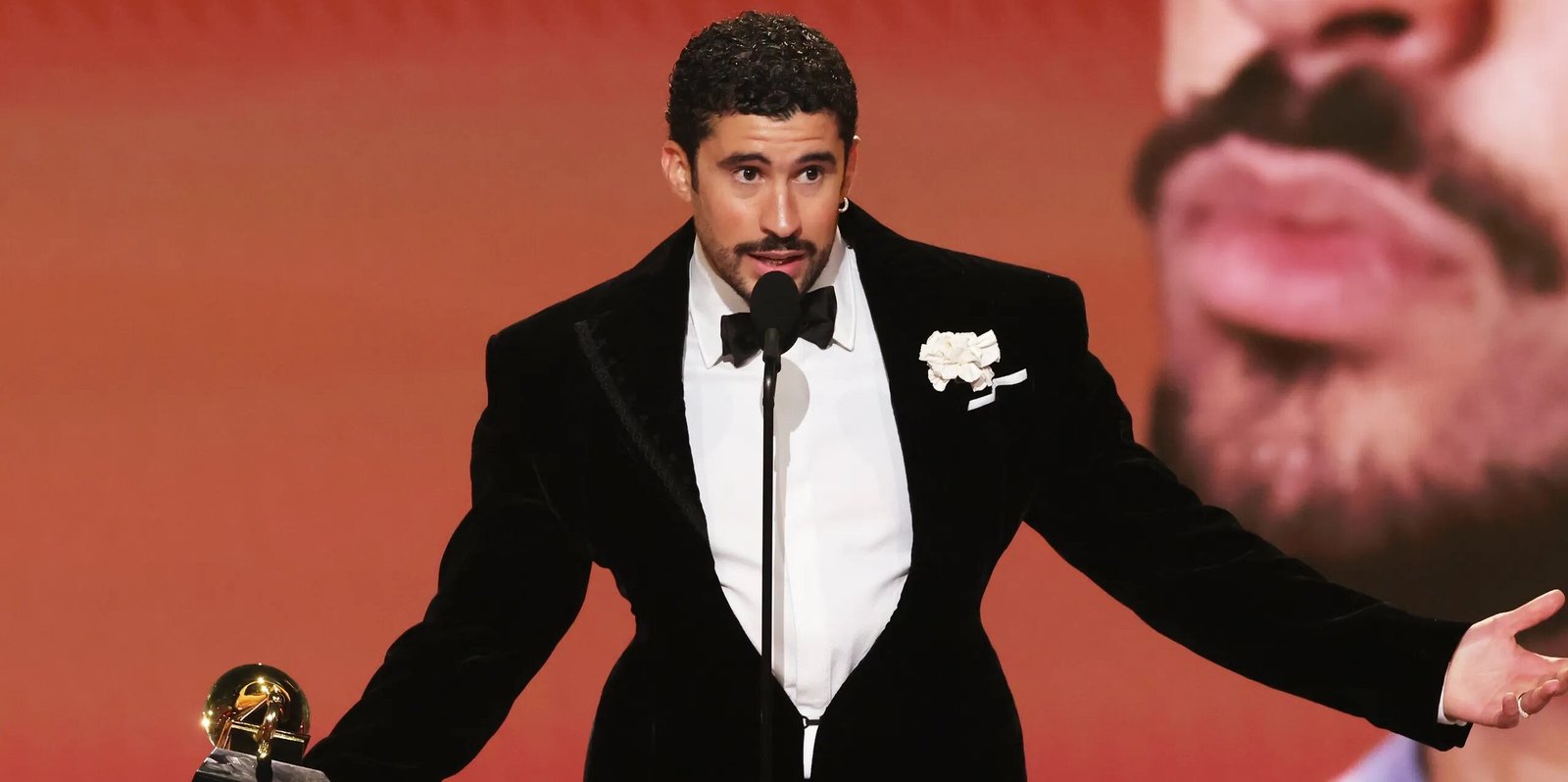
Music’s biggest night belonged to Bad Bunny. At the 68th Annual Grammy Awards held Sunday at Los Angeles’ Crypto.com Arena, the Puerto Rican superstar shattered barriers as his album DeBÍ TiRAR MáS FOToS became the first all-Spanish-language record to win Album of the Year. This watershed moment signals a seismic shift in the global music landscape.
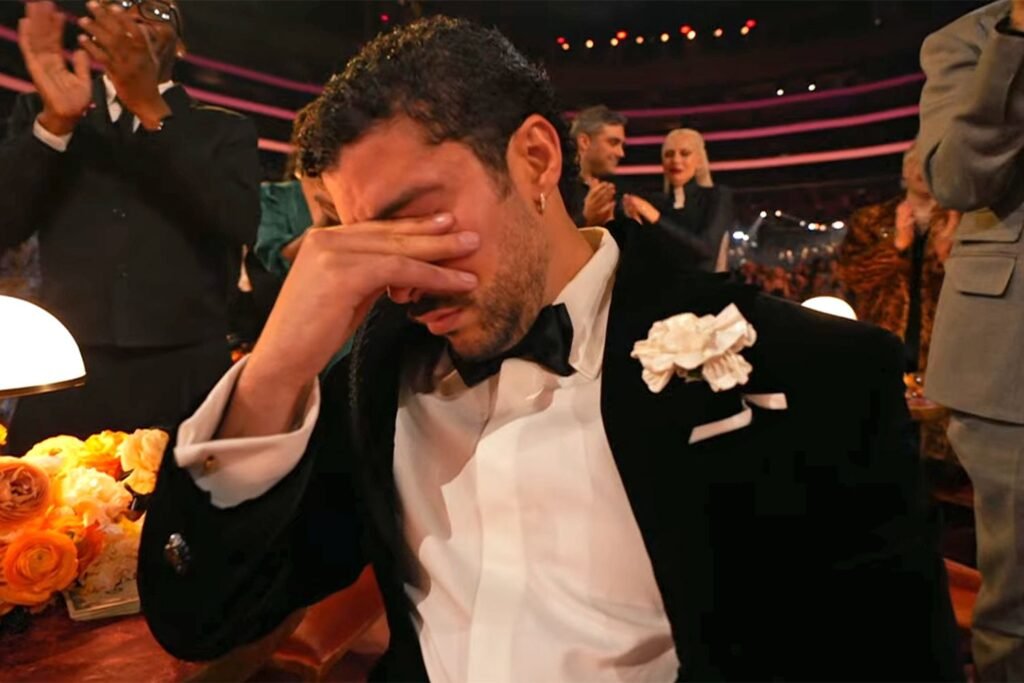
Overcome with emotion, Bad Bunny bowed his head and wept for several seconds before addressing the crowd. While most of his speech remained in Spanish, a deliberate choice that underscored the album’s cultural significance, he delivered one pointed line in English: “I want to dedicate this award to all the people who had to leave their homeland, their country, to follow their dreams.”
The victory arrived just days before his Super Bowl halftime show performance, cementing his status as a transcendent cultural force who has redefined what mainstream success looks like in the American music industry.
A Triumph Decades in the Making
Bad Bunny’s win represents more than personal achievement, it’s validation for an entire generation of Latin artists who’ve fought for recognition in an industry historically dominated by English-language music. Despite Latin music accounting for significant streaming numbers and festival headlining slots, the Recording Academy’s top prize had remained elusive.
DeBÍ TiRAR MáS FOToS, which translates to “I Should Have Taken More Photos,” is a deeply personal meditation on nostalgia, home and the Puerto Rican experience. The album resonated far beyond Spanish-speaking audiences, proving that authentic storytelling transcends language barriers.
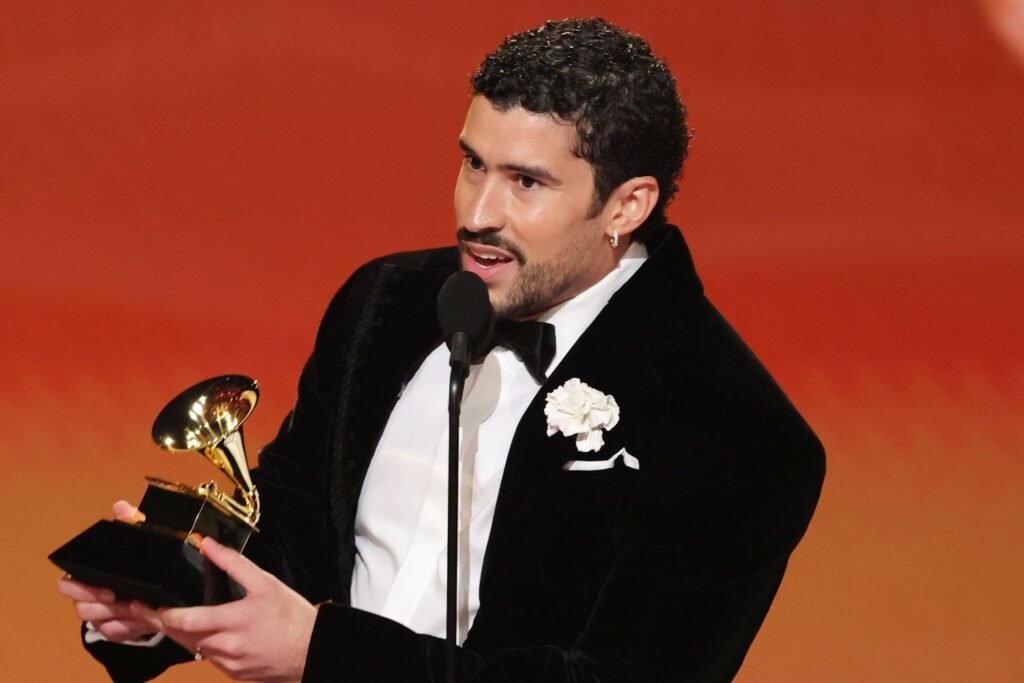
Beyond Album of the Year, Bad Bunny also claimed Best Música Urbana Album and Best Global Music Performance for “EoO,” completing a dominant evening that reflected Latin music’s undeniable influence on contemporary culture.
Kendrick Lamar’s Record-Breaking Night
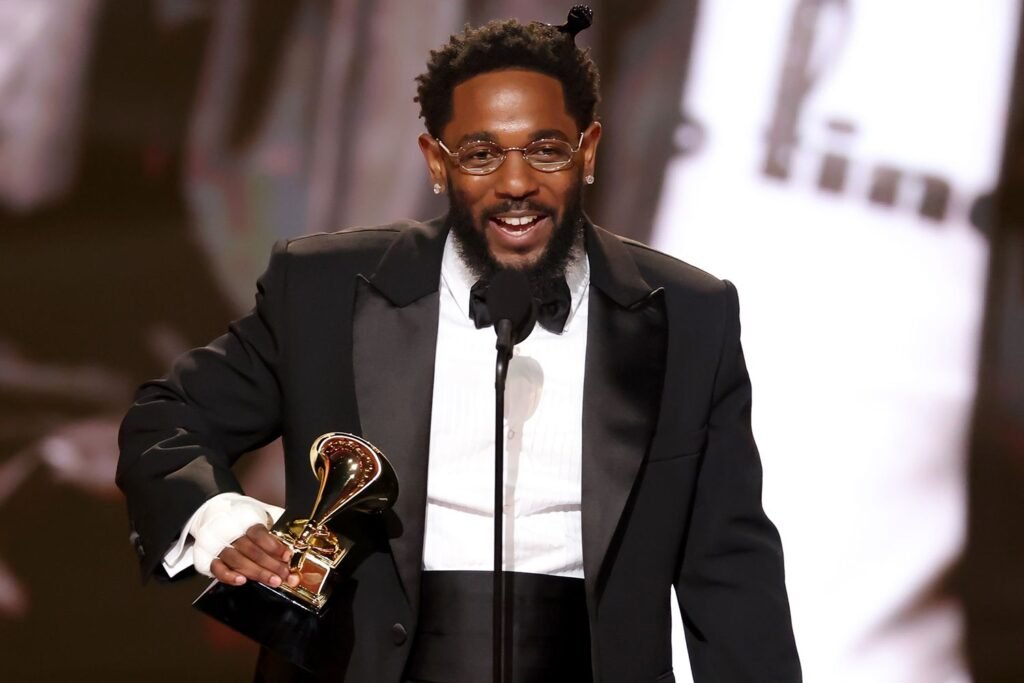
While Bad Bunny made history, Kendrick Lamar rewrote the record books. The Compton rapper entered the ceremony as the most-nominated artist with nine nods and left as hip-hop’s most decorated Grammy winner ever, bringing his career total to 27 awards, surpassing Jay-Z’s previous record of 25.
Lamar swept the rap categories, winning Best Rap Album for GNX, Record of the Year for “luther” with SZA, Best Melodic Rap Performance, Best Rap Song and Best Rap Performance. His ballad “luther,” which samples Luther Vandross and Cheryl Lynn’s “If This World Were Mine,” spent 13 consecutive weeks atop the Billboard Hot 100.
“This is what music is about,” Lamar said while accepting Record of the Year alongside SZA and their collaborators, graciously handling a moment when presenter Cher mistakenly announced Luther Vandross before correcting herself.
New Voices Rise
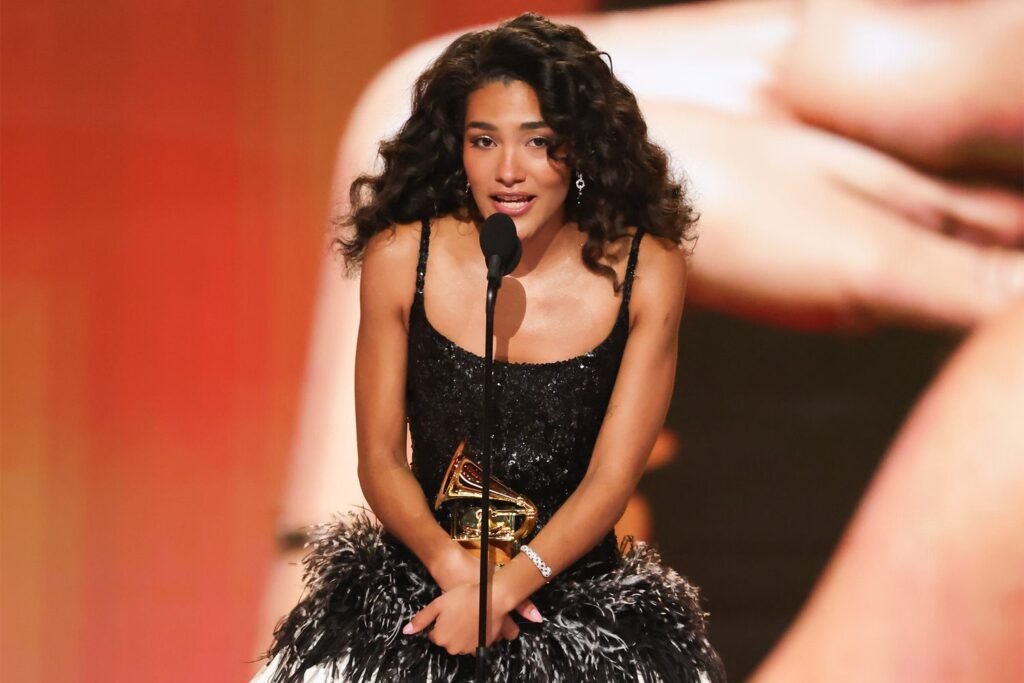
British singer-songwriter Olivia Dean claimed Best New Artist, marking a breakthrough for the UK artist whose sophomore album The Art of Loving propelled her to stardom. Her hit “Man I Need” made history as she became the first female solo artist to place four singles simultaneously in the UK Top 10.
Visibly emotional, Dean delivered a powerful acceptance speech: “I’m up here as a granddaughter of an immigrant. I’m a product of bravery, and I think those people deserve to be celebrated.”
Her words carried extra weight on an evening where many artists wore anti-ICE pins and used their platform to honor immigrant communities.
Pop and Beyond
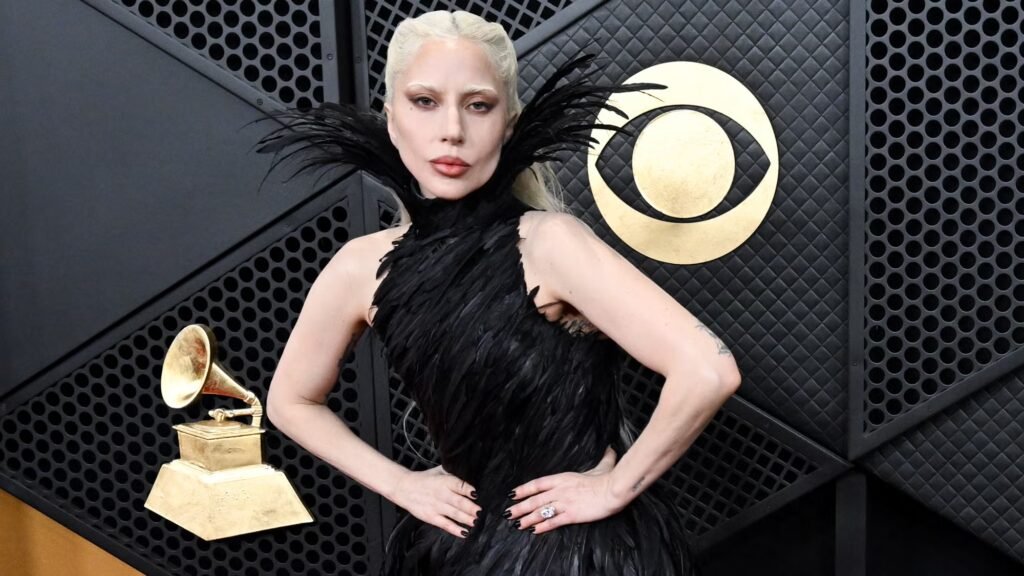
Lady Gaga dominated the pop categories with wins for Best Pop Vocal Album (MAYHEM) and Best Dance Pop Recording (“Abracadabra”). Producer Cirkut, who helmed much of Gaga’s album, was named Producer of the Year, Non-Classical.
Billie Eilish and FINNEAS took home Song of the Year for “WILDFLOWER,” while the Wicked phenomenon continued as Cynthia Erivo and Ariana Grande’s “Defying Gravity” claimed Best Pop Duo/Group Performance.
Across 95 categories, the evening celebrated artistic diversity: Leon Thomas won two R&B awards for MUTT, Jelly Roll earned Best Contemporary Country Album for Beautifully Broken, and The Cure secured their first Grammy in decades with Best Alternative Music Album for Songs of a Lost World.
FKA twigs became only the second Black woman to win Best Dance/Electronic Album for EUSEXUA, while hardcore band Turnstile claimed their first Grammy for Best Rock Album with NEVER ENOUGH.
A Cultural Turning Point
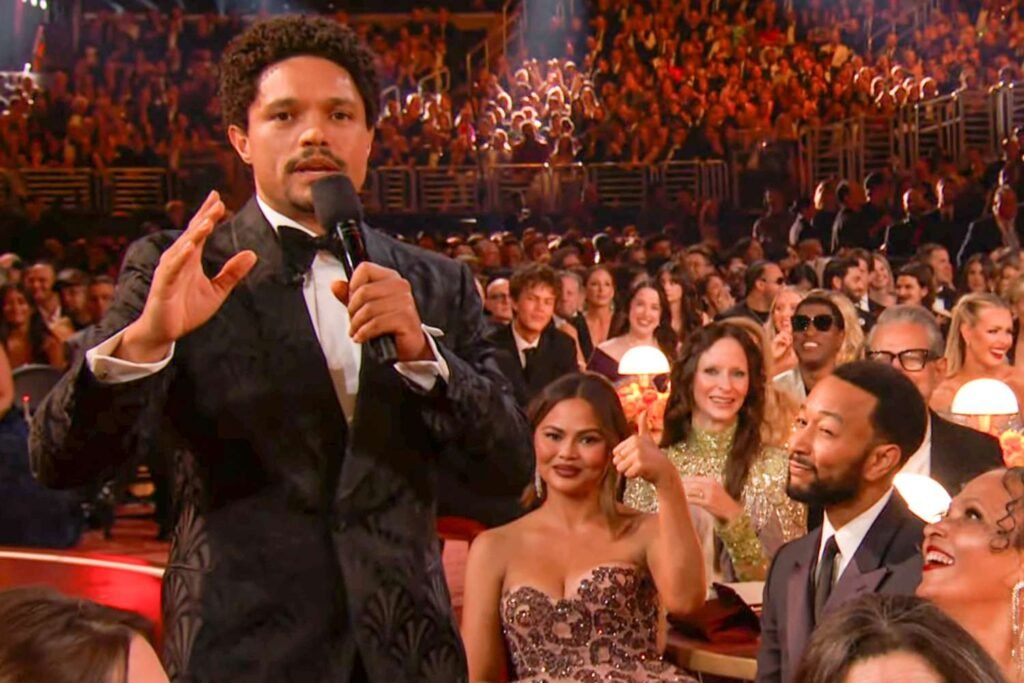
Hosted by Trevor Noah for his sixth and final time, the ceremony balanced celebration with quiet activism. Multiple winners used their acceptance speeches to honor their immigrant heritage, transforming music’s biggest night into a statement of cultural solidarity.
Bad Bunny’s historic victory caps a remarkable journey from SoundCloud uploads to becoming one of the most-streamed artists on the planet, all while never compromising his language, his sound or his identity. As he prepares to take the Super Bowl stage, his Grammy triumph serves as definitive proof: the future of music speaks every language.
For an industry long criticized for overlooking Latin excellence, Sunday night’s results weren’t just overdue, they were inevitable. Bad Bunny didn’t break down doors. He walked through them like they were never there.