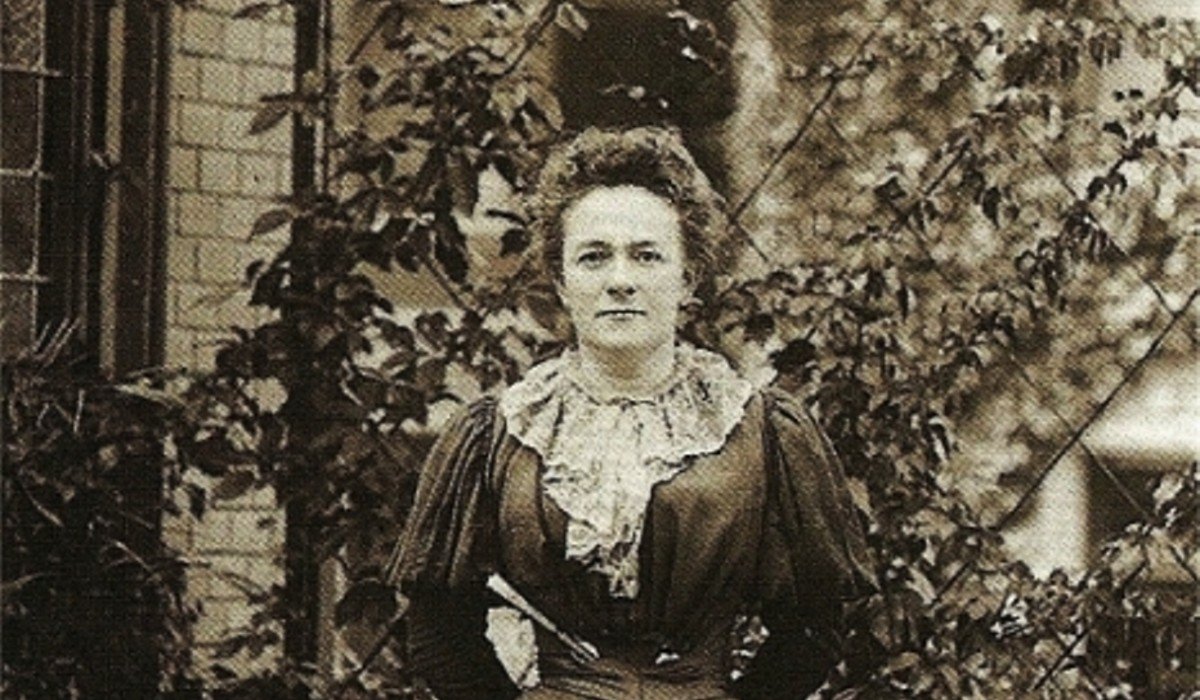

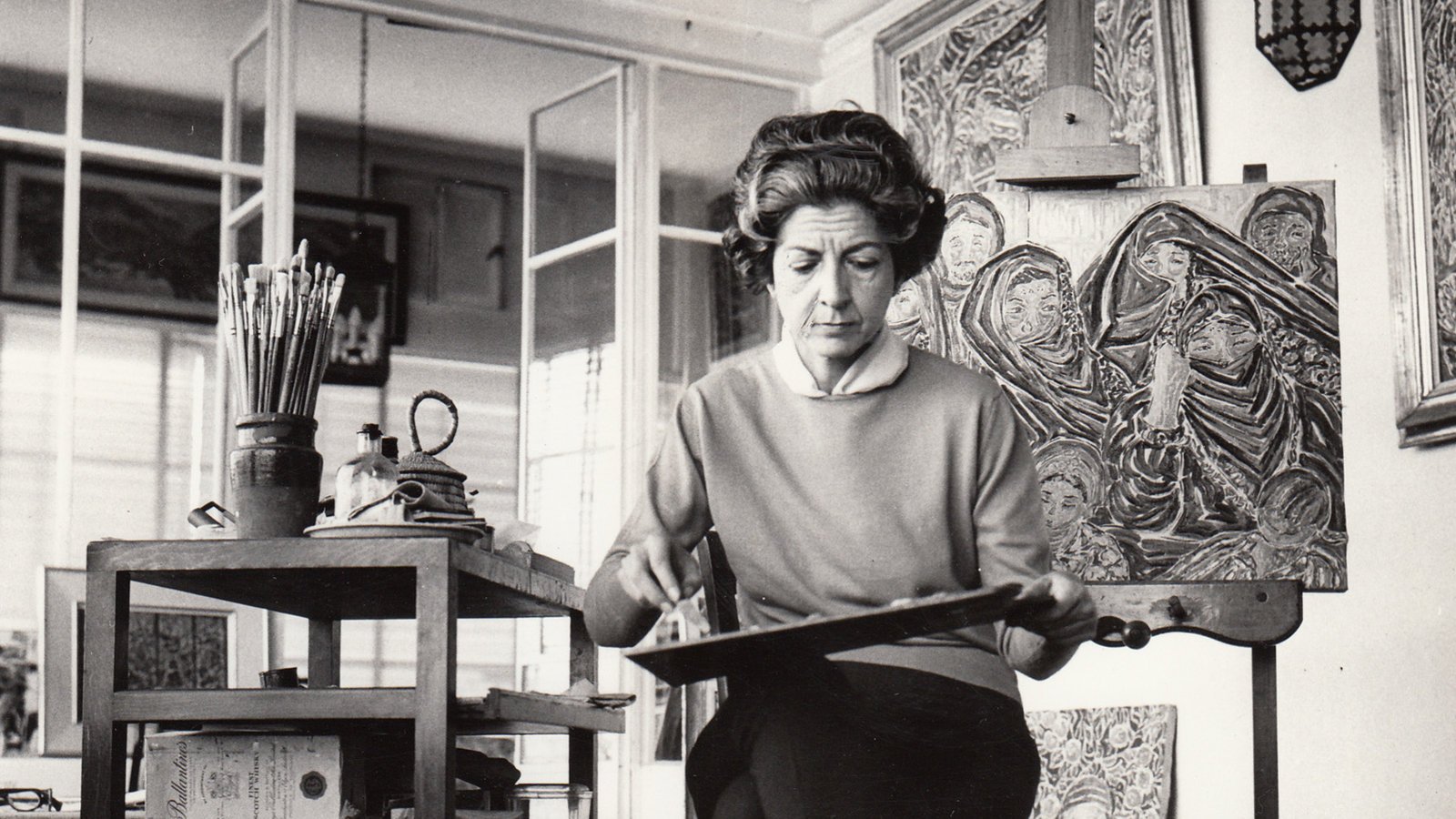
She was born into one of Cairo’s most privileged families, educated in French, raised among Cairo’s elite, and she spent her life painting the people that the world pretended not to see. That contradiction was Inji Efflatoun’s entire point.
Born in Cairo on April 16, 1924, Efflatoun came from a bourgeois francophone family. Her father was a scientist who founded the entomology department at Cairo University. After a divorce, her mother became the first woman in Cairo to own a fashion boutique, a detail that says something about the household Inji grew up in: unconventional, independent, and quietly ahead of its time. From early childhood, she drew and painted, and her family encouraged it. When she was young, her mother showed her drawings to the Egyptian painter Mahmoud Said, who encouraged the family to find her a tutor. That tutor turned out to be Kamel El-Telmissany, a surrealist painter and one of the founding members of the avant-garde collective Art et Liberté, and that single introduction changed everything.
From the Salon to the Streets
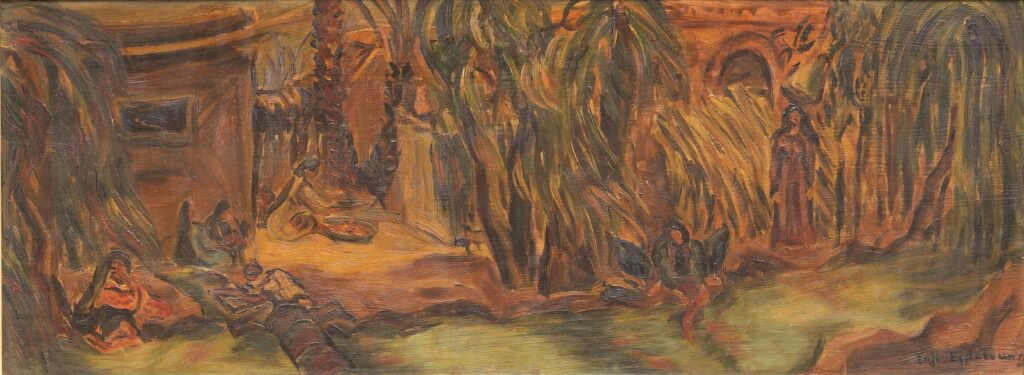
The public first encountered the work of Inji Efflatoun in 1942, in the midst of World War II. She was eighteen years old and took part in the third exhibition of Independent Art held at the Continental Hotel in Cairo, organised by the surrealist collective Art et Liberté.She was the youngest artist among all twenty-four exhibitors, and she was heralded as the biggest surprise of the show. Her early work was surrealist in nature, dark, imaginary, autobiographical, the work of a young woman straining against every cage around her: social, patriarchal, colonial.
But Efflatoun was never just a painter. She was, simultaneously and inseparably, a political activist. In 1945, she co-founded with novelist Latifa Al-Zayyat the League of University and Institutes’ Young Women, a leftist organisation against British occupation and for Egyptian women’s rights. She was perhaps the first woman to focus on creation at Cairo College, and she participated in a fifteen-year lobbying effort for women’s rights. She also published three books, Eighty Million Women With Us (1948), We, The Egyptian Women (1950), and Peace and Evacuation (1951), each a direct address to the political and social conditions bearing down on Egyptian women and the working poor. She was writing manifestos at an age when most people are still figuring out what they believe.
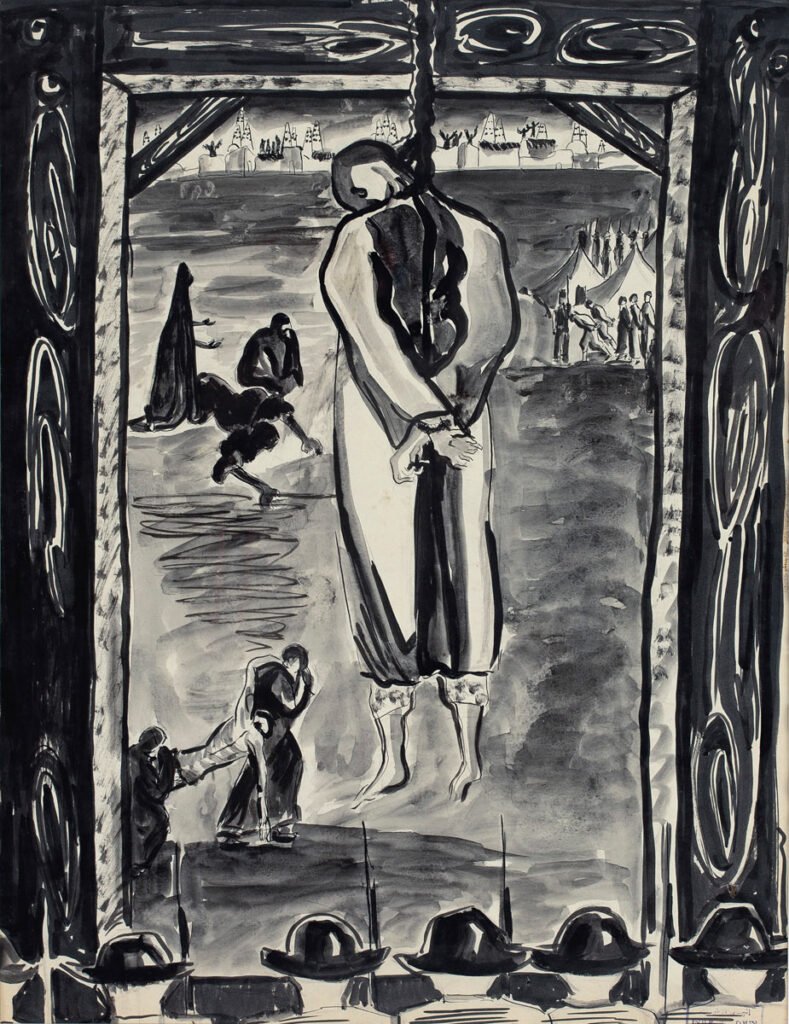
Her painting evolved alongside this. In the 1950s, probably influenced by her meeting with Mexican muralist David Alfaro Siqueiros, her style moved further towards socialist realism. She painted portraits of the fellahin, Egyptian landless peasants, and revisited violent episodes of British occupation, including the Dinshaway Massacre, rendered in ink on paper. Her reputation grew steadily in Egyptian and international circles. Her work was presented at the Venice Biennale in 1952 and the São Paulo Biennale in 1953.A painter from the Arab world, a woman, at both of those stages, that was not a small thing.
Four Years Behind Bars
In 1959, it all stopped. From June 1959 to July 1963, Efflatoun was imprisoned by the Nasserite regime for her communist ties. Before her arrest, she had spent three months undercover, disguised as a fellaha, a peasant woman, operating under the nickname Anan, continuing her underground work as Nasser’s government turned on the left-wing intelligentsia. She was eventually caught and became one of Egypt’s first female political prisoners.
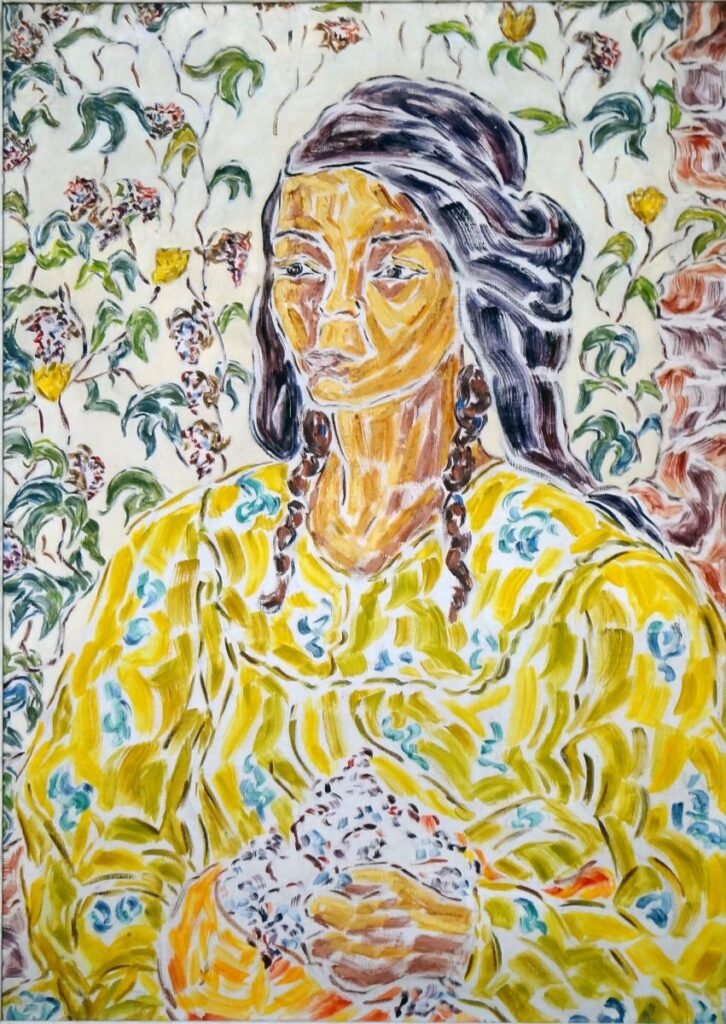
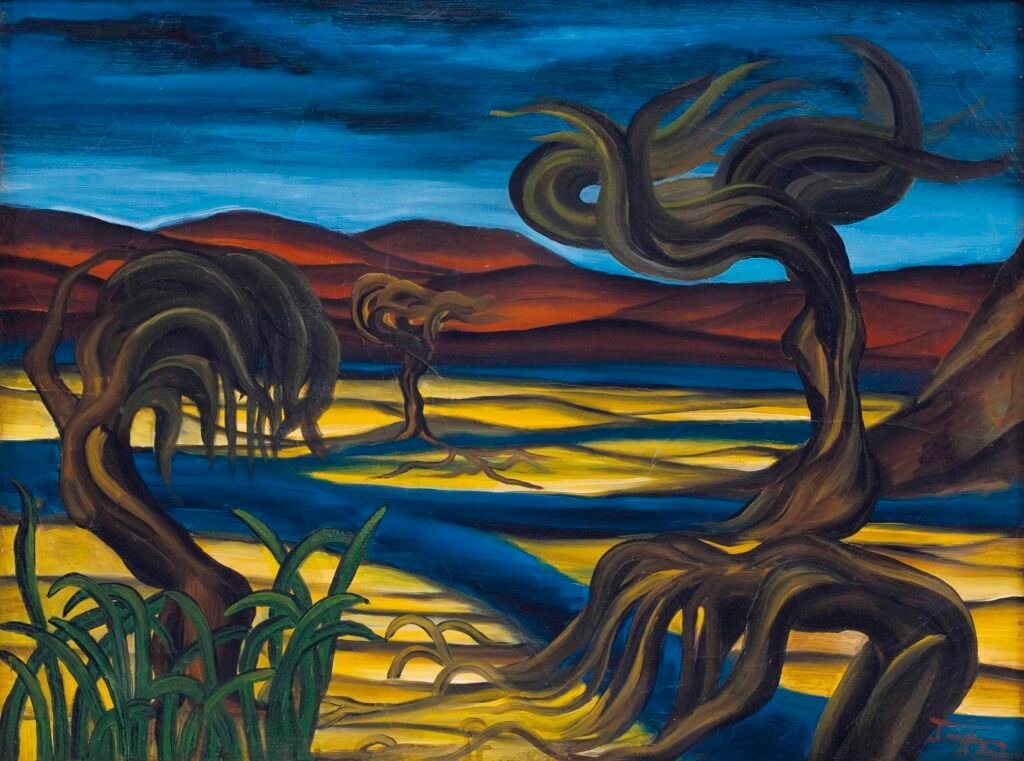
What she did inside prison is the part of her story that still stops people cold. She painted. At the time of her arrest, she had been awarded first prize for a landscape painting competition sponsored by the Ministry of Culture and Information. The publicity of the award helped her negotiate with the prison director for permission to paint; she argued that if she could paint, he could sell her work for the prison’s benefit. Some paintings were confiscated. Others were smuggled out, wrapped around the bodies of sympathetic guards. Her early prison paintings are portraits of inmates, prison life, and expressions of dejection. Later, she turned to more neutral subjects: landscapes, trees, the sailboats she could see from the laundry room. One tree visible from her window became so familiar to the prisoners that they called it Inji’s tree.
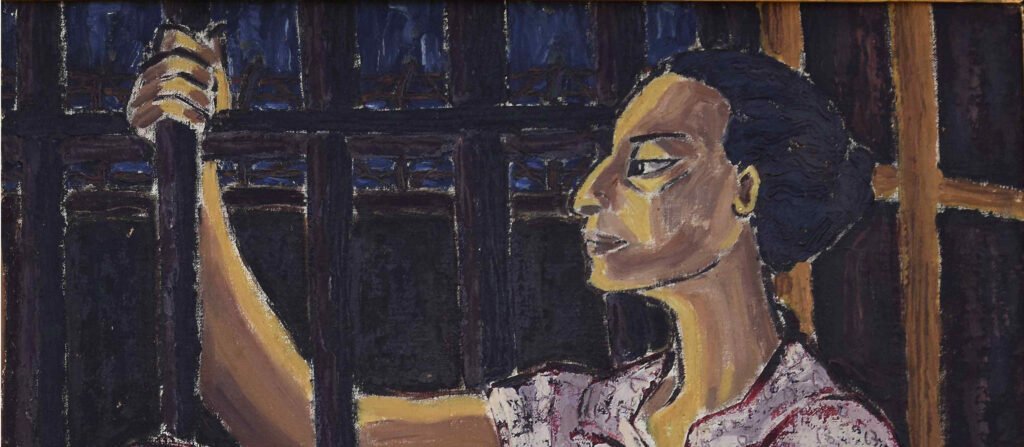
These prison works, raw, contained, quietly devastating, are today considered among the most significant paintings produced in twentieth-century Egyptian art.
White Light and a Final Chapter
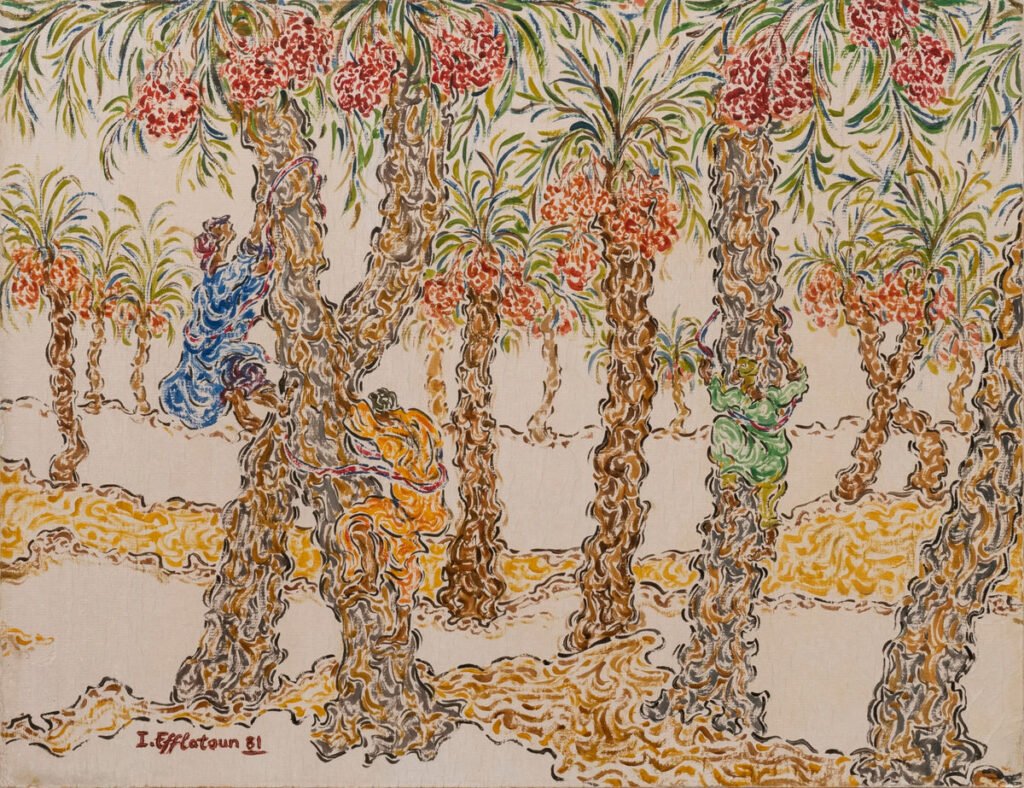
After her release in 1963, Efflatoun devoted herself to painting. Her style shifted significantly in the 1970s with the White Light series, loosely composed forms, vibrating filaments of colour, and large areas of unpainted canvas that gave the impression of illumination from within. She described this use of white as allowing the paintings to breathe.It was a style born from a woman who had spent years in a cell, and it looked exactly like that: open, restless, reaching for air.
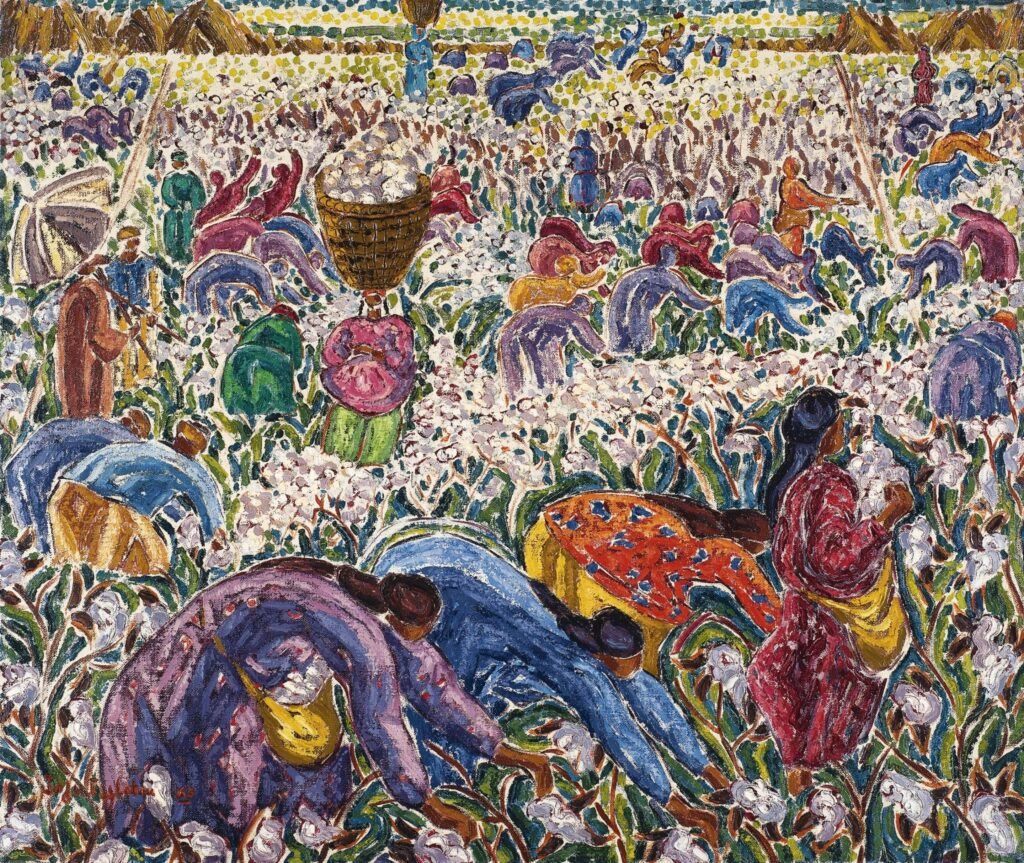
In 2015, the White Light works were reintroduced to global audiences at the Venice Biennale, curated by Okwui Enwezor under the theme “All the World’s Futures.” The installation paired her luminous abstract works with earlier prison paintings, highlighting the tension between darkness and light across her career.
Inji Efflatoun died on April 17, 1989, one day after her sixty-fifth birthday. Her work is held at the Arab Museum of Modern Art in Doha and the Museum of Modern Art in Cairo, and has been studied and written about in universities across Europe and the United States. She remains, in every honest account of Arab modernism, one of its most essential figures, a painter who understood that art is never neutral, and who used that understanding every single day of her life.