
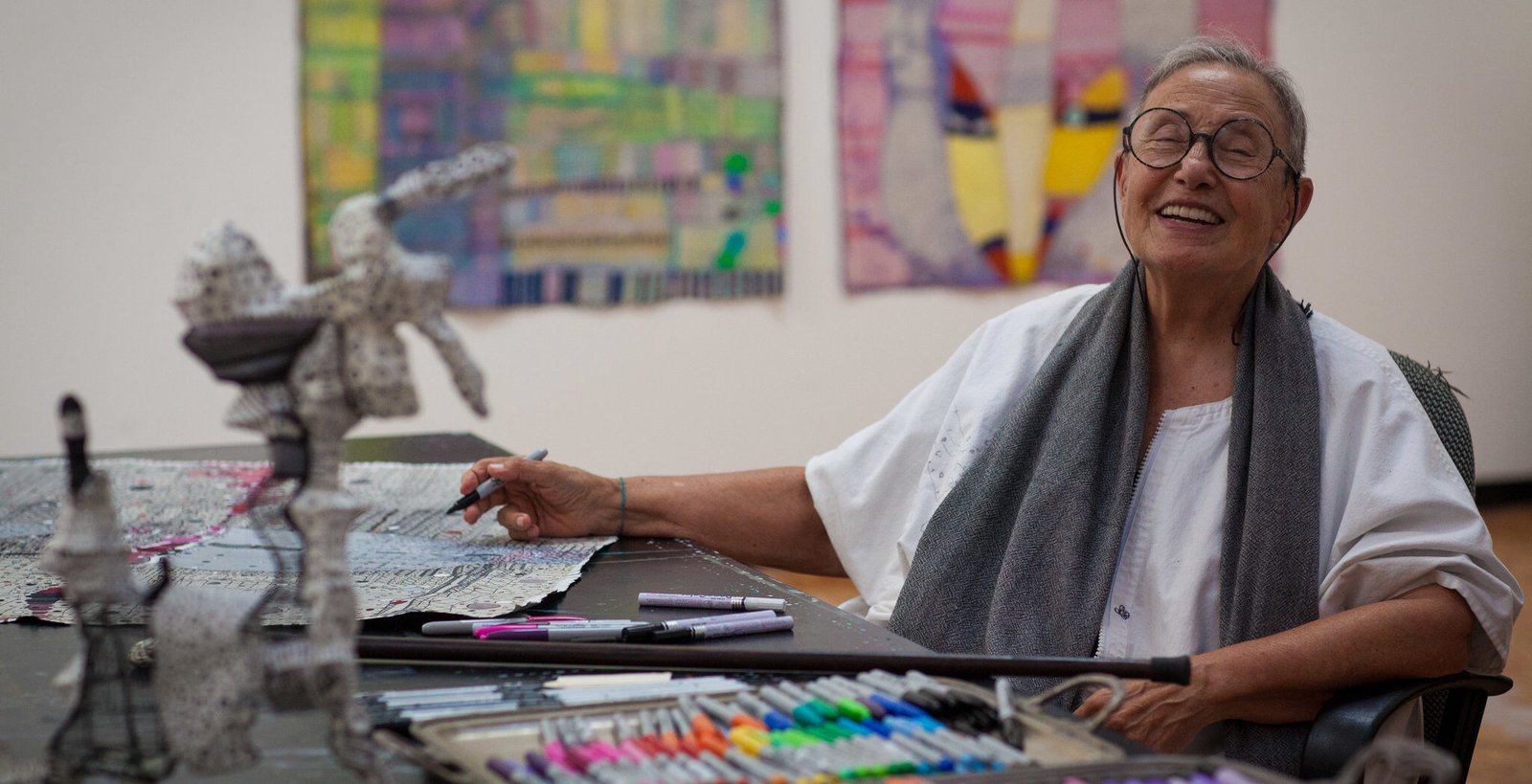
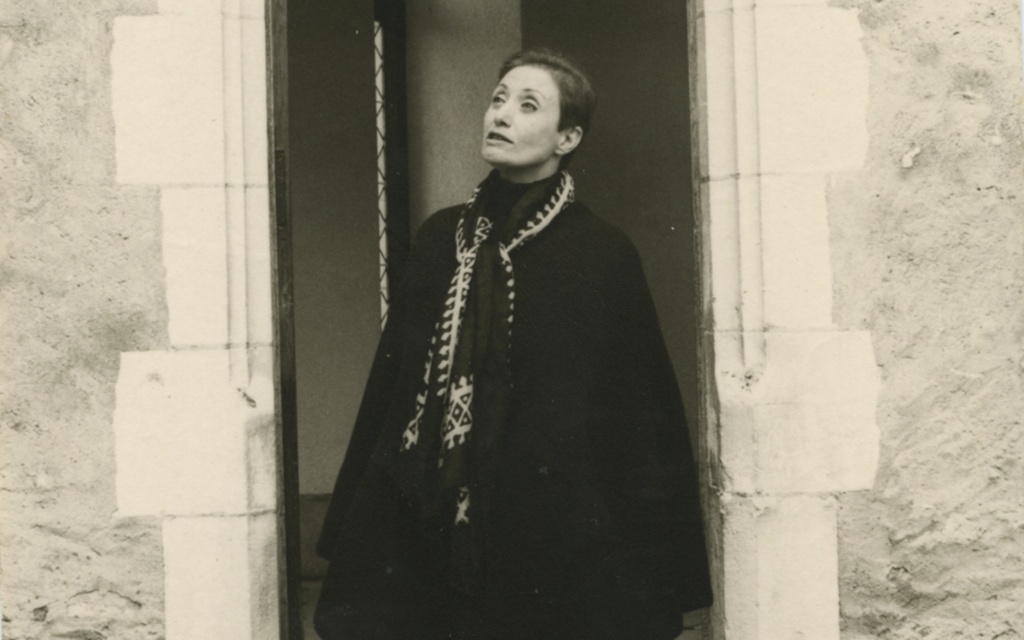
Some artists are defined by their work. Huguette Caland was defined by her nerve. Born in Beirut in 1931 as the daughter of Bechara El Khoury, the first post-independence president of Lebanon, a hero of Lebanese nationalism who served from 1943 to 1952, she was handed a life of position, expectation, and carefully maintained appearances. She dismantled all of it, one decision at a time, and built something far more interesting in its place.
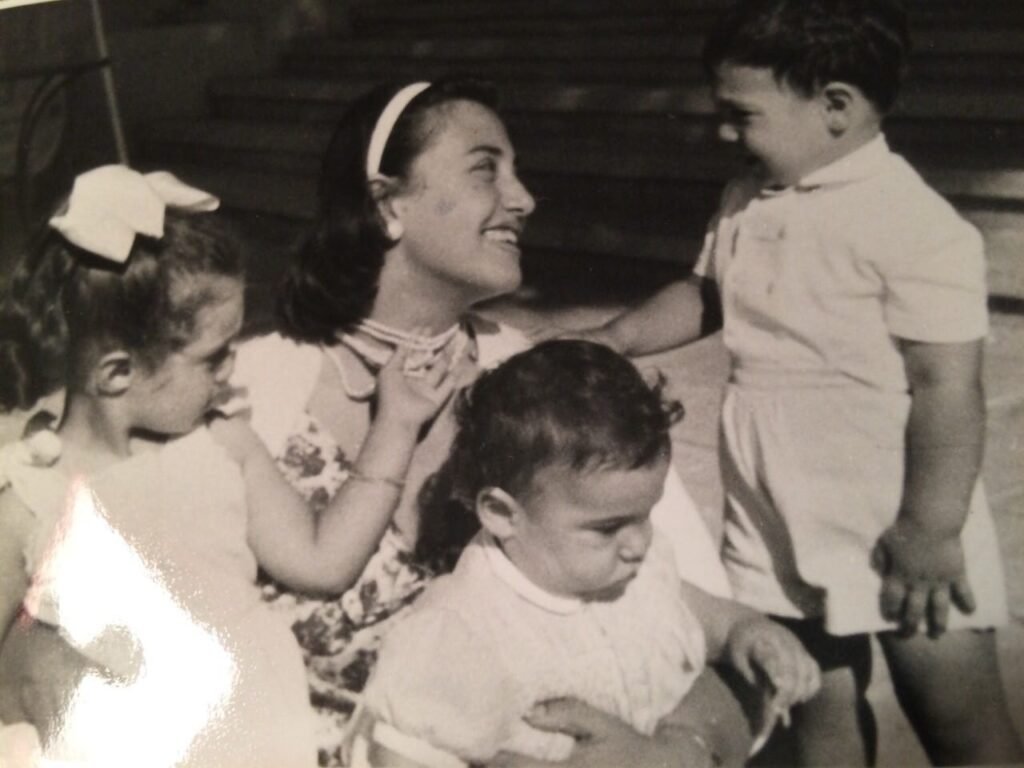
She married Paul Caland, a man whose family was her father’s political rivals, an act that infuriated her parents from the start.She took a lover. She raised three children. And then, in 1964, when her father died, something in her broke open. She threw away all her clothes, dressed in scandalous kaftans, and enrolled in art school at the American University of Beirut, at 33, already a mother, beginning entirely from scratch. Her daughter Brigitte would later say that after her grandfather’s death, Caland felt free for the first time in her life, that his absence left behind both a void and an urge.
She graduated in 1968. By 1970, she was gone, to Paris, without her husband, without her children, without an apology.
Paris and the Body as Canvas
Paris gave Caland permission she had not known she needed. Free from the identities imposed on her, a politician’s daughter, wife, and mother, she began to paint with a directness that was startling even by the standards of a city that prided itself on liberation.
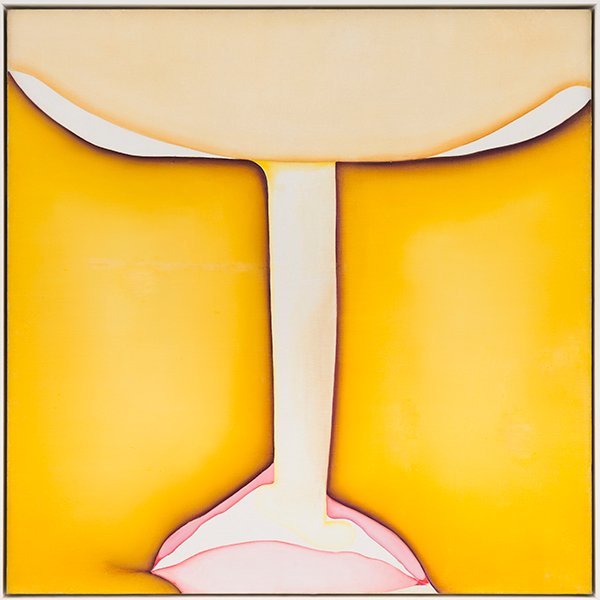
Out of her Paris years came a series of oil paintings she called Bribes de Corps, Body Parts, in which she filled canvases with fragments of her own body, abstracted to seem almost landscape-like, in colourful and suggestive curves of flesh.Hips became horizons. Skin became terrain. The human body, her body, became both subject and landscape, both intimate and cosmic.
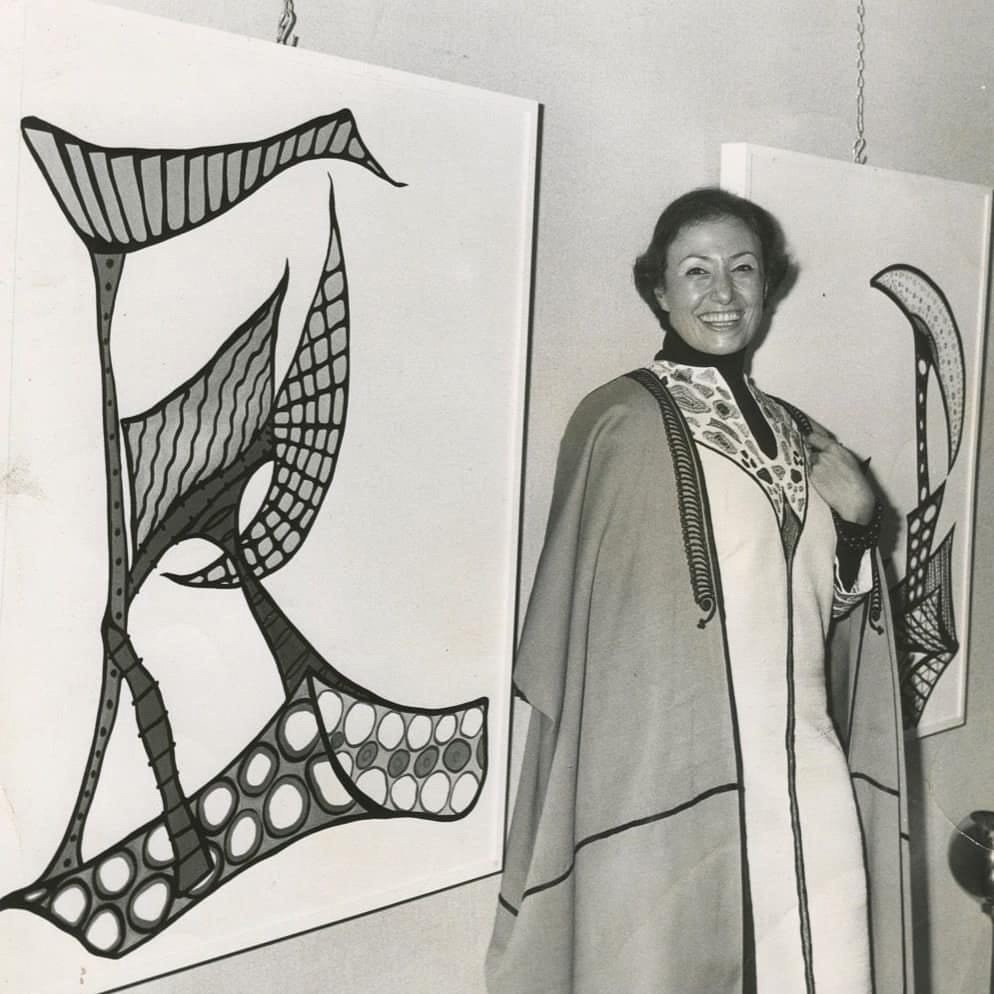
Caland herself remarked in 1973: “Eroticism is an abstract thing. It is the gaze that creates the mood.”That line tells you everything. Her work was never crude. It was knowing, playful, sensual, and quietly political in a way that many of her contemporaries missed entirely. She was pioneering a subject and an aesthetic that had rarely, if ever, been tackled before by an Arab woman with such will and dedication, or such passion, style, and efflorescence.
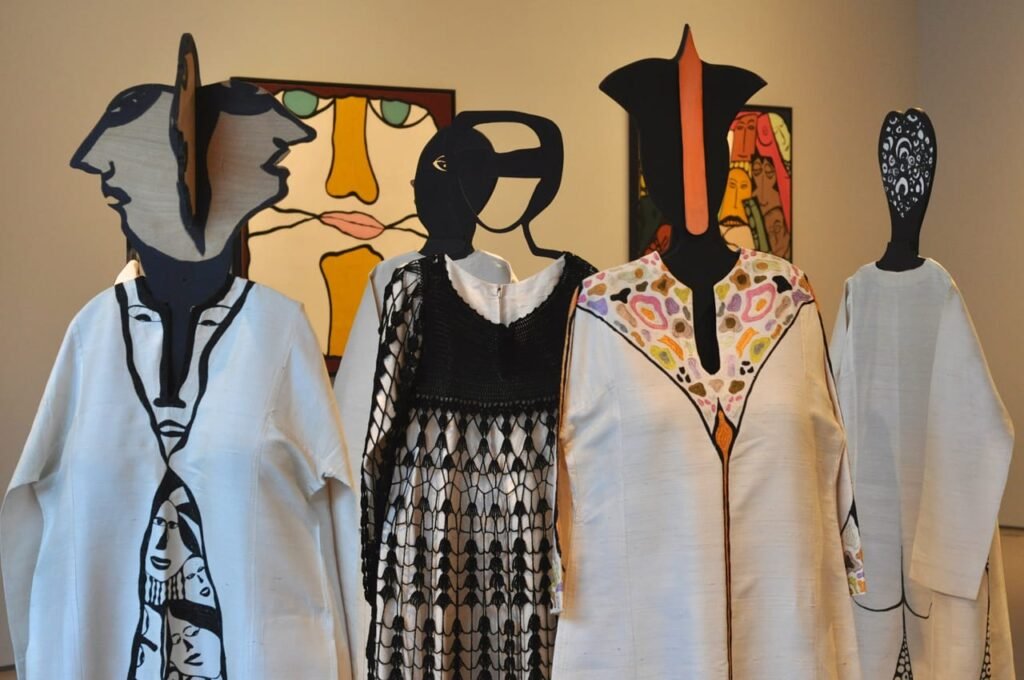
Paris also brought her into fashion’s orbit. In 1979, Caland collaborated with designer Pierre Cardin, creating a line of caftans, the Nour collection, that were displayed at Espace Cardin. When Cardin told her he liked her clothes, she replied simply: “So do I.” That was Caland in a sentence.
California and the Years the World Missed
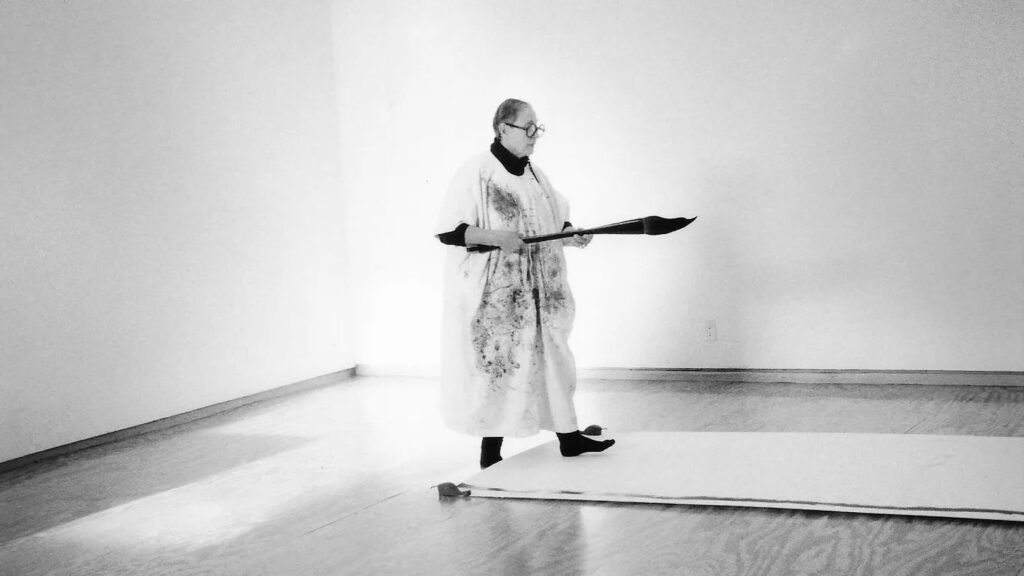
When her partner, the Romanian sculptor George Apostu, died in 1982, she moved to California, where one of her sons was living.She settled in Venice Beach, set up a studio, and opened her home to artists, musicians, and anyone worth talking to. Articles written about her time there often referred to her as the “Gertrude Stein of the LA art world,” a force, an anchor, a woman at the centre of every room she entered.
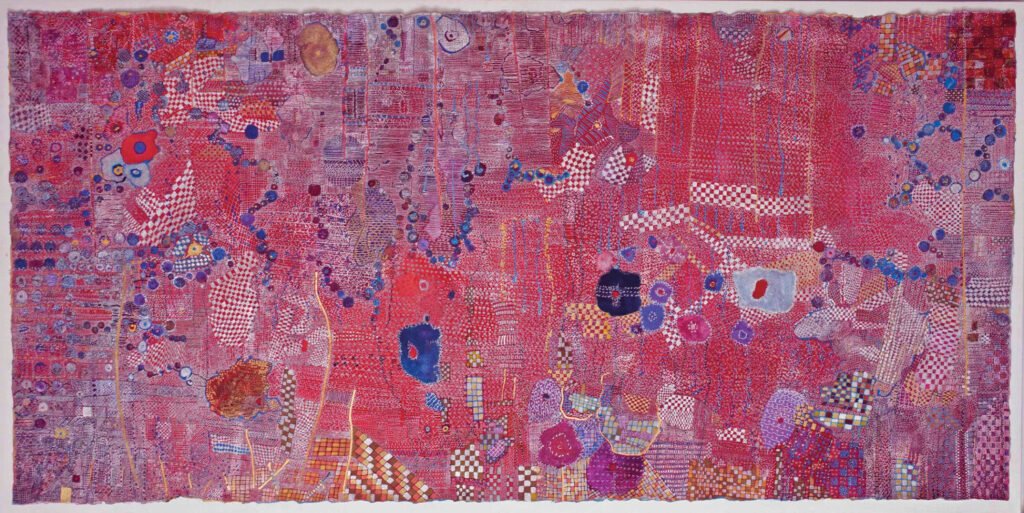
And yet, despite all of it, the American art world was largely indifferent. Caland’s work didn’t receive major attention in the US until much later in her life; it was her inclusion in the 2016 Hammer Museum’s Made in LA biennial that many considered a catalyst, finally bringing her the recognition she had long been owed.From there, things moved quickly: the Venice Biennale in 2017, a show at the Institute of Arab and Islamic Art in New York in 2018, and a major retrospective at Tate St. Ives, all arriving when Caland was already in her late eighties.
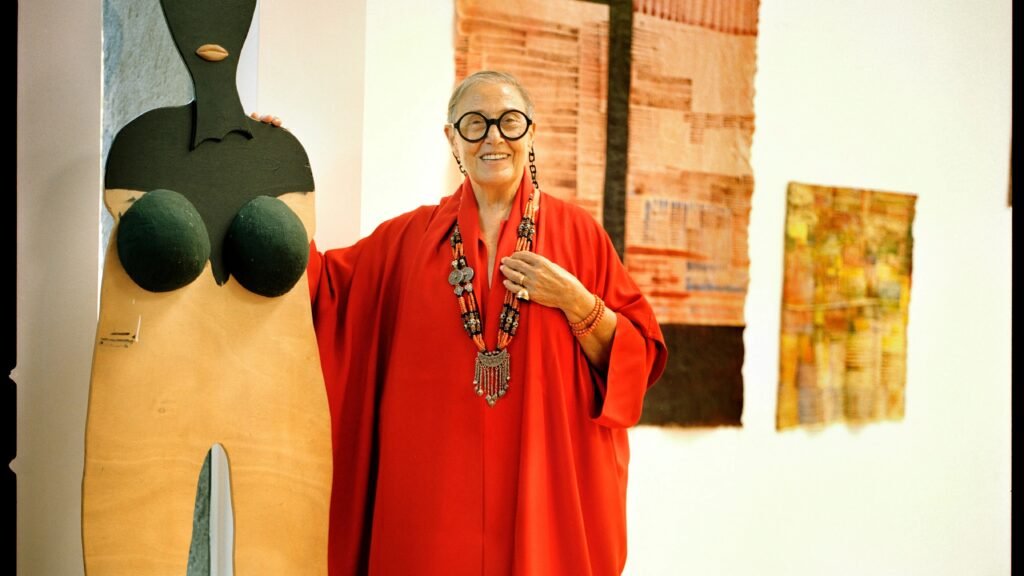
She took it all in stride. “I love every minute of my life,” she once said. “I squeeze it like an orange and eat the peel, because I don’t want to miss anything.”
The Legacy She Deserved All Along
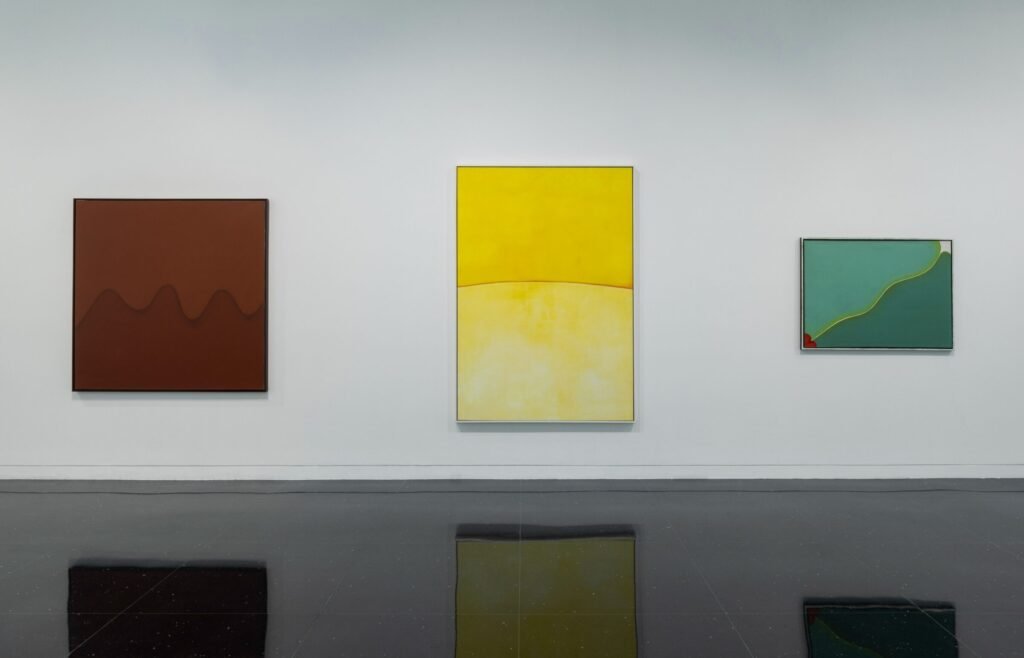
Caland’s life and work spanned decades, continents, and media, challenging the aesthetic and social conventions of her time with a body of work that explored gender, the body, belonging, love, aging, and personhood.She was a painter, a sculptor, a fashion designer, and a poet. She was also simply one of the most alive people to have ever picked up a brush.
Over her career, she proved again and again, even if she never considered herself a feminist, that the actions and decisions of leading a feminist life could create the circumstances of a liberated, rebellious, and historically consequential art.
Huguette Caland passed away in Beirut on September 23, 2019, surrounded by her children and grandchildren. She was 88. Her first major European retrospective, A Life in a Few Lines, opened at Madrid’s Museo Nacional Centro de Arte Reina Sofía in early 2025, gathering her studio assistants, her gallerists, her beloved family and friends, and an entirely new audience that had no idea what it was about to discover.
They never do, until they stand in front of one of her paintings and feel, for reasons they cannot immediately explain, that someone has just told the truth.