
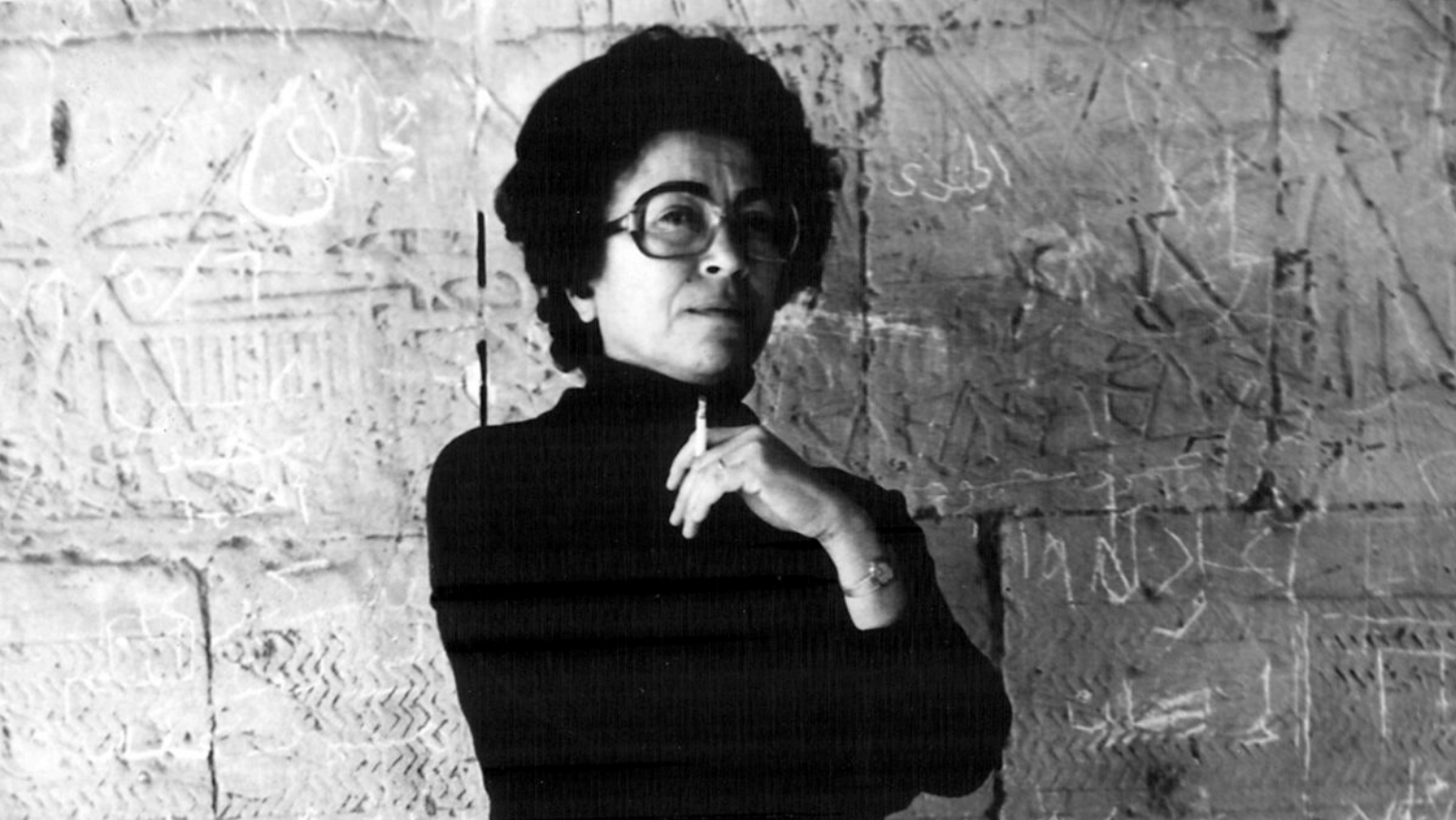
A Name That Deserves to Be Said Out Loud
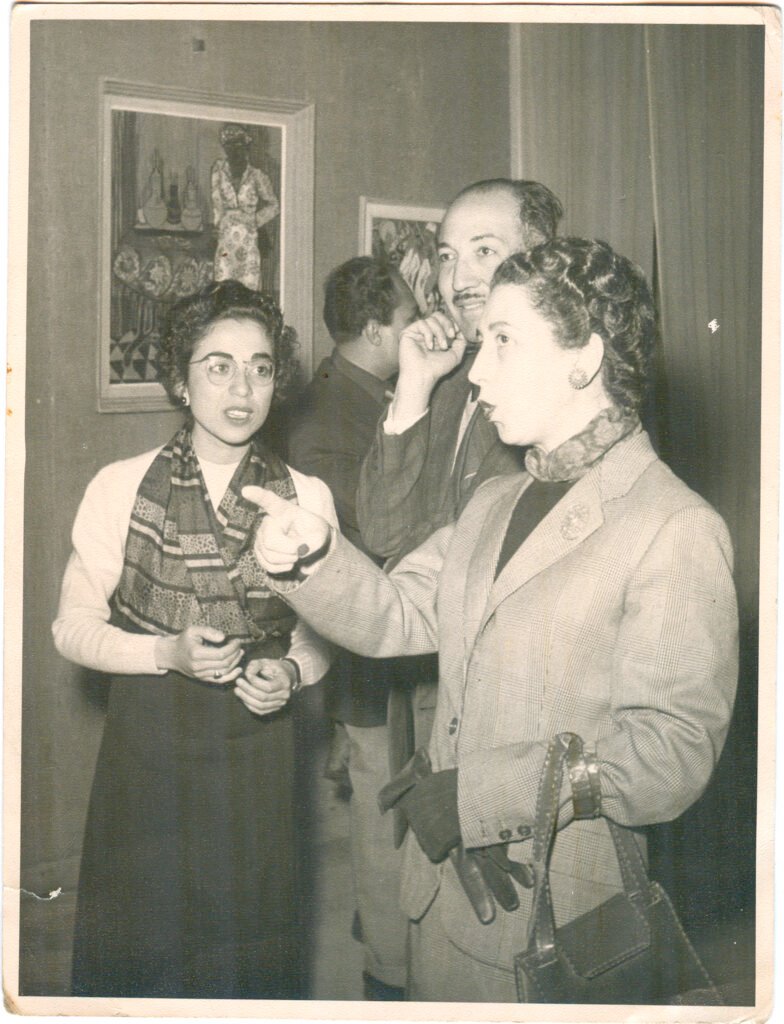
Most people who love art have never heard of Gazbia Sirry. That is not their fault; it is a failure of the story we have been told about modern art, a story that still tends to begin and end in Europe, with a brief detour through New York. But here is the truth: one of the most extraordinary painters of the twentieth century was born in Cairo in 1925, and she spent nearly a century making work that was bold, political, heartbreaking, and completely her own.
She was not rediscovered late in life. She was never truly lost, either; Egypt knew who she was. The Met knew. MoMA knew. And yet she remains the kind of name that makes even well-read people pause and say, tell me more. So let us.
She Chose Her Neighbours on Purpose
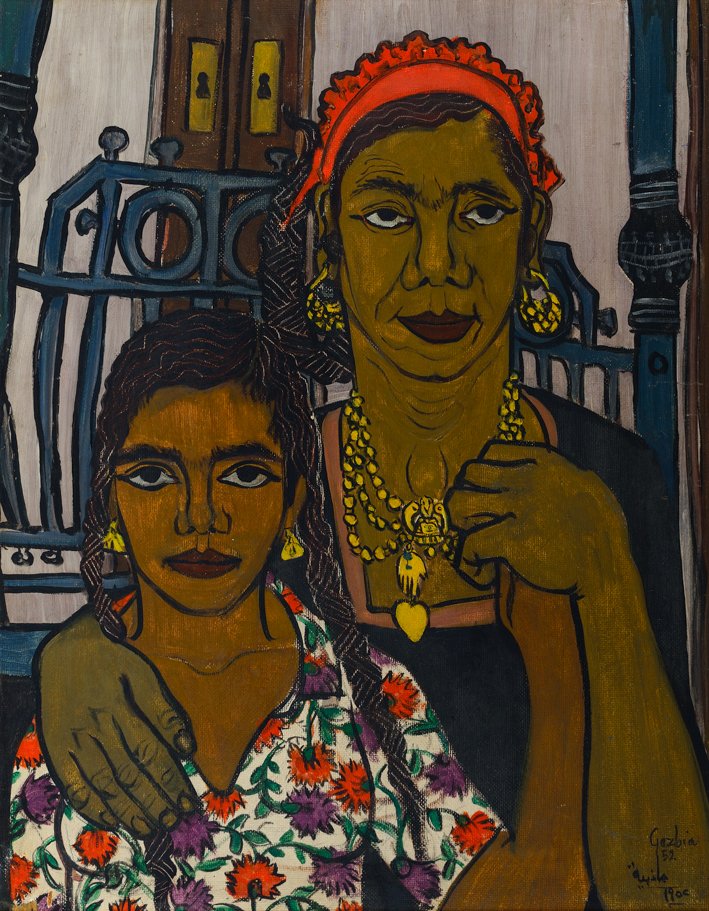
Before we talk about the paintings, it is worth talking about the choice Sirry made early in her career that tells you everything about who she was. When her family moved to a more comfortable part of Cairo, she did not go with them. She rented a room in Helmeya, a working-class neighbourhood, because she wanted the women who lived around her to be her models. Not idealised peasant figures. Not mythologised symbols of Egyptian womanhood. Her actual neighbours. The women who cooked and argued and raised children and worked with their hands.
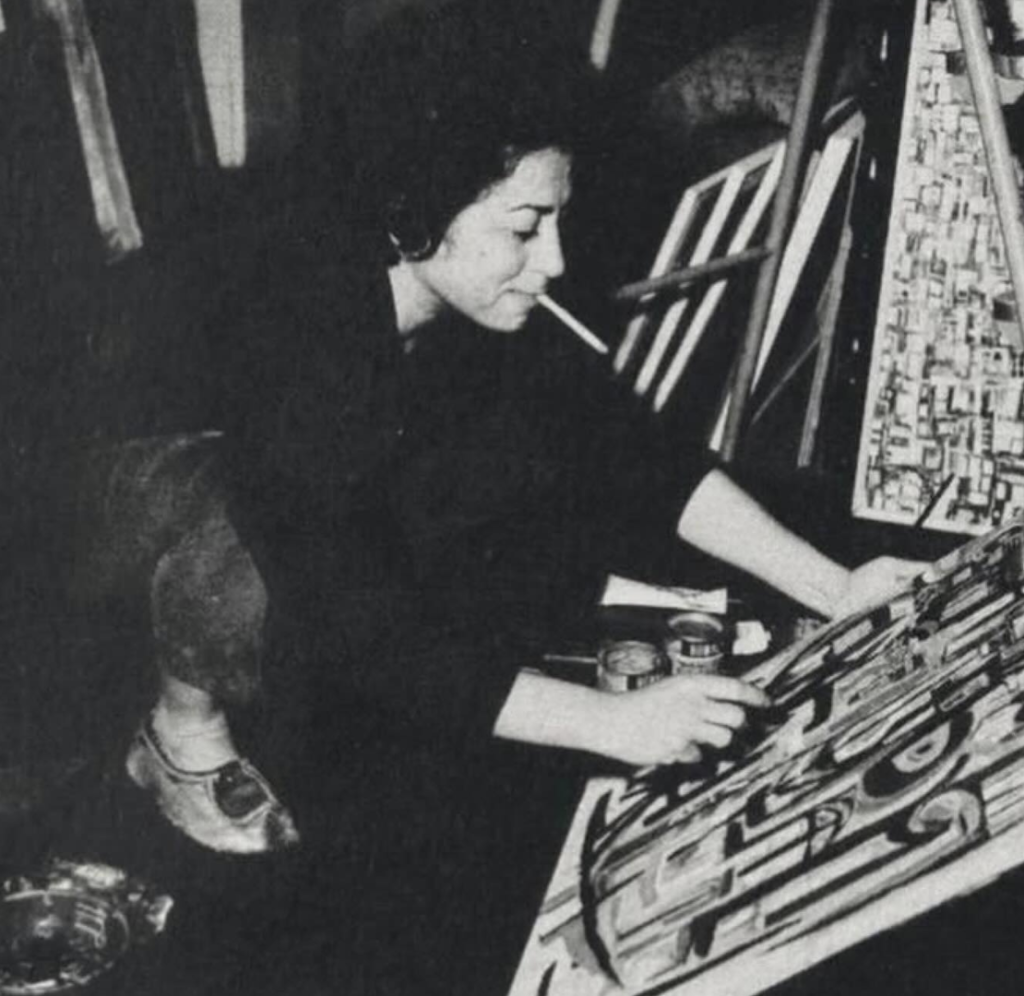
That was her subject in those early years, and she painted them with the kind of attention that borders on love. Her figures were outlined in thick black lines that echoed pharaonic wall paintings and Coptic icons, but there was nothing ancient or static about them. They were full of life and weight and presence.
She was doing something genuinely unusual for Egyptian art at the time. And she knew it.
Art as Resistance, Not Decoration
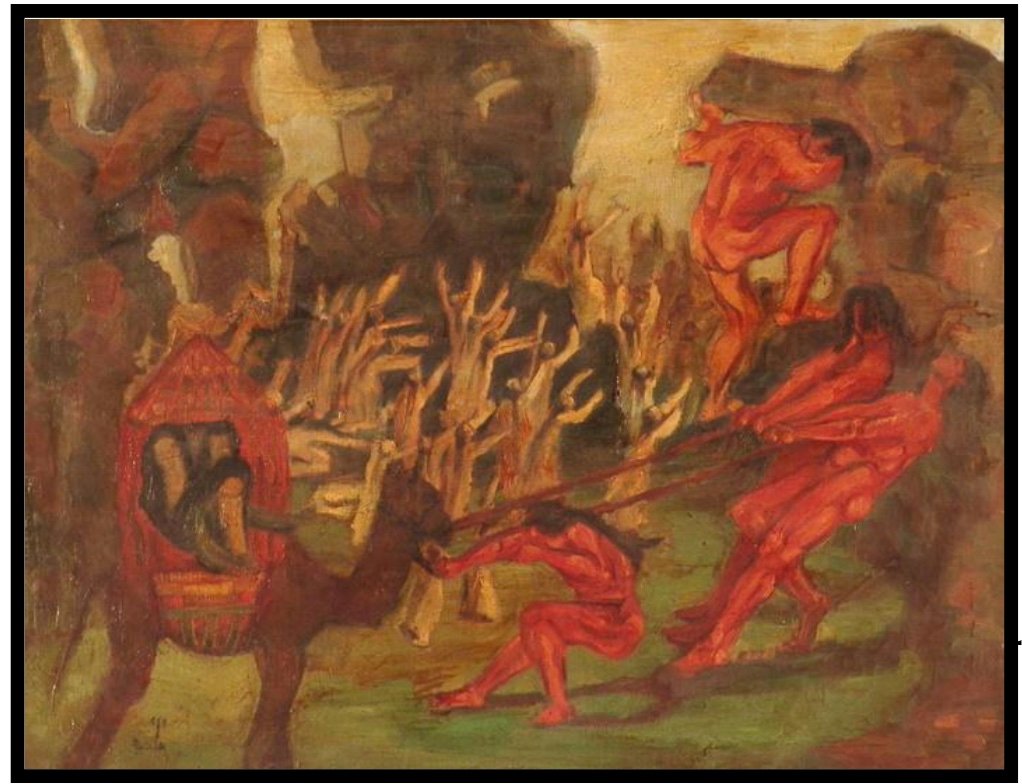
Sirry studied at the Higher Institute of Art Education for Women in Cairo, and her final dissertation traced Egypt’s political history, which, frankly, says everything. This was never a woman who thought of painting as something that happened separately from the world. For her, the two were inseparable.
She lived through two kings, four wars, multiple revolutions, and seven presidencies. She painted through all of it. Her early work addressed women’s rights, class, Western imperialism, and patriarchy at a time when those were not comfortable subjects in any room. She mixed the visual language of ancient Egypt with influences from Mexican muralism and expressionism and made something that belonged entirely to her, grounded in this specific soil, speaking to this specific moment.
The Years That Broke Something Open
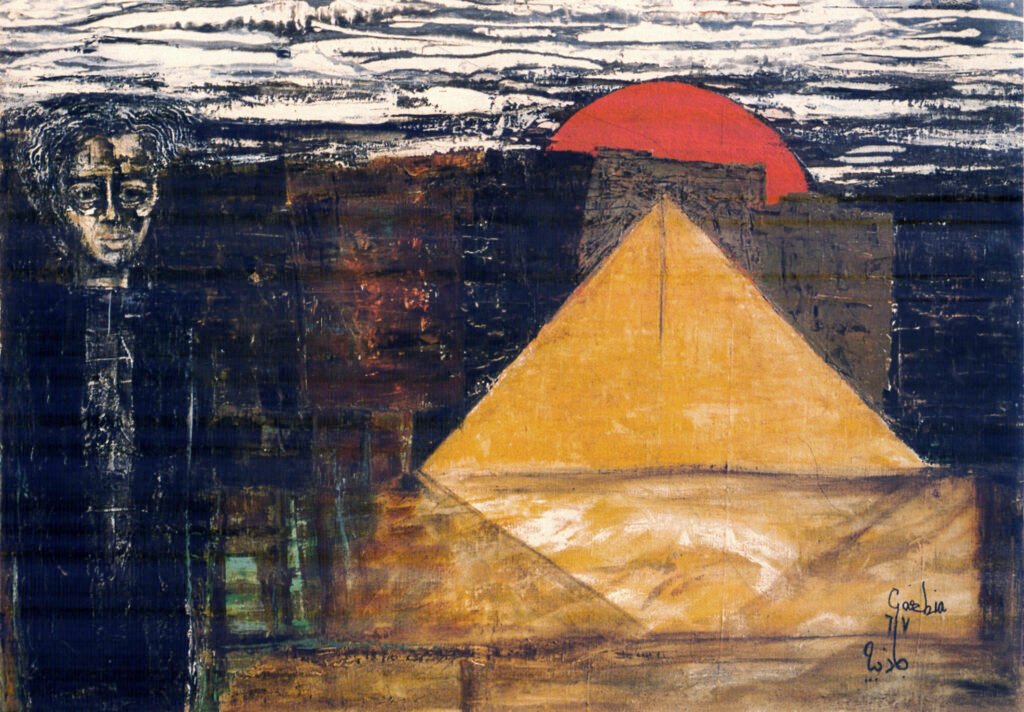
After her imprisonment for several days, and the imprisonment of her husband, you can see the shift in her work. The bold figures began to dissolve. Wide desert landscapes appeared, with the pyramid’s triangular form rising quietly at their centre. The lines loosened. There is a grief in that period of her paintings that she never stated directly, but that you feel immediately when you stand in front of them.
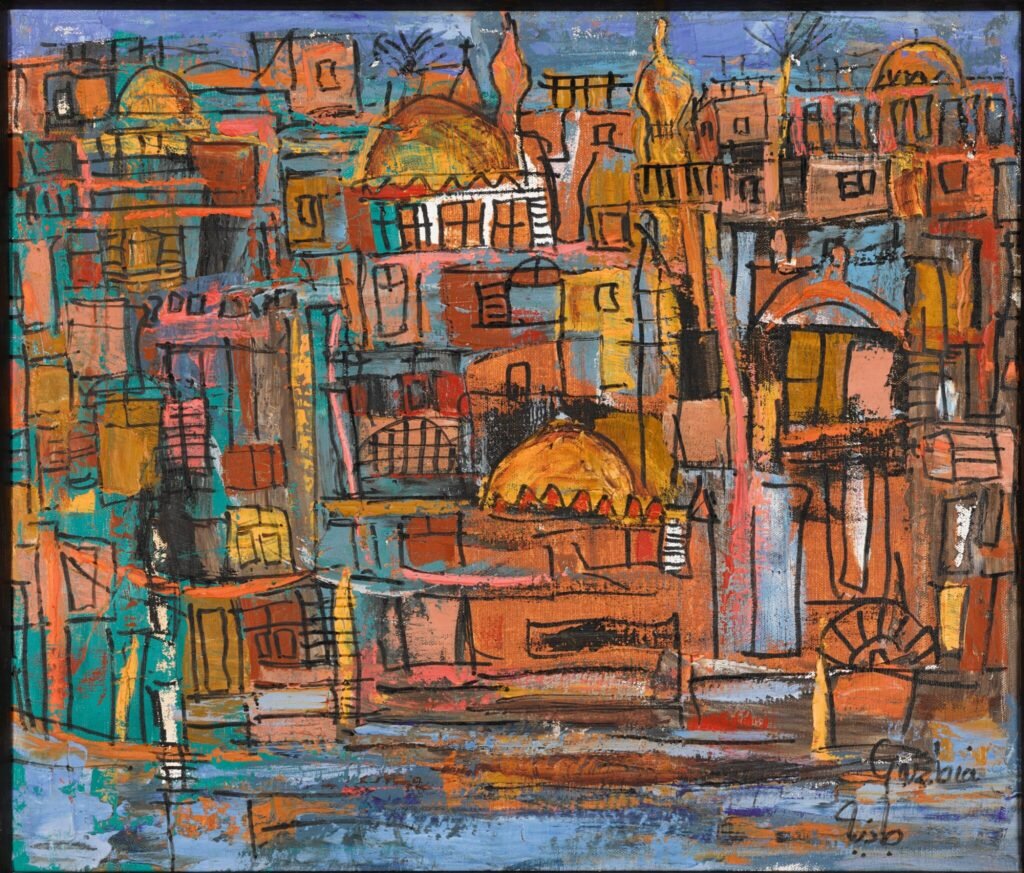
By the 1970s, she had moved into abstract cityscapes, dense grids, and layered colour fields that read like Cairo being processed from a great emotional distance. Not escape, exactly. More like translation.
The World Caught Up, Eventually
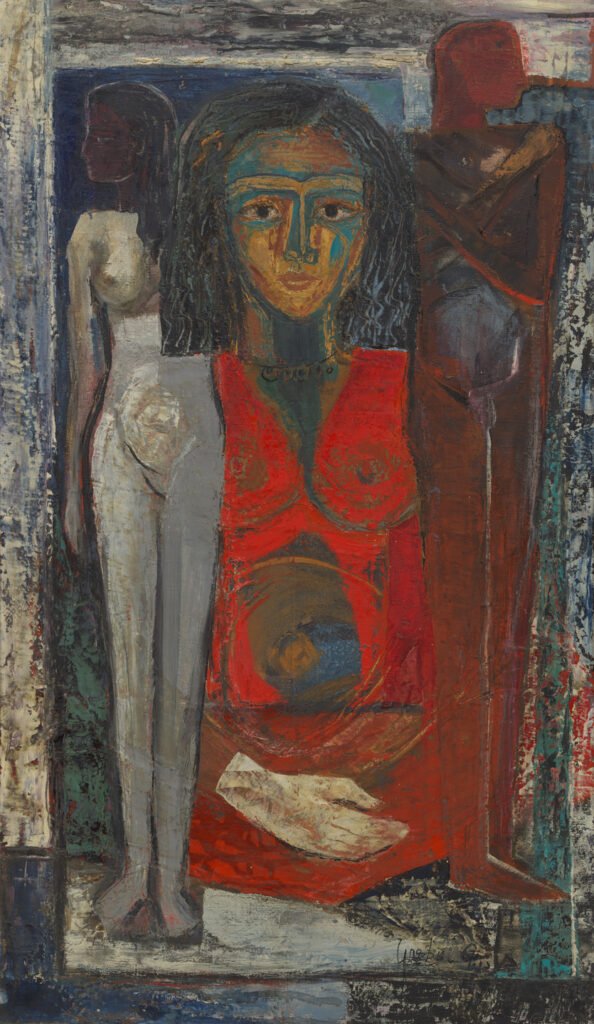
The international recognition did come. She became the first Egyptian artist to exhibit at the Metropolitan Museum of Art in New York. Her painting, The Fortune Teller, entered MoMA’s permanent collection, making her the first Egyptian woman to achieve that. The British Museum collected her work. So did the Arab Museum of Modern Art in Doha and the Guggenheim Abu Dhabi. She represented Egypt at the Venice Biennale three times.
None of that made her a household name outside the art world. And somehow, that still feels like the world’s loss more than hers.
Still Painting at 85
In 2011, when the revolution broke out in Cairo, Gazbia Sirry was eighty-five years old. She picked up her brushes. She painted a new series. That is really all you need to know about her.
She passed away in November 2021 at ninety-six. If Mahmoud Said is the father of Egyptian modernism, she is its mother, a title she earned not through association but through eight decades of uncompromising, deeply felt, quietly furious work.
Some artists capture a moment. Gazbia Sirry captured a century, and somehow made it feel personal every single time.