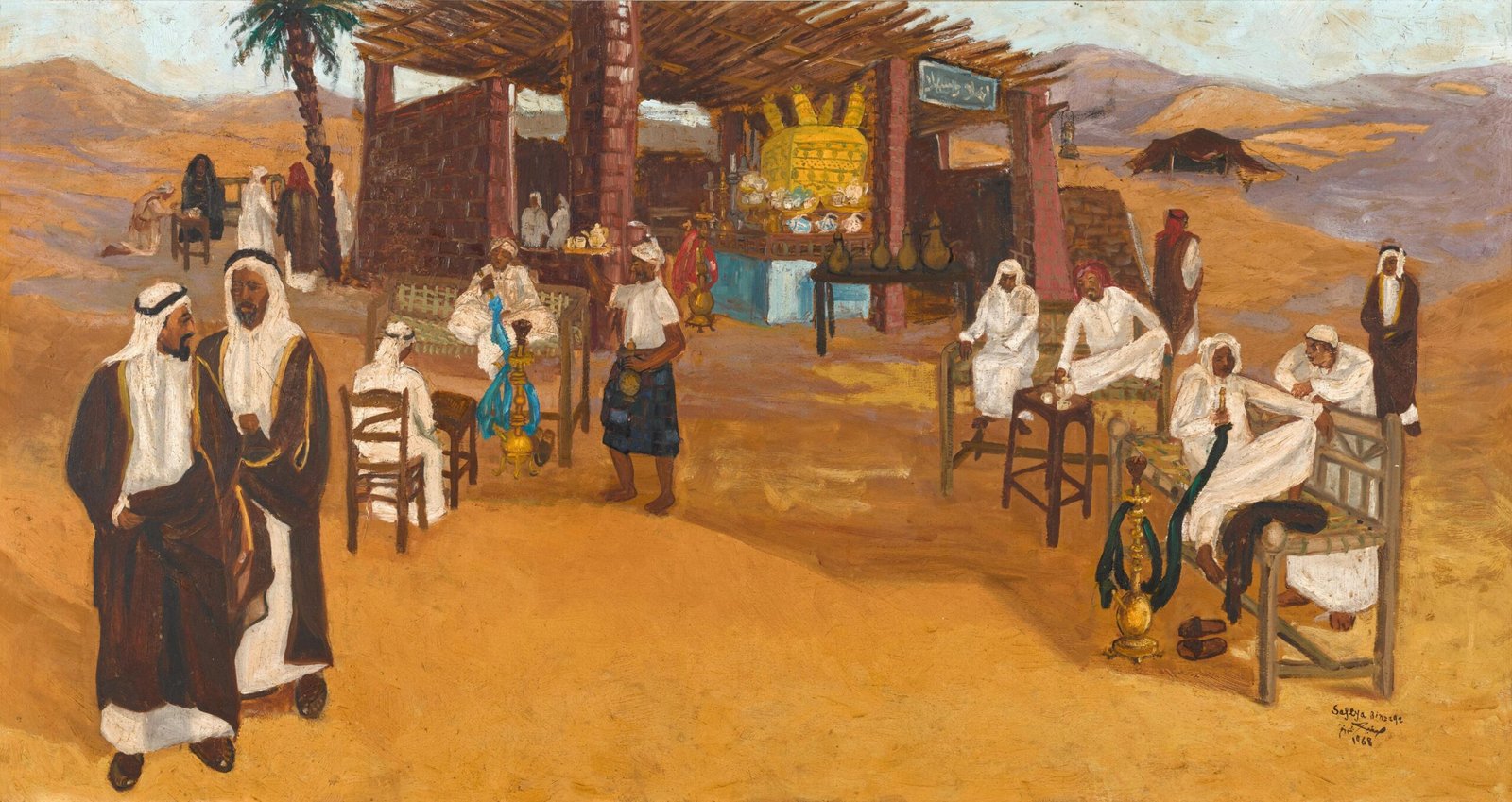

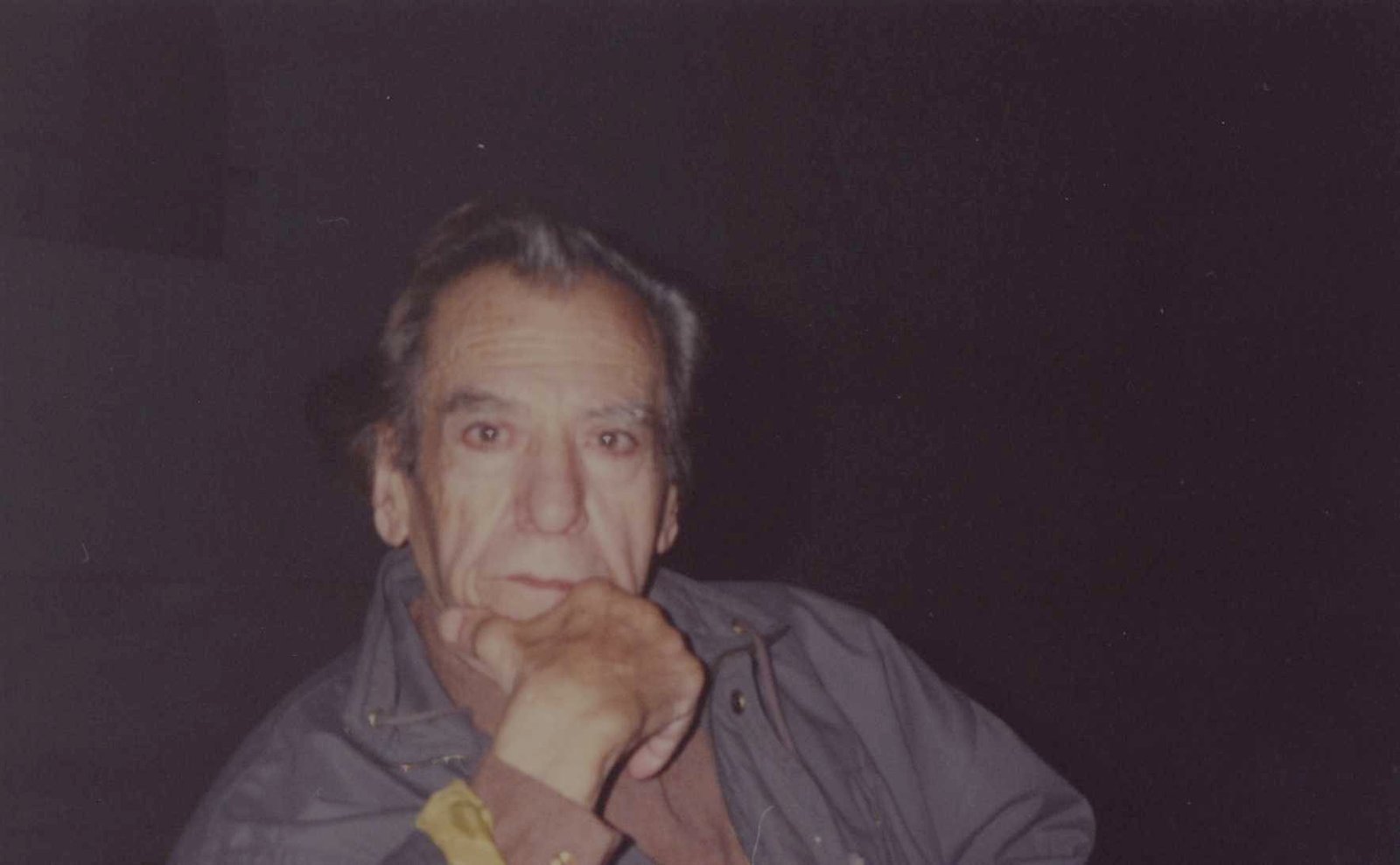
Fateh’s first real experience was when he lost his father when he was only 22 months old. His father, in his mid-twenties, was killed by a gang in a conflict over land ownership and political differences. This is where Fateh Moudarres begins, not in a studio, not in a gallery, but in a grief so early it preceded language itself. Even though a long time had passed since his father’s death, whenever his childhood was recalled, Fateh used to consider the killing as a turning point in life, one that explained certain aspects like the “subjects” which remain the material for much of what he painted.
Fateh’s childhood strongly impacted his art more than it did many others, as if it had always been with him in many forms. Although travel and long experience shaped, refined, and at times disguised him, childhood was his main theme from beginning to end, remaining like a musical theme, disappearing at times only to reappear stronger. Loss became his vocabulary before paint ever did.
Rome, Paris, and the Making of a Visual Language
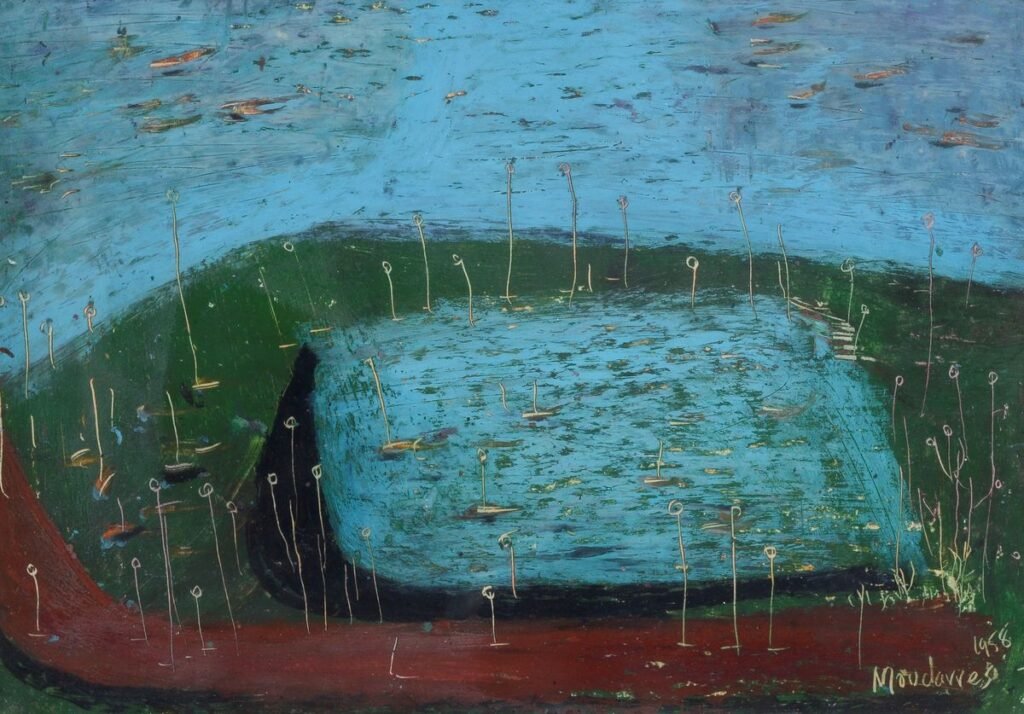
Born in Aleppo in 1922, Fateh Moudarres originally taught himself realist painting techniques before becoming interested in Surrealism.In 1954, he embarked on intensive artistic training at the Accademia di Belle Arti di Roma, completing his studies there by 1960. Under the influence of teachers like Franco Gentilini, he began to combine Western Surrealism with regional motifs from Assyrian, Sumerian, and Christian iconography.
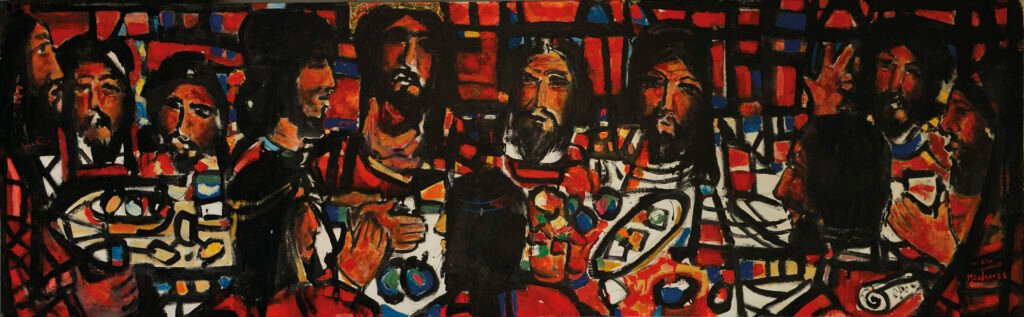
Europe did not erase what Aleppo had given him. It sharpened it. Upon his return from Italy in the late 1950s, Moudarres abandoned the traditional formulas of painting prevalent in Syria and began to create a language where his vocabulary was drawn from the primitive and ancient arts of his country. The result was unlike anything Syria had seen; in his expressionistic idiom, reality was mixed with fiction. The heroes were taken both from the present and from ancient civilisations, nameless peasants alongside legendary figures. Their square-shaped heads recalled those of Assyrian statuary, the figures in Palmyrene frescos, and early Christian iconography.
He later continued his education at the École Supérieure des Beaux-Arts in Paris in the early 1970s, sharpening his compositional and technical skills. These formative decades in Europe allowed him to forge a signature style: bold, flat-headed figures; luminous, warm earth tones; and a harmonious balance between abstraction and cultural narratives.
The Political Turn
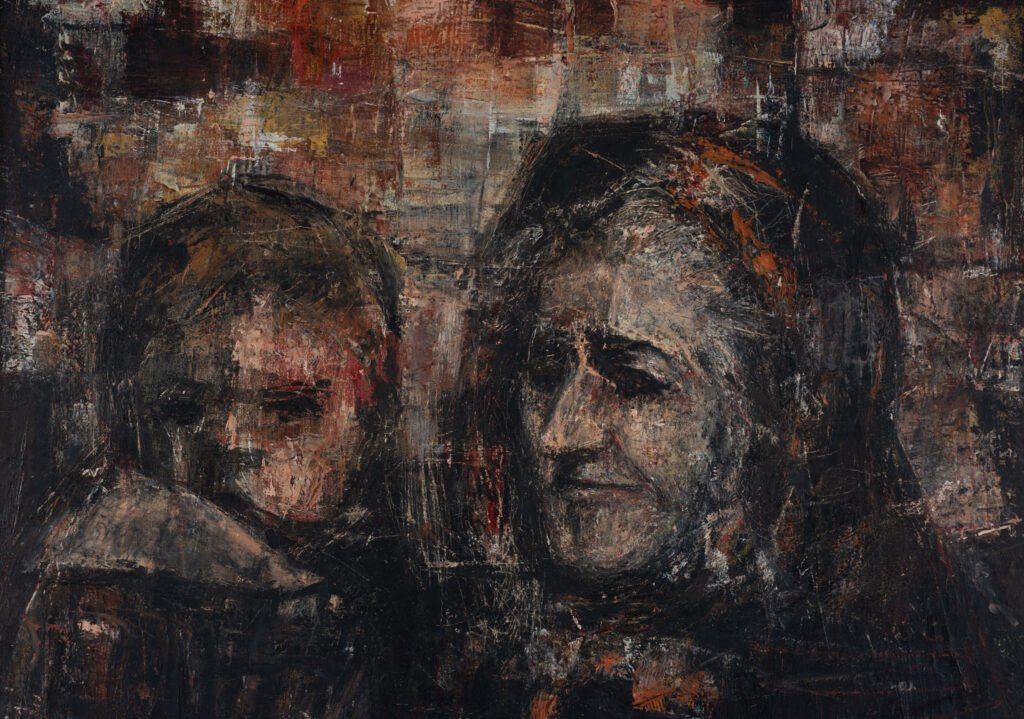
Art, for Moudarres, was never decorative. It was testimony. After 1967, his work took on deeply political themes. The defeat of the Arab armies in the Six-Day War cracked something open in an entire generation of Arab artists, and Moudarres was among those who could not look away. Reflecting the changing social and political environments of the time, his work took on issues such as the Syrian agricultural crisis and the civil war in Lebanon, seeking to depict the sorrow and the problems of the people.
Growing up, Moudarres had spent much of his time in the countryside. But the agricultural crisis of the 1960s forced him to relocate to Damascus, a city experiencing unprecedented growth and fast becoming an increasingly cramped and hostile environment. These conditions were compounded by the political and social unrest sweeping the Arab world. He painted what he saw: not the powerful, but the powerless. Not the victors, but the left behind. He was especially moved by the life of ordinary people in the Syrian countryside, for them, what could often be incorrectly characterised as an idyllic existence was in fact a way of life marred by the problems of social upheaval.
The Teacher Who Shaped a Generation
Upon returning to Syria, Moudarres became a lecturer and Dean of the Faculty of Fine Arts at Damascus University until 1993, where he became a highly influential professor for generations of artists.This is perhaps his most underrated legacy, not the canvases in institutions, but the artists who sat in his classrooms and left seeing the world differently.
Moudarres was not confined to the visual arts. He was a profound intellectual whose thoughts traversed the boundaries of literature, philosophy, and politics. He was also renowned for his philosophical ideas and critical art essays, published alongside his artwork in regional magazines. He wrote poetry. He wrote short stories. He was, in the fullest sense of the word, a man of letters who happened to also be one of the greatest painters his country ever produced.
The Legacy, and the Fight to Protect It
Moudarres represented Syria at the Venice Biennale in 1961, the São Paulo Biennale in 1963, where he won a Medal of Honourable Mention, and exhibited in Seoul, Cairo, New York, Beirut, Paris, Vienna, and Washington D.C.His works were acquired by institutions including the British Museum, Mathaf: Arab Museum of Modern Art in Doha, the National Museum in Damascus, and the Dalloul Art Foundation in Beirut.
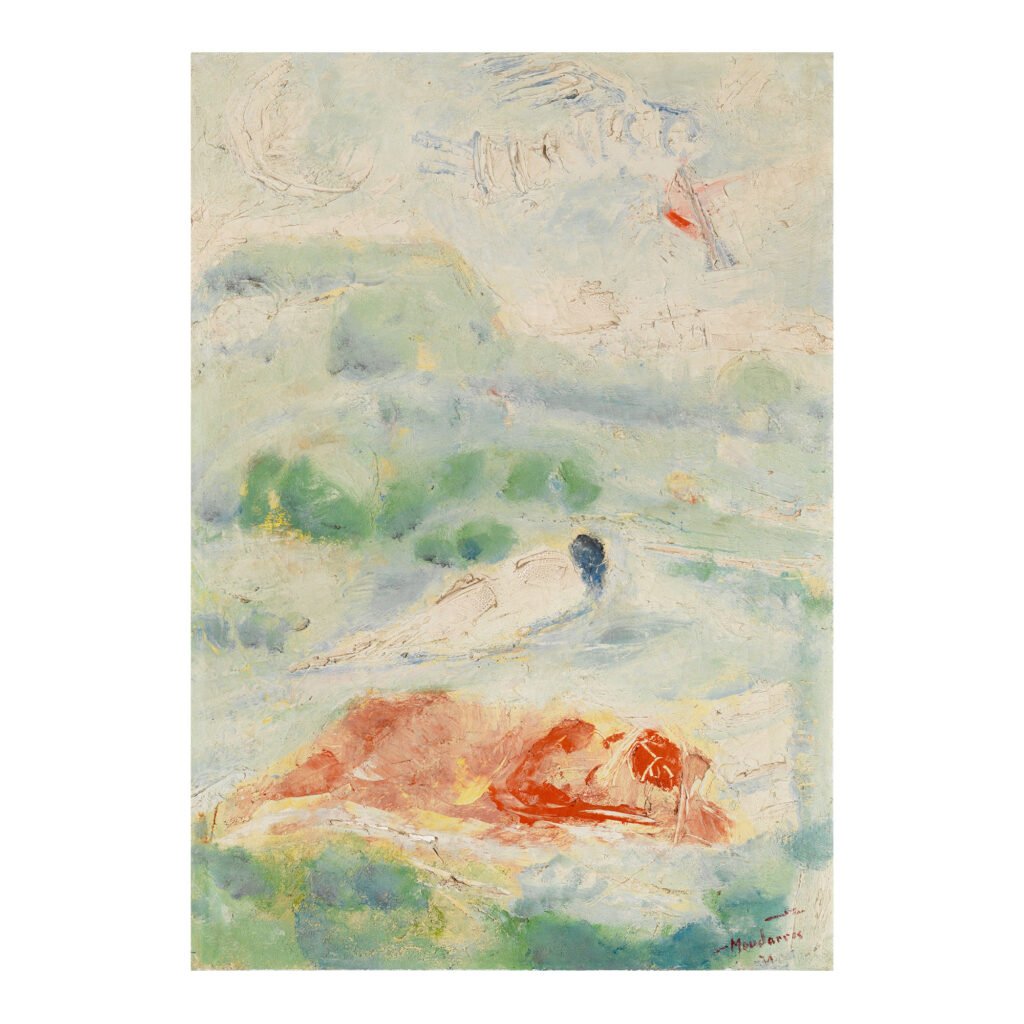
After he died in Damascus in 1999, the fight to preserve his legacy became its own story. His wife, Shokran Imam, dedicated herself to maintaining his workshop in Damascus as a museum and exhibition space. Following her death in 2015, their daughter Rania took on the responsibility, and amid the Syrian conflict, relocated parts of the collection to Portugal, safeguarding it and later organising a pivotal solo exhibition in Toulouse in 2018.The estate is now working to establish a comprehensive catalogue raisonné, a full accounting of his life’s work, to protect it against counterfeits and ensure it is accurately represented in the global art narrative.
Why He Still Matters
As one curator noted, his work “looks childish, but is crafted over fifty years,” a testament to his mastery of subtle simplicity. That line tells you everything. The flat-headed figures, the warm earth tones mixed with sand, the square faces staring out from canvases with the weight of a civilisation behind them, none of it was accidental. All of it was earned.
Fateh Moudarres spent his life painting the people his society was most comfortable ignoring: the rural poor, the grieving, the displaced, the ordinary. He did it with the visual grammar of Assyria and the emotional intelligence of someone who had known loss before he could speak. In a region whose art history is still being written, and too often written incompletely, his name belongs at the very beginning of the sentence.