
In every generation of Arab artists, some chase the moment, and those who quietly shape the language of art itself. Egyptian painter Ahmed Morsi belongs firmly to the latter. From Alexandria’s Mediterranean light to decades spent between continents, his work has unfolded as a lifelong meditation on memory, symbolism, and the poetic imagination.
Alexandria as Origin
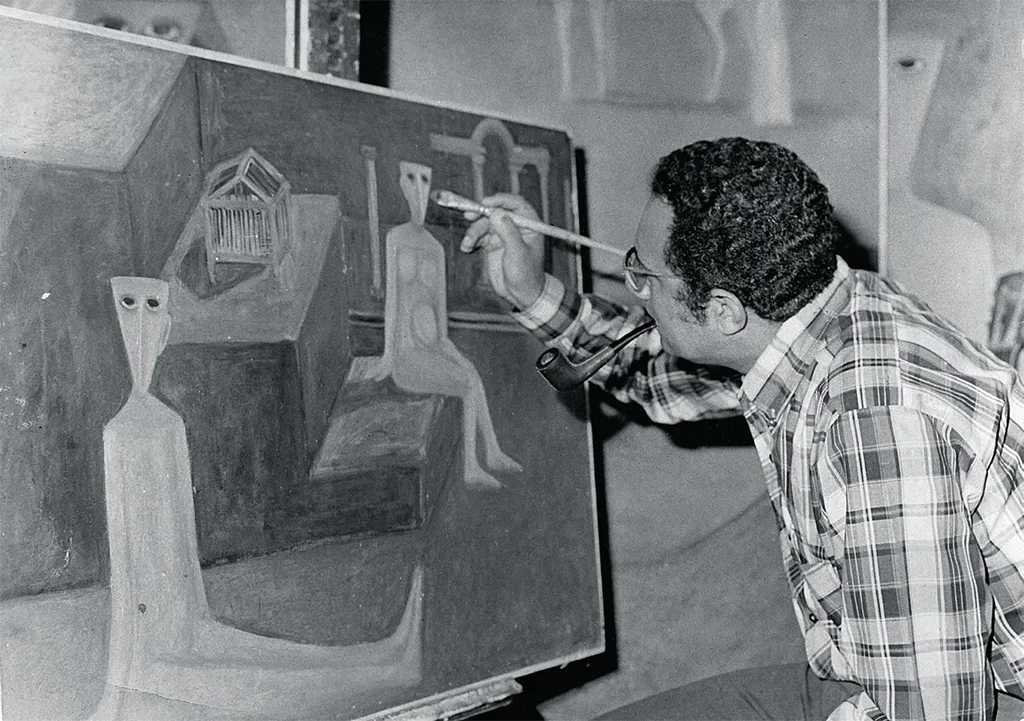
For many Egyptian artists, Alexandria is not simply a birthplace; it is a sensibility. The sea, the cosmopolitan past, the sense of layered histories, all of it echoes in the quiet surrealism of Morsi’s visual language.
His paintings often feel suspended between places and times. Architecture floats. Figures appear alone yet purposeful. Objects hold symbolic weight. The city of his beginnings lingers not as geography, but as atmosphere: a place where reality and imagination meet without friction.
This Alexandrian sensibility, introspective, literary, and subtly cosmopolitan, became a foundation for a career that would expand far beyond the city’s shores.
Painting as Poetry
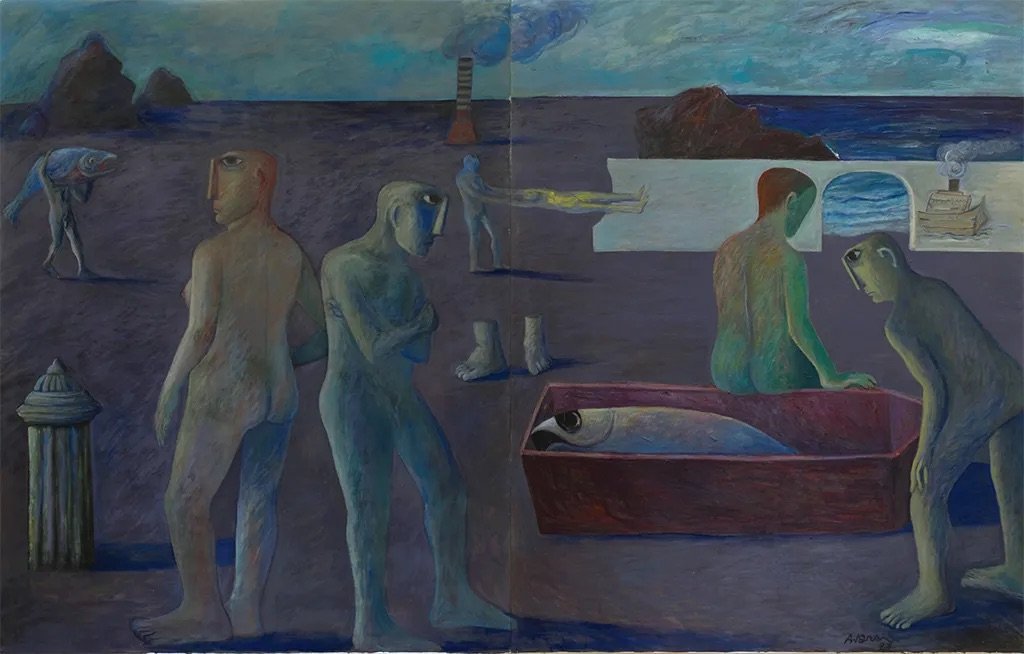
Ahmed Morsi is not only a painter. He is also a poet and writer, and this dual identity sits at the core of his work. His paintings often feel like visual poems: sparse, contemplative, and layered with metaphor.
Rather than dramatic narrative or spectacle, Morsi’s canvases rely on restraint. A single figure. A symbolic animal. A horizon that stretches into ambiguity. Silence becomes a compositional tool.
This poetic approach places him within a lineage of Arab modernists who saw art as a philosophical practice, not merely an aesthetic one. His work invites viewers to slow down, to read images the way one reads verse, carefully, repeatedly, and with openness to interpretation.
The Language of Symbols
Across decades of work, certain motifs reappear: solitary figures, animals, architectural fragments, boats, and open landscapes. These symbols do not offer fixed meanings. Instead, they function as recurring questions.
- Is the figure searching, remembering, or witnessing?
- Is the landscape external, or psychological?
- Is the journey physical, or existential?
This ambiguity is intentional. Morsi’s art resists instant clarity, asking viewers to participate in meaning-making rather than consume it. In a fast-moving visual culture, this resistance itself feels radical.
Between Worlds
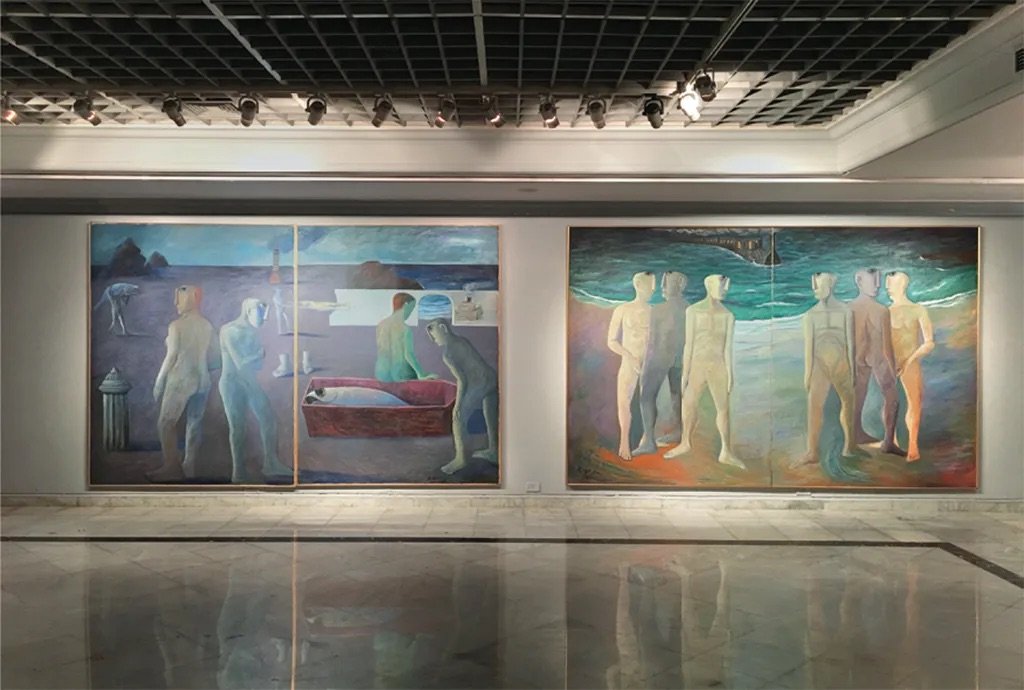
Like many artists of his generation, Morsi’s career unfolded between the Arab world and the global art scene. Living and working across cultures deepened his exploration of displacement, belonging, and memory
His work never abandons its Egyptian roots, yet it speaks in a universal visual language. The result is art that feels both deeply local and quietly global, anchored in identity while open to the world.
This in-between space became fertile ground. It allowed him to build a body of work that reflects the experience of movement, distance, and reflection without losing intimacy.
Time as a Medium
Perhaps the most striking aspect of Ahmed Morsi’s career is its longevity. Over the decades, his work has evolved without losing its essential voice. The themes remain consistent, yet the execution grows quieter, more distilled.
There is a patience to his trajectory. A refusal to rush toward trends. A belief in artistic practice as a lifelong conversation rather than a series of moments.
This sense of time, slow, layered, cumulative, echoes in the stillness of his compositions.
A Legacy of Quiet Influence
In conversations about modern Arab art, the loudest names often dominate. Yet artists like Ahmed Morsi shape the cultural landscape in quieter ways: through consistency, depth, and intellectual rigor.
His work stands as a reminder that artistic influence does not always arrive through spectacle. Sometimes it arrives through persistence. Through decades of asking the same questions in new ways. Through the belief that art can be both deeply personal and collectively meaningful.
The Stillness That Endures
Ahmed Morsi’s paintings do not demand attention; they hold it. They create space for reflection in a world increasingly built for speed.
In that stillness lies their power. And in that power lies the enduring relevance of an Alexandrian artist who chose contemplation over noise, poetry over spectacle, and depth over immediacy.